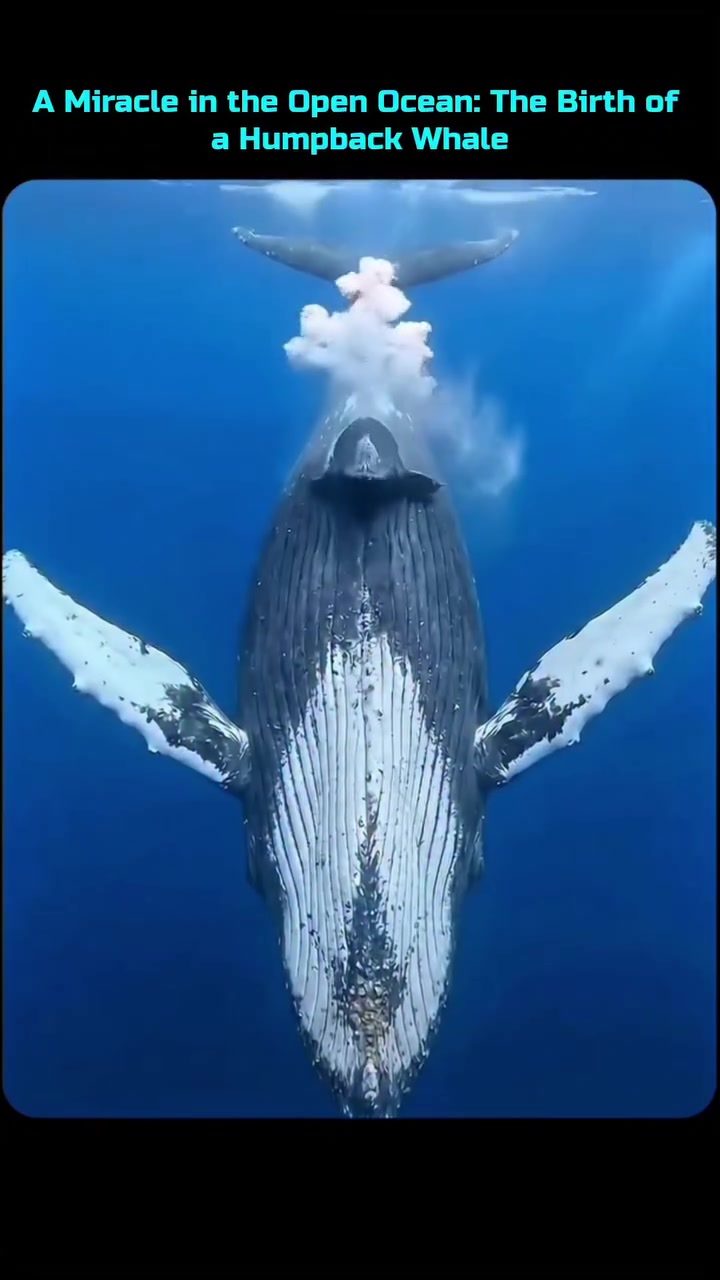
The Miracle of a Humpback Whale Birth in the Open Ocean
Witnessing the birth of a humpback whale is an awe-inspiring event that offers a rare glimpse into the natural world. This remarkable process, which unfolds in the vast expanse of the open ocean, showcases the resilience and adaptability of these magnificent creatures. The humpback whale calf, after nearly a year of growth inside its mother, enters the world in a dramatic and critical moment of transition.
Context: Why This Matters
The birth of a humpback whale is not just a biological event; it is a testament to the intricacies of nature and the profound bond between a mother and her calf. This event underscores the importance of understanding and preserving marine life, as well as the delicate balance of our oceans' ecosystems.
The Birth Process
The birth of a humpback whale calf is a carefully orchestrated event. After nearly a year inside its mother, the calf emerges into the water tail-first. This unusual method of birth is crucial because it ensures the calf can quickly navigate to the surface for its first breath. The newly born calf, already weighing close to a ton, is not yet self-sufficient and relies entirely on its mother for survival. The mother's role during this critical period is paramount.
The Mother's Role
From the moment of birth, the mother humpback whale becomes a devoted guardian. She immediately guides the calf to the surface, ensuring it takes its first breath. This first breath is a pivotal moment as the calf must quickly adapt to the water and its new environment. The mother's constant presence is not just for emotional support but a survival necessity. She shields her calf from ocean predators, helps it navigate powerful currents, and significantly slows her own migration to match the calf's strength.
Guiding and Protecting
Guiding the calf through the water is a complex task. The mother uses her powerful body to create currents that help the calf swim. This constant assistance is crucial as the calf's swimming skills and endurance develop. Protecting the calf from predators is another critical aspect. The mother's size and strength act as a natural barrier, ensuring the calf remains safe.
Milk: Fuel for Growth
The high-fat, nutrient-packed milk provided by the mother is essential for the calf's rapid growth. In an ocean where weakness is not an option, the calf must quickly gain size and strength. The milk’s rich content not only nourishes the calf but also aids in the development of a thick layer of blubber, which provides insulation and energy reserves. This rapid growth is vital for the calf to keep up with the mother's migration and eventually thrive independently.
Survival in the Wild
For humpback whales, survival begins at birth. The open ocean is a challenging environment, and the calf must quickly adapt to its new surroundings. The mother's unwavering support during this critical period ensures that the calf has the best chance of survival. The calf's strength and endurance are constantly tested, but the mother's guidance and protection make the difference.
Adaptation and Learning
The mother humpback whale does more than just provide physical protection and nourishment. She also acts as a mentor, teaching the calf essential survival skills. This includes navigating currents, recognizing oceanic cues, and interacting with other marine life. The mother's role in shaping the calf's behavior during this formative period is crucial for its long-term survival.
The Journey Together
The journey from birth to independence is a remarkable one. The mother and calf remain closely bonded, with the mother's migration pace slowing to match the calf's capabilities. This ensures the calf has time to learn and grow before venturing out on its own. The bond between mother and calf is a vital aspect of humpback whale society, one that ensures the continuation of their species.
Practical Tips for Viewing Wildlife Births
While it's a rare privilege to witness a humpback whale birth, there are other marine births that can be observed with the right knowledge and equipment. Here are a few practical tips for those interested in viewing wildlife births:
- Choose the Right Time and Place: Different species have specific breeding and birthing seasons. Researching these times can increase the chances of witnessing a birth.
- Use Binoculars or a Telescope: For species that are difficult to observe, binoculars or a telescope can provide a closer look without disturbing the animals.
- Maintain a Safe Distance: Respect the animals' space and avoid disturbing their natural behaviors. A safe distance ensures both your safety and the well-being of the wildlife.
- Document with Care: If you plan to document the event, ensure your equipment is silent and non-intrusive. Some species are sensitive to noise and light, which can disrupt their natural behaviors.
Important Takeaways
The birth of a humpback whale is a breathtaking event that highlights the beauty and resilience of marine life. The mother humpback whale’s role in guiding, protecting, and nourishing her calf is a testament to the power of maternal care. Understanding this process not only enriches our appreciation for these magnificent creatures but also underscores the importance of preserving our oceans and marine life.
The deep bond between the mother and calf, the calf's rapid growth, and the challenges of survival in the wild all contribute to the wonder of this natural miracle. Observing and studying such events can provide valuable insights into the intricacies of marine ecosystems and the behaviors of these incredible creatures.
Conclusion
The open ocean holds countless wonders, and the birth of a humpback whale is one of the most awe-inspiring events. The journey from birth to independence is a testament to the resilience and adaptability of these magnificent creatures. By understanding and appreciating this process, we can better protect and preserve the delicate balance of our oceans and the marine life that thrives within them.
Watch the Reel
Questions readers ask
How long does a humpback whale pregnancy typically last?
A humpback whale pregnancy lasts approximately 11-12 months. The calf spends nearly a year growing inside its mother before being born into the open ocean.
What happens immediately after a humpback whale calf is born?
After birth, the humpback whale calf must quickly swim to the surface to take its first breath. The mother whale assists her calf, using her tail and body movements to help it reach the surface safely.
Why is the bond between a humpback whale mother and her calf so important?
The bond between a humpback whale mother and her calf is crucial for the calf's survival. The mother provides protection, teaches essential survival skills, and ensures the calf's well-being during its first days and weeks.
What are the challenges faced by a newborn humpback whale calf in the open ocean?
Newborn humpback whale calves face several challenges, including learning to swim and navigate in the open ocean, avoiding predators, and adapting to the new environment. The mother's support and guidance are vital during this critical period.
Can witnessing a humpback whale birth help raise awareness about marine life conservation?
Yes, witnessing a humpback whale birth can highlight the fragility and beauty of marine life, fostering a deeper appreciation for the ocean ecosystem. This awareness can encourage individuals to support conservation efforts and promote sustainable practices.
How do humpback whale mothers protect their newborns?
Humpback whale mothers protect their newborns by swimming closely together, using their bodies to shield the calf from potential threats, and teaching the calf essential survival skills through gentle nudges and tail movements.
Recent articles
Fresh deep dives from the latest Reels we unpacked.




Comments
Be the first to comment.