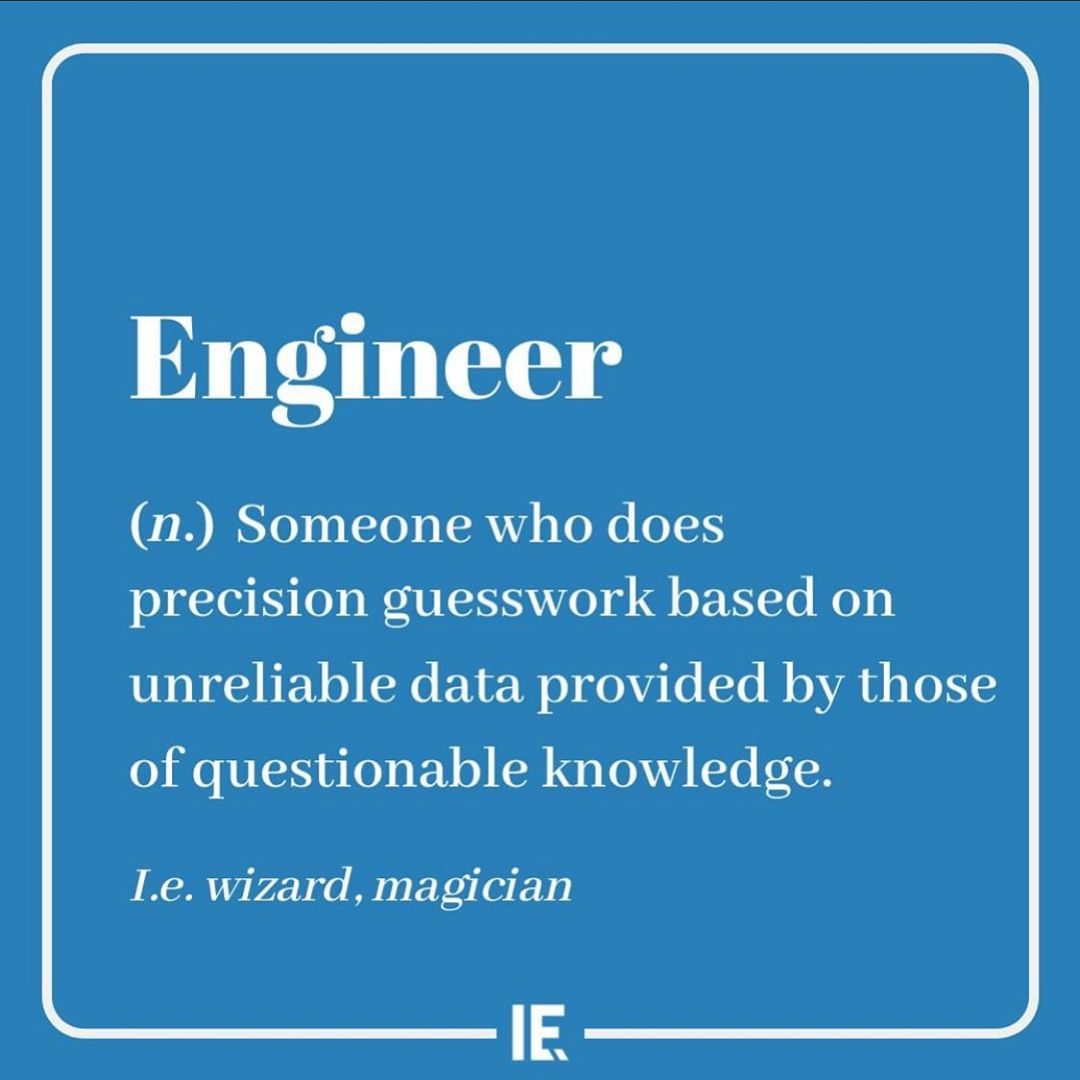
Definition of an Engineer
An engineer, by classical definition, is a professional who applies scientific and mathematical principles to design, build, and maintain structures, machines, devices, and systems. However, a humorous and thought-provoking definition has been making the rounds, one that offers a more playful and somewhat cynical take on the role of an engineer. This definition describes an engineer as "someone who does precision guesswork based on unreliable data provided by those of questionable knowledge." This whimsical interpretation adds a layer of complexity to the traditional understanding of engineering and raises several interesting points about the profession. It also highlights the challenges and uncertainties that engineers often face in their work.
Context: Why this matters
The humorous definition of an engineer as a "wizard or magician" who engages in "precision guesswork" might seem at odds with the meticulous and systematic image of engineering. However, it underscores the reality that engineers often work in environments of uncertainty and incomplete information. This definition matters because it offers a different perspective on the nature of engineering work, emphasizing the creative problem-solving and adaptability required in the field. It also serves as a reminder that engineering is not just about applying textbook knowledge but also about making decisions and taking actions despite gaps in data and knowledge.
Main discussion
The Playful Side of Engineering
Engineering is often depicted as a rigorous, disciplined field where every decision is based on empirical data and precise calculations. While this is largely true, the playful definition reveals that there is more to the job than just following formulas. Engineers frequently encounter situations where data is incomplete or unreliable. They must rely on their experience, intuition, and creativity to make informed decisions. This aspect of engineering is less emphasized in academic settings but is crucial in real-world applications.
The Reality of Unreliable Data
One of the main points highlighted in the definition is the concept of "unreliable data." Engineers are often provided with data that may be incomplete, inconsistent, or simply wrong. This could be due to various factors, such as outdated information, measurement errors, or biases in data collection. Engineers must then sift through this data to extract meaningful insights and make decisions that can significantly impact projects, safety, and cost. The ability to navigate these challenges is a testament to the adaptability and resourcefulness of engineers.
The Art of Precision Guesswork
The definition also mentions "precision guesswork" which may seem like an oxymoron. However, it accurately describes the process of engineering in many practical scenarios. Engineers often have to make precise calculations based on assumptions and best guesses. This requires a high level of skill and expertise to ensure that the decisions made are as accurate as possible, even in the face of uncertainty. This skill is honed through years of experience and a deep understanding of the underlying principles.
Comparing Engineers to Wizards and Magicians
Comparing engineers to wizards and magicians adds a whimsical element to the definition. This comparison highlights the almost mystical ability of engineers to transform raw materials and complex systems into functional, efficient, and reliable solutions. It also emphasizes the creative and innovative aspects of engineering, where engineers often have to think outside the box to solve problems. This creative problem-solving is a key component of engineering and is often what sets successful engineers apart from the rest.
Practical tips
For aspiring engineers, understanding this definition can provide valuable insights into the realities of the profession. Here are some practical tips to help you navigate the uncertainties and challenges of engineering:
Embrace Creativity and Innovation
Engineering is not just about applying theoretical knowledge; it is also about thinking creatively and innovatively. Embrace the creative side of your brain and be open to unconventional solutions. This will help you tackle problems that may not have straightforward answers.
Develop Strong Analytical Skills
Given the often unreliable and incomplete nature of data, it is essential to develop strong analytical skills. Learn to discern between useful and irrelevant data, and always question the sources of your information. This will help you make more informed decisions and improve the reliability of your guesswork.
Gain Experience
Experience is invaluable in engineering. The more you work on real-world projects, the better you will become at making educated guesses and navigating uncertainties. Seek out opportunities to work on diverse projects and learn from experienced engineers.
Build a Strong Foundation
A solid foundation in scientific and mathematical principles is crucial. This knowledge will provide you with the tools you need to make precise calculations and informed decisions, even in the face of uncertainty.
Important takeaways
The humorous definition of an engineer as someone who does "precision guesswork based on unreliable data" offers a fresh perspective on the complexities of the profession. Key takeaways include:
- Engineering involves a significant amount of creativity and adaptability.
- Engineers often work with incomplete or unreliable data, necessitating precise guesswork and critical thinking.
- The ability to navigate uncertainties and make informed decisions is a key skill in engineering.
Conclusion
The whimsical definition of an engineer as someone who does precision guesswork based on unreliable data provides a unique and thought-provoking perspective on the profession. It underscores the challenges and uncertainties that engineers often face, highlighting the importance of creativity, adaptability, and strong analytical skills. Whether you are an aspiring engineer or someone who appreciates the intricacies of the field, this definition offers valuable insights into the world of engineering.
Watch the Reel
Questions readers ask
What does 'precision guesswork' mean in the context of engineering?
'Precision guesswork' refers to the process engineers often undertake when they must make accurate estimations or predictions despite having incomplete or uncertain data. This term playfully acknowledges the challenges engineers face when crucial information is missing. The humor lies in the idea that engineers must work with what they have, even if it's not perfect, to create reliable solutions.
Why is the definition of an engineer as someone who works with 'unreliable data provided by those of questionable knowledge' humorous?
This definition is humorous because it exaggerates the challenges engineers face in their daily work. Engineers often receive incomplete or unreliable information, and they must still produce accurate and functional solutions, making them seem like wizards who can make something out of nothing, you could say. The humor comes from the juxtaposition of the seriousness of engineering tasks with the lighthearted way of describing the input they often receive.
How does this humorous definition highlight the creativity of engineers?
The humorous definition underscores engineering creativity by illustrating that engineers must think outside the box to solve problems. It shows that engineers are not just applying formulas but are using their ingenuity to fill in the gaps and make decisions based on what they do have, even if it's not everything they need. This kind of flexibility and adaptability is a key part of what makes engineering both challenging and rewarding.
What are some of the challenges engineers face based on this definition?
The challenges highlighted in this definition include dealing with unreliable data, making critical decisions based on uncertain information, and often working with incomplete details. Plus, engineers must translate complex information from various sources into practical and effective solutions. It also highlights the need for engineers to communicate with a wide range of people, who may not always provide the most reliable information.
Why might someone describe an engineer as a 'wizard'?
Describing an engineer as a 'wizard' emphasizes their ability to create something useful from seemingly nothing. Engineers often take incomplete or unreliable information and turn it into functional designs, much like a wizard might conjure a solution from thin air. This comparison highlights the creativity and problem-solving skills that are essential to the engineering role. Plus, they often have to deal with complicated situations, requiring a bit of magic to fix them.
What does the humorous definition suggest about the role of engineers in society?
The humorous definition suggests that engineers play a crucial role in society by transforming unreliable or incomplete data into functional and useful solutions. It also highlights the problem-solving and creativity required to navigate the uncertainties and challenges that come with engineering tasks, making them essential for progress in many fields. It shows that engineers are often the ones who have to make things work, even when the cards are stacked against them.
How does this definition change the way we think about engineering?
This whimsical definition changes the way we think about engineering by presenting it as a complex and creative process, rather than just a series of calculations. By emphasizing the challenges and uncertainties, it highlights the ingenuity and resourcefulness of engineers and might make the engineering more approachable. It also shows that engineers must be flexible and adaptable, and that their work is not always straightforward or predictable.
Related deep dives
Similar reads based on topic and creator.



Recent articles
Fresh deep dives from the latest Reels we unpacked.




Comments
Be the first to comment.