Humanoid Robots: The Future of Autonomous Workplaces
Humanoid robots are evolving beyond simple collaboration. They are now learning to communicate effectively as a team, marking a significant advancement in robotics and artificial intelligence.
Why This Matters
The shift from independent to coordinated robotic work is transforming industries. Robots that can communicate and share tasks efficiently reduce errors, enhance productivity, and handle complex operations with minimal human intervention. This evolution is paving the way for autonomous workplaces where machines can operate with greater autonomy.
Main Discussion
The Evolution of Robotic Communication
Humanoid robots, especially those like 1X's Neo, are now equipped with advanced communication capabilities. These robots can exchange task updates in real-time, sharing information about completed tasks, current observations, and upcoming actions. This level of coordination is crucial for handling complex tasks that require multiple robots working together seamlessly.
Office Integration and Performance
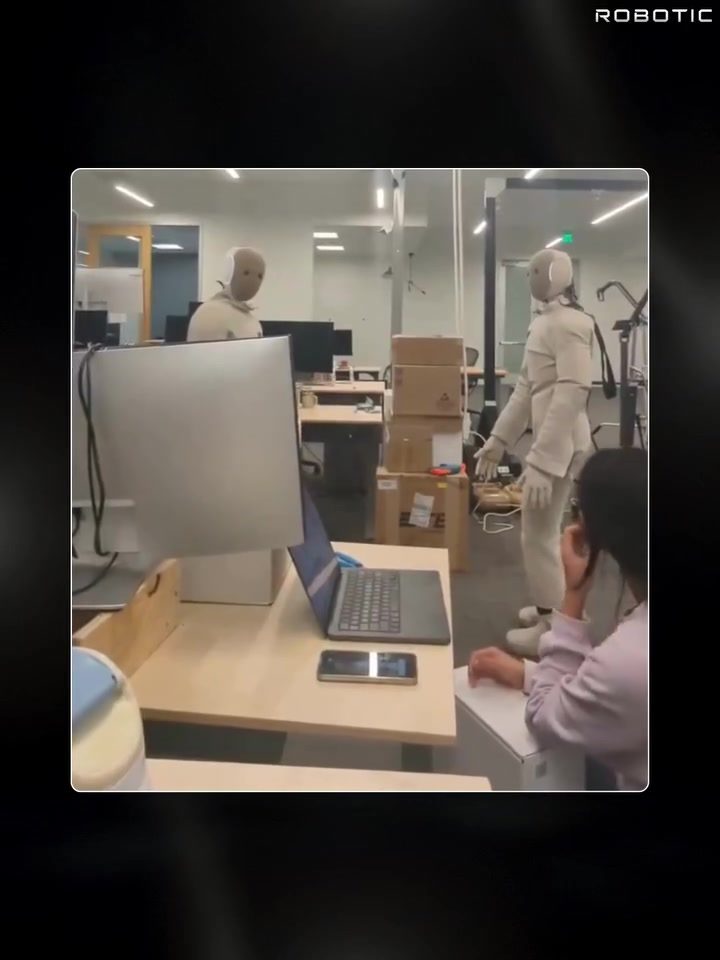
The video demonstrates a humanoid robot navigating an office environment with ease. The robot's movements include walking, gesturing, and interacting with office equipment such as computers and desks. These actions highlight the robot's physical capabilities and its ability to integrate into a human workspace. The focus on office settings suggests that these robots are designed to assist in professional environments, potentially taking over tasks that are currently performed by humans.
Task Coordination and Efficiency
One of the standout features of these advanced robots is their ability to share task updates. This real-time communication allows robots to work together more efficiently. For example, if one robot completes a task, it can update the others, who can then adjust their plans accordingly. This kind of coordination helps in reducing errors and improving overall efficiency. It also enables multiple robots to handle complex tasks that would be difficult for a single robot to manage.
The Path to Autonomous Workplaces
As robot-to-robot communication continues to advance, the vision of autonomous workplaces becomes more achievable. These workplaces would be characterized by minimal human supervision, with robots handling most of the work. This shift could lead to significant changes in how we think about work, productivity, and the role of humans in the workforce.
Practical Tips
For Integration into Workplaces
-
Assessment and Training: Before integrating humanoid robots into your workplace, assess the specific tasks they can handle and provide necessary training for employees to work alongside them.
-
Environment Setup: Ensure the workspace is robot-friendly. This includes clear pathways, accessible equipment, and safety measures to prevent accidents.
-
Communication Protocols: Establish clear communication protocols between robots and humans. This ensures that both can work together without misunderstandings or delays.
For Enhancing Efficiency
-
Regular Updates: Keep the robots’ software updated to benefit from the latest advancements in communication and task management.
-
Data Analysis: Use the data collected by the robots to identify areas for improvement. This can help in optimizing workflows and increasing overall efficiency.
-
Coordination Training: Regularly train the robots to work together in different scenarios. This will help them adapt to various tasks and improve their coordination skills.
Important Takeaways
Humanoid robots are no longer just tools for independent tasks. They are now capable of coordinating with each other, sharing information, and working together to handle complex tasks. This advancement brings us closer to a future where robots can operate in autonomous workplaces with minimal human supervision.
Conclusion
The future of robotics is here, and it's more collaborative and efficient than ever before. Humanoid robots are evolving to become more than just tools; they are becoming team players in the workforce. As we continue to advance in this field, the potential for autonomous workplaces becomes a reality, changing how we work and interact with technology.
Watch the Reel
Questions readers ask
How do humanoid robots enhance productivity in automated workplaces?
Humanoid robots improve productivity by working together efficiently, reducing errors, and handling complex tasks with minimal human intervention. Their ability to communicate and collaborate as a team allows them to optimize workflows and complete tasks more quickly and accurately.
What are some examples of humanoid robots that excel in teamwork?
Robots like 1X's Neo are designed with advanced communication capabilities, making them excellent for teamwork. These robots can coordinate their activities, share tasks, and communicate effectively, which is crucial for enhancing productivity in automated environments.
How does the evolution of robot communication impact workplace automation?
As robots become better at communicating and working together, they can take on more complex tasks and operate more autonomously. This reduces the need for constant human oversight, making workplaces more efficient and adaptable to changing demands.
What benefits does teamwork bring to the automation industry?
Teamwork in automation leads to increased efficiency, reduced errors, and the ability to tackle more intricate tasks. When robots work together, they can share the workload, trouble shoot issues more effectively, and adapt to new challenges more quickly.
What does the future hold for autonomous workplaces with advanced robotics teamwork?
The future of autonomous workplaces is likely to see robots working seamlessly together, handling a wide range of tasks with minimal human intervention. This will lead to more efficient operations, lower error rates, and an overall transformation of how work is done in various industries.
How do humanoid robots reduce errors in automated tasks?
Humanoid robots reduce errors by communicating effectively with each other, ensuring that tasks are coordinated and executed precisely. Their ability to share information and work together helps in identifying and correcting mistakes quickly, leading to more reliable and consistent performance.
Related deep dives
Similar reads based on topic and creator.



Recent articles
Fresh deep dives from the latest Reels we unpacked.




Comments
Be the first to comment.