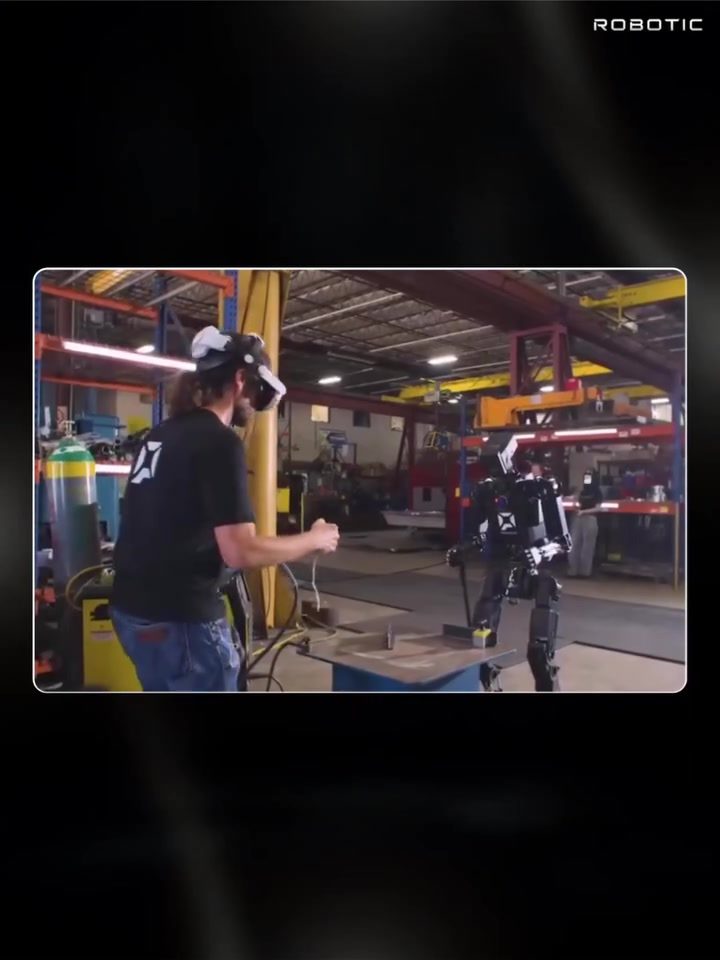
Humanoid Robotics in Industrial Welding
Humanoid robots, such as those developed by roboticPersona AI, are making significant strides in industrial welding, particularly in shipyards. These advanced robots are designed to perform complex tasks in environments where human workers face shortages and safety challenges.
Context: The Need for Automation in Shipyards
Shipyards present a unique set of challenges for traditional welding methods. The work is often dangerous, requiring skilled labor that is increasingly difficult to find. Additionally, the complex and often confined spaces within ships make it impractical to use fixed robotic arms for welding tasks.
Enter humanoid robots, which offer a more flexible solution. By mimicking human movements, these robots can navigate the intricate spaces of a shipyard more effectively. This adaptability is crucial for tasks that require precision and dexterity, such as welding. The integration of VR teleoperation further enhances the capabilities of these robots, allowing human operators to guide them remotely.
The Strategy Behind roboticPersona AI's Gen 1 Humanoid Robot
roboticPersona AI’s approach is focused on tackling one high-value task first: industrial welding. This strategy contrasts with other efforts that aim to create robots capable of performing a wide range of tasks. By concentrating on a single, challenging task, roboticPersona AI can develop more specialized and effective solutions.
Industrial Welding as a Strong Use Case
Industrial welding is a strong use case for several reasons:
- Skilled Labor Shortage: The demand for skilled welders often outstrips the supply, making it a critical area for automation.
- Dangerous Environment: Shipyards can be hazardous, with risks from falls, burns, and exposure to toxic fumes. Robots can perform these tasks without endangering human workers.
- Complex Spaces: The confined and irregular spaces within ships make it difficult to use traditional fixed robotic arms. Humanoid robots, with their human-like form factor, can navigate these spaces more easily.
Teleoperation and Future Autonomy
The initial phase of roboticPersona AI’s roadmap involves teleoperation, where humans guide the robot using VR headsets and remote controls. This method allows for real-time adjustments and ensures that the robot can complete tasks accurately. It also provides valuable training data, which can be used to develop more autonomous systems in the future.
Technological Foundations and Expertise
roboticPersona AI was co-founded by robotics experts with extensive experience in advanced humanoid programs. Key contributors have backgrounds in projects like NASA’s Valkyrie and Figure AI, bringing a wealth of knowledge and innovation to the table. This expertise is evident in the design and capabilities of the Gen 1 humanoid robot, which demonstrates impressive precision and adaptability in welding tasks.
Practical Tips for Implementing Humanoid Robots in Shipyards
If you're considering integrating humanoid robots into your shipyard operations, here are some practical tips:
- Start with Teleoperation: Begin with teleoperated robots to ensure accuracy and gather data. This phase allows for real-time adjustments and helps in fine-tuning the robot’s capabilities.
- Focus on High-Value Tasks: Identify tasks that are critical and challenging, such as welding, and focus on automating these first. This approach ensures that the investment in robotics yields immediate and tangible benefits.
- Invest in VR Technology: Incorporate VR technology for remote control. This not only enhances precision but also provides a more immersive and intuitive control experience for operators.
- Iterative Development: Use the data collected during teleoperation to iteratively improve the robot’s capabilities. This iterative process can lead to greater autonomy over time.
Important Takeaways
The integration of humanoid robots in industrial welding represents a significant leap forward in automation. Key takeaways include:
- Humanoid robots offer flexibility and precision in navigating complex spaces, making them ideal for shipyard welding.
- Focusing on high-value tasks, such as welding, allows for more specialized and effective automation solutions.
- Teleoperation provides a valuable bridge between human control and future autonomy.
- The expertise behind roboticPersona AI’s development ensures cutting-edge technology and innovation in the field.
Conclusion
The future of industrial welding in shipyards is evolving rapidly with the integration of humanoid robots. By focusing on high-value tasks and leveraging advanced technologies, companies like roboticPersona AI are paving the way for safer, more efficient, and more flexible industrial operations. As the technology continues to develop, the potential applications and benefits of humanoid robots are set to expand, revolutionizing various sectors of the industrial landscape.
Watch the Reel
Questions readers ask
How do humanoid robots improve safety in shipyards?
Humanoid robots enhance safety by taking over dangerous tasks in confined spaces, reducing the risk of injuries to human workers. By using advanced sensors and AI, they can detect and avoid hazards, minimizing accidents in shipyard environments.
What makes humanoid robots suitable for shipyard welding?
Humanoid robots are well-suited for shipyard welding due to their ability to mimic human movements and navigate complex, confined spaces. Unlike fixed robotic arms, humanoid robots can handle the varied and intricate tasks required in shipbuilding.
How does teleoperation work in the context of shipyard welding?
Teleoperation in shipyard welding allows human operators to remotely guide humanoid robots using VR technology. This enables real-time control and precision while keeping human workers away from hazardous environments.
What challenges do shipyards face that make humanoid robots a valuable solution?
Shipyards often struggle with labor shortages and the need for skilled welders, along with the challenges posed by confined and dangerous workspaces. Humanoid robots address these issues by providing a flexible, skilled labor force that can operate in hazardous environments.
How do humanoid robots tackle the complexities of shipyard environments?
Humanoid robots excel in shipyard environments by adapting to the complex and ever-changing layouts. They can manipulate tools and materials, just like a human, to perform tasks that would be impractical for fixed robots.
What role does AI play in humanoid welding robots?
In humanoid welding robots, AI enables autonomous operation, real-time decision-making, and precision control. It allows the robots to learn from experience, adapt to new tasks, and improve their performance over time.
What are the benefits of using humanoid robots in shipbuilding?
Humanoid robots in shipbuilding offer numerous benefits, including increased efficiency, reduced downtime, and improved working conditions. They also help mitigate labor shortages and enhance safety by handling tasks in dangerous environments.
Related deep dives
Similar reads based on topic and creator.



Recent articles
Fresh deep dives from the latest Reels we unpacked.




Comments
Be the first to comment.