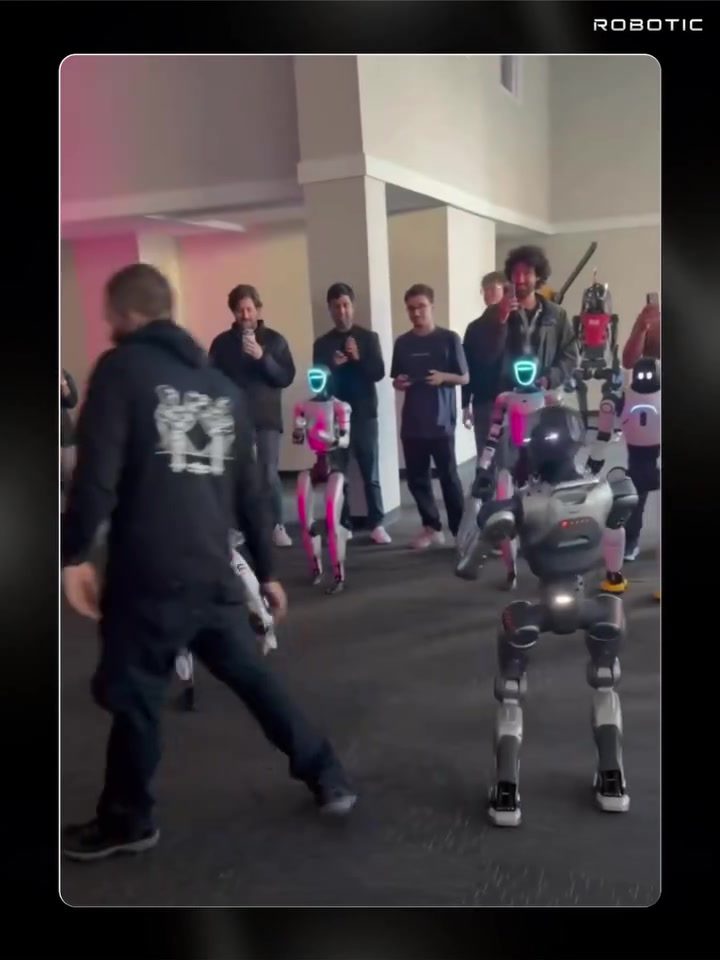
Demos of Humanoid Robots
The recent demonstration of humanoid robots at REK showcased the current advancements in humanoid robotics. The robots, controlled via virtual reality (VR), were not acting autonomously but were tested for remote control, balance, reaction timing, and real-world physical interaction. This event, which might have seemed like a robot “fight” to some, was a controlled public demonstration with a specific focus on understanding the current capabilities and limitations of humanoid robots.
Context
Why Humanoid Robots Matter
Humanoid robots are designed to mimic human movements and actions, making them versatile for various applications. From industrial automation to healthcare and even entertainment, these robots have the potential to revolutionize multiple sectors. The demonstration at REK highlighted the challenges and possibilities of integrating humanoid robots into real-world scenarios, which is crucial for future developments in this field.
Main Discussion
The Unitree G1 and EngineAI PM01
Two models that stood out during the demonstration were the Unitree G1 and the EngineAI PM01. These robots are notable for their affordability compared to older systems, making them more accessible for experimentation and development. This lower price point allows researchers and developers to explore the capabilities of humanoid robots without the high costs traditionally associated with such technology.
Remote Control and Balance
The primary focus of the demonstration was on remote control, balance, and reaction timing. The robots were piloted via VR, allowing operators to control their movements in real-time. This setup simulates real-world scenarios where remote control and immediate reaction are crucial. The robots’ movements were captured in slow motion and from multiple angles for a detailed analysis, showing their stability, balance, and precision.
Handling Real Physical Interaction
Another key aspect of the demonstration was how the robots handle physical interaction. Each slip, contact, and misstep was intentional, as these moments generate valuable data to improve robot control and interaction capabilities. By analyzing these interactions, developers can understand the limitations and possibilities of current humanoid technology, paving the way for future advancements.
The Importance of Real-World Testing
The messy slips, contacts, and missteps observed during the demonstration are not failures but rather opportunities for learning. Each physical interaction between the robots and their environment provides valuable data which can be analyzed to improve future performance. This hands-on approach allows developers to refine the robots' control systems and algorithms, ensuring they can handle real-world scenarios more effectively.
The Role of VR in Humanoid Robotics
The use of VR in controlling the humanoid robots was a significant feature of the demonstration. VR allows for a more immersive and precise control experience, enabling operators to respond quickly and accurately to the robots' movements. This technology enhances the interaction between the operator and the robot, making it easier to test and improve the robots' capabilities.
Practical Tips
Experimenting with Humanoid Robots
For those interested in experimenting with humanoid robots, the demonstration offers several practical tips:
- Start with Accessible Models: Models like the Unitree G1 and EngineAI PM01 provide a cost-effective entry point into humanoid robotics.
- Focus on Real-World Scenarios: Conduct tests that simulate real-world interactions to understand the robots' capabilities and limitations.
- Use VR for Control: Utilize VR for a more immersive and precise control experience, enabling quicker and more effective adjustments.
- Analyze Data: Every interaction, even the seemingly messy ones, can provide valuable data. Analyze these interactions to refine control algorithms and improve performance.
Developing with Humanoid Robots
Developing with humanoid robots requires a thorough understanding of their capabilities and limitations. The demonstration at REK provides insights into how to handle this:
- Real-World Interaction: Focus on how the robots handle real-world interactions, paying attention to balance, reaction timing, and physical contact.
- Control Systems: Enhance control systems by analyzing the data generated from physical interactions.
- Virtual Reality: Leverage VR for a more intuitive control experience, ensuring that the operators can respond quickly and accurately to the robots' movements.
- Iterative Testing: Conduct iterative testing to refine the robots' capabilities and performance, continually improving their control and interaction systems.
Important Takeaways
The Future of Humanoid Robotics
The demonstration at REK highlighted several critical aspects of humanoid robotics. The use of VR for control, the focus on real-world interactions, and the analysis of physical data are all key components in advancing this technology. As developers and researchers continue to refine these aspects, the future of humanoid robots looks promising, with potential applications in various sectors.
The Value of Real-World Testing
Real-world testing is essential for understanding the current capabilities and limitations of humanoid robots. The data generated from these tests is invaluable in refining control systems and algorithms, enabling more effective and efficient performance. By focusing on real-world scenarios, developers can ensure that humanoid robots are ready for practical applications.
The Role of Affordable Models
The accessibility of robots like the Unitree G1 and EngineAI PM01 is a significant step forward in humanoid robotics. These models provide a cost-effective way to experiment and develop, making the technology more accessible to a broader range of researchers and developers. This democratization of humanoid robotics is crucial for its continued advancement.
Conclusion
The demonstration of humanoid robots at REK provided a unique insight into the current state of humanoid robotics. By focusing on remote control, balance, reaction timing, and real-world interaction, developers can refine the capabilities of these robots, making them more effective and efficient. The use of VR for control, the focus on real-world testing, and the analysis of physical data are all key components in advancing this technology. As researchers and developers continue to build on these findings, the future of humanoid robots looks bright, with promising applications in various sectors.
Watch the Reel
Questions readers ask
What are some key applications of humanoid robots in different industries?
Humanoid robots have a wide range of applications. In industry, they can automate tasks that require complex movements, such as assembly or inspection. In healthcare, they can assist with patient care, rehabilitation, and even surgery. In entertainment, they can be used in performances, theme parks, and interactive experiences.
What were the main objectives of the recent humanoid robotics demo at REK?
The demo aimed to test and showcase the capabilities of humanoid robots in areas such as remote control, balance, reaction timing, and real-world physical interaction. It was not about autonomous action, but rather about understanding how well these robots can be controlled remotely using VR.
Which humanoid robots were featured in the recent demo?
The demonstration featured several humanoid robots, including the Unitree G1 and the EngineAI PM01. These robots were chosen for their advanced capabilities in balance and physical interaction, providing a clear view of the current state of humanoid robotics.
How are VR controllers used in humanoid robotics?
VR controllers are used to remotely operate humanoid robots, allowing users to control the robots' movements and actions in real-time. This method enables precise control and immediate feedback, which is crucial for tasks that require high levels of dexterity and responsiveness.
What are the benefits of using humanoid robots in industry?
Humanoid robots can perform tasks that are dangerous, repetitive, or physically demanding for humans. They can work in hazardous environments, reduce human error, and increase efficiency. Additionally, their ability to mimic human movements makes them suitable for tasks that require complex manipulations.
What is the significance of the balance and reaction timing tests in the robot demo?
Balance and reaction timing are crucial for humanoid robots, as they enable the robots to navigate environments safely and respond to changes effectively. These tests help assess the robots' stability, agility, and ability to handle unexpected situations.
What safety measures are typically in place during humanoid robot demonstrations?
During demonstrations, safety measures are paramount to prevent accidents. Robots are typically operated in controlled environments, and safety protocols are in place to monitor and manage the robots' actions. These measures ensure that the robots operate safely around humans and other objects.
Related deep dives
Similar reads based on topic and creator.


Recent articles
Fresh deep dives from the latest Reels we unpacked.




Comments
Be the first to comment.