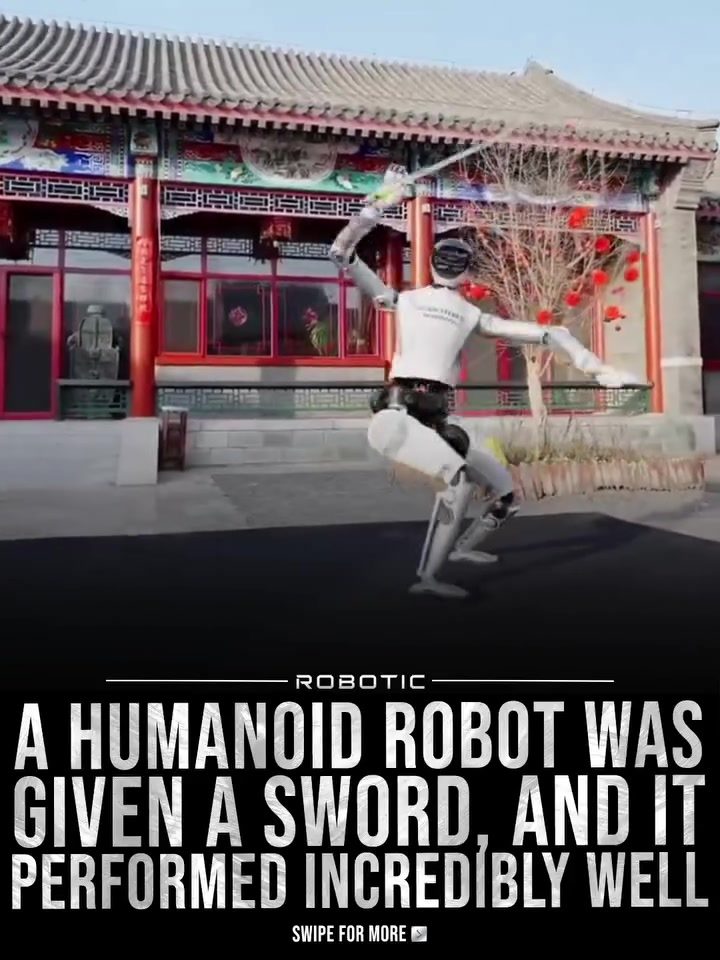
Humanoid Robots and Swordsmanship
Humanoid robots are increasingly pushing the boundaries of what machines can achieve, particularly in the realm of physical dexterity and agility. During a recent demonstration, the Robotera L7 humanoid robot showcased its remarkable capabilities by performing intricate sword movements inspired by traditional Chinese martial arts. This demonstration not only highlights the advancements in robotics but also underscores the potential for humanoid robots to master complex physical tasks.
Why This Matters
Humanoid robots are evolving rapidly, moving beyond simple walking and talking to more sophisticated movements and tasks. The ability to perform complex physical tasks is a significant milestone in robotics, opening up new possibilities for applications in various fields. The Robotera L7's sword demonstration showcases advancements in robotics and AI, emphasizing the potential for humanoid robots to handle intricate and precise movements.
Main Discussion
The Role of Degrees of Freedom
One of the key factors enabling the Robotera L7 to perform such intricate movements is its 55 degrees of freedom. Degrees of freedom refer to the number of independent parameters that define the configuration of a mechanical system. In the context of humanoid robots, this means the robot has a high level of flexibility and mobility, allowing it to execute complex movements with precision.
The Robotera L7's 55 degrees of freedom enable advanced movement across its arms, hands, and body. This flexibility is crucial for performing tasks that require intricate coordination and control, such as swordsmanship. The robot's ability to leverage this flexibility showcases the progress in robotics and AI, demonstrating how machines can now handle tasks that were once thought to be uniquely human.
The Art of Swordsmanship
The Robotera L7's sword performance showcased a range of movements inspired by traditional Chinese martial arts. The robot executed rapid strikes, spins, kicks, and coordinated full-body movements while maintaining control of the weapon. This level of precision and agility is a testament to the advancements in robotics and AI, highlighting the potential for humanoid robots to handle complex physical tasks.
The fact that the robot performed these movements in a setting reminiscent of traditional Chinese martial arts adds another layer of fascination. Martial arts require a high level of balance, coordination, and real-time control, all of which the Robotera L7 demonstrated with impressive agility. This performance not only showcases the robot's capabilities but also underscores the potential for humanoid robots to interact with and master complex tasks.
The Future of Movement in Robotics
The Robotera L7's demonstration highlights a future where robots aren't just about intelligence but also about mastering movement. While robots still have a long way to go compared to human dexterity, performances like this show how quickly humanoid robotics is evolving. The future of robots may not just be about intelligence; it may be about mastering movement, enabling them to handle complex physical tasks with precision and agility.
As robotics continues to advance, we can expect to see more demonstrations of humanoid robots performing intricate and complex physical tasks. The Robotera L7's sword performance is a glimpse into a future where robots can handle tasks that require a high level of physical dexterity and agility. This evolution in robotics has the potential to revolutionize various fields, from manufacturing and healthcare to entertainment and beyond.
Practical Tips
For those interested in exploring the world of humanoid robotics and swordsmanship, here are some practical tips:
Understanding the Basics
Before diving into the advanced aspects, it's essential to understand the basics of robotics and AI. Familiarize yourself with concepts such as degrees of freedom, motor control, and sensory feedback. These foundational concepts will provide a solid basis for understanding how humanoid robots perform complex tasks.
Exploring Martial Arts
Since the Robotera L7's demonstration was inspired by traditional Chinese martial arts, exploring martial arts can provide valuable insights. Understand the movements, techniques, and principles behind martial arts. This knowledge can help you appreciate the complexity and precision required for tasks like swordsmanship.
Hands-On Learning
Engaging in hands-on learning can be incredibly beneficial. Participate in robotics workshops, join robotics clubs, or even build your own robots. Hands-on experience will give you a deeper understanding of the challenges and innovations in robotics and AI.
Staying Updated
The field of robotics is continually evolving, so staying updated with the latest advancements is crucial. Follow robotics news, attend conferences, and engage with the robotics community. This will help you stay informed about the latest developments and innovations in the field.
Important Takeaways
The Robotera L7's sword demonstration highlights several important takeaways:
- Advancements in Robotics and AI: The performance showcases the rapid advancements in robotics and AI, demonstrating how humanoid robots can handle complex physical tasks with precision and agility.
- Degrees of Freedom: The robot's 55 degrees of freedom enable intricate movements and coordination, crucial for tasks requiring high levels of dexterity.
- Mastering Movement: The future of robotics may be about mastering movement, enabling robots to handle tasks that require physical dexterity and agility.
- Interdisciplinary Applications: The integration of martial arts and robotics highlights the interdisciplinary potential of robotics, opening up new possibilities for applications in various fields.
Conclusion
The Robotera L7's sword demonstration is a testament to the rapid advancements in robotics and AI. Humanoid robots are no longer just walking and talking; they are becoming more agile, precise, and capable of complex physical tasks. As the field continues to evolve, we can expect to see more demonstrations of robots mastering intricate movements and tasks. Whether in manufacturing, healthcare, or entertainment, the future of robotics is poised to revolutionize various industries. The path forward involves not just enhancing intelligence but also mastering movement, paving the way for a new era of humanoid robotics.
Watch the Reel
Questions readers ask
What makes the Robotera L7's swordsmanship demonstration significant?
The Robotera L7's demonstration is significant because it showcases the robot's ability to perform intricate and precise movements, inspired by traditional Chinese martial arts. This highlights the advancements in robotics and the potential for humanoid robots to master complex physical tasks, moving beyond simple walking and talking.
How does the Robotera L7's performance indicate advancements in robotics?
The Robotera L7's performance indicates advancements in robotics by demonstrating precise body control and agility. These capabilities are crucial for executing complex physical tasks, such as swordsmanship, and open up new possibilities for the future of robotics in various applications.
What types of movements did the Robotera L7 perform during its demonstration?
During its demonstration, the Robotera L7 performed intricate and precise sword movements inspired by traditional Chinese martial arts. These movements required a high degree of agility, body control, and coordination, showcasing the robot's advanced capabilities.
How does the Robotera L7's demonstration relate to the future of robotics?
The Robotera L7's demonstration provides a glimpse into the future of robotics by showcasing the potential for humanoid robots to perform complex and precise physical tasks. This opens up new possibilities for robots in various fields, from manufacturing to interactive entertainment, where advanced agility and dexterity are crucial.
What are some potential applications for humanoid robots with advanced agility and dexterity?
Humanoid robots with advanced agility and dexterity, like the Robotera L7, could have applications in various fields. These include advanced manufacturing, healthcare, and interactive entertainment. Their ability to perform complex physical tasks could revolutionize how humans and robots interact and collaborate.
What challenges are involved in programming a humanoid robot for swordsmanship?
Programming a humanoid robot for swordsmanship involves overcoming several challenges, including precise body control, coordination, and agility. The robot must be programmed to mimic the intricate movements of traditional martial arts, which require a high degree of dexterity and timing. Additionally, the robot must be able to adapt to different environments and scenarios, making real-time adjustments as needed.
How might the Robotera L7's demonstration influence other robotics developments in China and globally?
The Robotera L7's demonstration could influence other robotics developments in China and globally by setting a new benchmark for humanoid robot agility and dexterity. It showcases the potential for robots to excel in complex physical tasks, inspiring further research and development in advanced robotics movements and applications.
Related deep dives
Similar reads based on topic and creator.



Recent articles
Fresh deep dives from the latest Reels we unpacked.




Comments
Be the first to comment.