Humanoid Robots and the Challenges of Advanced Dance Moves
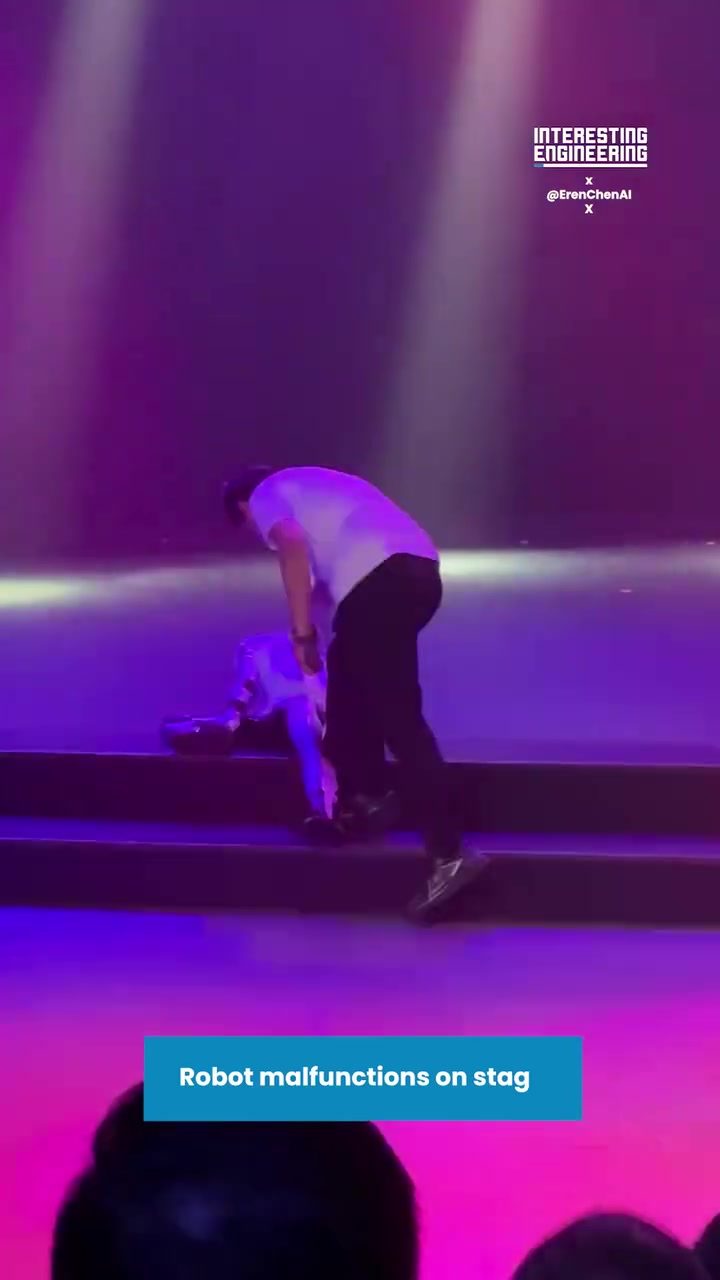
Humanoid robots have long captured the imagination of scientists and enthusiasts alike, showcasing the potential to revolutionize various fields, from healthcare to entertainment. However, a recent incident highlights the ongoing challenges these robots face, particularly when it comes to executing complex movements. A humanoid robot performing Michael Jackson dance moves on stage tripped on the stairs and lost its balance. As the show continued, the malfunctioning robot was unable to get back up and had to be pulled off the stage by a staff member. The incident has sparked a discussion about the current capabilities and limitations of humanoid robots.
Context / Why This Matters
The development of humanoid robots is a rapidly evolving field, driven by advancements in artificial intelligence, robotics, and machine learning. These robots are designed to mimic human movements and capabilities, with the ultimate goal of performing tasks that require human-like dexterity and mobility. One of the key areas of research is in the domain of entertainment, where humanoid robots are used to perform intricate dance moves and other complex movements. However, as the incident highlights, these robots are still prone to technical difficulties and malfunctions, particularly when dealing with unexpected obstacles or movements.
Challenges in Humanoid Robotics
Complex Movements and Balance
Humanoid robots are designed to mimic human movements, but executing precise and complex movements, such as Michael Jackson dance moves, poses significant challenges. These movements require a high degree of balance, coordination, and precise control over the robot's joints and limbs. Achieving these capabilities involves advanced sensors, actuators, and control algorithms, which are still being refined.
Balance and Stability: Maintaining balance while performing complex dance moves is a critical challenge. The robot's ability to stay upright and stable relies on its sensors and control systems, which must be finely tuned to handle sudden changes in movement or unexpected obstacles. The incident where the robot tripped on the stairs highlights the fragility of this balance.
Technical Malfunctions
Technical malfunctions can occur due to a variety of factors, including software glitches, hardware failures, and sensor issues. These malfunctions can disrupt the robot's performance and potentially cause it to malfunction in unpredictable ways. In the case of the robot performing Michael Jackson dance moves, a technical malfunction led to the robot losing its balance and falling on the stage. This underscores the need for more robust and reliable systems in humanoid robots.
Environmental Adaptability
Humanoid robots must be able to adapt to different environments and conditions. This includes navigating uneven surfaces, dealing with obstacles, and responding to unexpected changes in the environment. The incident highlights the challenges of performing in a live setting, where the robot must contend with factors such as stage design, lighting, and audience interaction.
Practical Tips for Robotic Performances
Thorough Testing and Simulation
Before deploying a robot in high-stakes performance, thorough testing and simulation are essential. This includes rigorous testing in a controlled environment to identify potential failures and ensure the robot can handle the expected movements and conditions. Simulation tools can also be used to model and analyze the robot's performance under various scenarios, allowing engineers to refine the control algorithms and hardware.
Regular Maintenance and Updates
Regular maintenance and updates are critical for ensuring the reliability of humanoid robots. This includes routine inspections, software updates, and hardware replacements as needed. Keeping the robot's systems up-to-date can help prevent technical malfunctions and ensure smooth performance.
Human Assistance and Intervention
Having a human team ready to intervene in case of malfunctions is crucial. In the case of the robot performing on stage, a staff member was able to assist the robot and prevent further disruption. This highlights the importance of having a backup plan and human support to manage unexpected situations.
Important Takeaways
The incident involving the humanoid robot performing Michael Jackson dance moves underscores the challenges and limitations of current robotics technology. While significant progress has been made in developing humanoid robots, there are still many obstacles to overcome. These challenges are especially pronounced in high-stakes performances, where precision, balance, and adaptability are critical.
Conclusion
Humanoid robots hold immense potential for a wide range of applications, from entertainment to healthcare. However, as the incident shows, there is still much work to be done in refining their capabilities. By understanding the challenges and limitations of current technology, we can better appreciate the ongoing advancements and the steps needed to achieve more reliable and versatile robots. As we continue to push the boundaries of robotics, we must strive for more robust systems that can handle the complexities of real-world environments and unexpected situations.
Watch the Reel
Questions readers ask
What caused the humanoid robot to malfunction during its dance performance?
The humanoid robot experienced a malfunction due to issues with balance and coordination. Specifically, it tripped while attempting to perform complex dance moves, similar to those of Michael Jackson, and was unable to recover. This highlights the ongoing challenges in robotics and AI when it comes to executing intricate movements.
How did the incident unfold during the performance?
During a live performance, the robot attempted to execute a series of complex dance moves and lost its balance, resulting in a fall. Despite efforts, it could not regain its footing and had to be assisted off the stage by a staff member, causing a disruption to the show.
What are the key challenges faced by humanoid robots in performing advanced dance routines?
Humanoid robots face several key challenges, including maintaining balance, coordinating movements, and preventing technical malfunctions. These issues are exacerbated by the complexity of dance routines, which require precise and fluid motions.
Why is the incident significant for the field of robotics?
The incident underscores the current limitations and safety challenges in robotics and AI, particularly in real-world applications. It serves as a reminder of the need for continued advancements to ensure reliable and safe performance of humanoid robots in public settings.
What measures can be taken to prevent such malfunctions in the future?
To prevent future malfunctions, researchers can focus on improving balance algorithms, enhancing coordination systems, and conducting thorough testing under various conditions. Additionally, implementing safety protocols can help mitigate risks during live performances.
Have there been similar incidents involving humanoid robots in the past?
Yes, there have been several incidents where humanoid robots have faced issues with balance and coordination, especially during live performances. These incidents often highlight the same underlying challenges, emphasizing the need for robust solutions in robotics and AI.
What are the potential impacts of these incidents on the public's perception of robotics?
Such incidents can influence public perception by raising awareness about the current limitations of robotics and AI. While they may spark concern, they also generate interest and curiosity, encouraging discussions and advancements in the field. It is important for developers to address these issues proactively to build public trust and confidence in robotics.
Related deep dives
Similar reads based on topic and creator.


Recent articles
Fresh deep dives from the latest Reels we unpacked.




Comments
Be the first to comment.