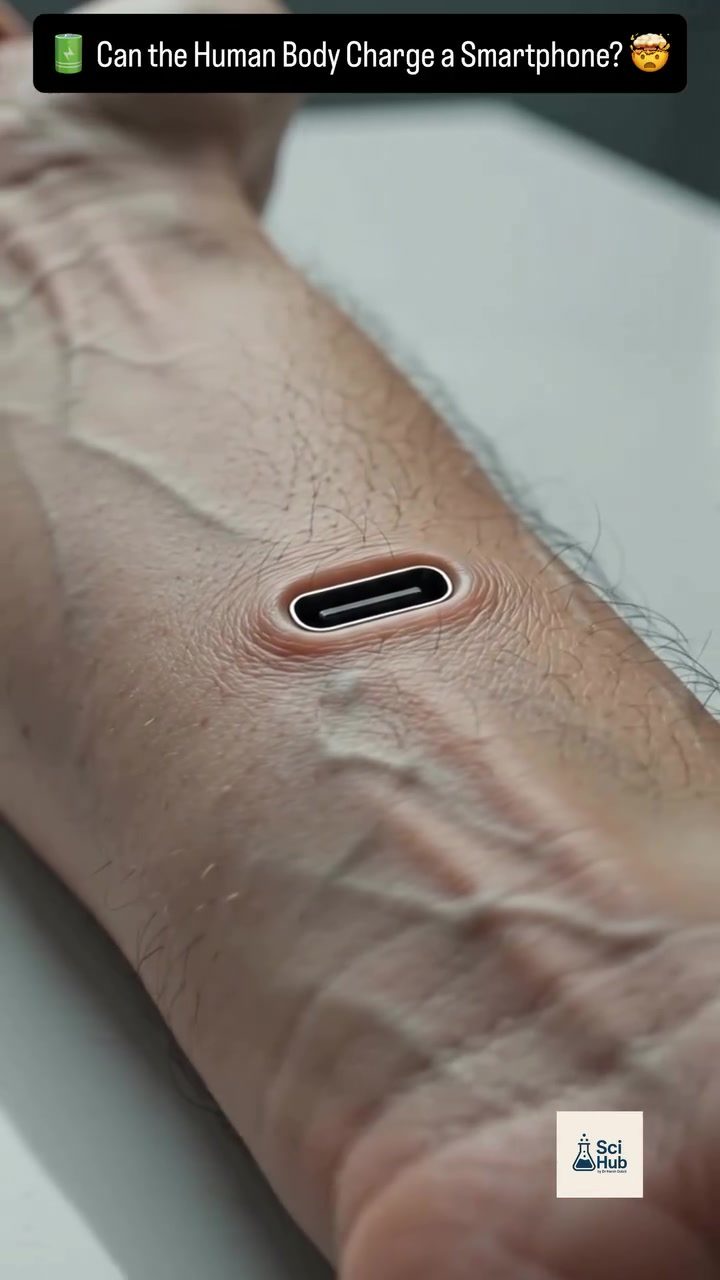
Human Body Electricity
Electricity is a fundamental aspect of our everyday lives, powering everything from smartphones to medical devices. But what if your body had a charging port? Could it actually charge your phone? This intriguing question leads us into an exploration of the human body's electrical systems and the fascinating world of neurobiology.
Why This Matters
Understanding the electrical signals within the human body offers insights into biology, neurology, and the potential for future medical advancements. The human nervous system is a complex network of neurons that transmit electrical impulses to control every movement, heartbeat, and thought. These tiny electrical signals are essential for life, but they are far too weak to power a smartphone. However, exploring this concept can open doors to innovative medical technologies and a deeper appreciation for the human body's intricate workings.
The Science of Human Body Electricity
The Basics of Neural Communication
The human body produces electricity in the form of tiny electrical signals that travel through billions of neurons. These signals allow the brain to communicate with muscles, the heart, and every part of the body. Unlike the steady flow of electricity required to charge a smartphone, these neural impulses are designed to carry information, not electrical power. They are essential for life but far too small to charge a smartphone.
The Difference Between Neural and Electronic Power
The electricity inside the human body is fundamentally different from the electrical power that charges electronic devices. Neural signals are weak and designed for information transfer, while electronic devices require a steady flow of much stronger electricity. A smartphone, for example, needs a consistent and powerful electrical supply to function, which the human body simply cannot produce. This distinction highlights the unique roles of electricity in biological and technological contexts.
The Nervous System: A Natural Electrical Network
The nervous system is one of the most amazing electrical networks in nature. It consists of neurons that communicate using electrical signals. These signals control everything from muscle movements to heartbeats and thought processes. The brain, spinal cord, and peripheral nerves form an intricate network that ensures the body's proper functioning. However, the electrical signals in this network are not strong enough to power external devices.
The Human Body as an Energy Source
While the electricity generated by the human body is not sufficient to charge electronic devices, it is crucial for sustaining life. The body's electrical activity is a marvel of nature, allowing for complex functions such as muscle contraction, neural communication, and organ regulation. The intricate web of electrical signals within the body supports countless physiological processes, making it a fascinating subject of study for scientists and researchers.
Practical Tips for Understanding Human Body Electricity
Exploring the Fascinating World of Neuroscience
If you're curious about the electrical signals in the human body, delving into the field of neuroscience can provide a wealth of knowledge. Explore books, documentaries, and online courses that cover topics such as neural communication, brain function, and the nervous system. Understanding the basics of neuroscience can help you appreciate the complexity and importance of electrical signals in the human body.
Engaging with Scientific Resources
Scientific resources, such as research papers, scientific journals, and educational platforms, offer in-depth insights into the human body's electrical systems. Look for reliable sources that provide accurate and comprehensive information on neural communication, the nervous system, and related topics. Engaging with these resources can deepen your understanding of how the body's electrical signals work and their implications for human health and technology.
Join Online Science Communities
Joining online science communities, forums, and discussion groups can provide opportunities to learn from experts and fellow enthusiasts. Participate in forums, ask questions, and share your thoughts on topics related to human body electricity. Engaging with a community of like-minded individuals can enhance your knowledge and provide valuable perspectives on the subject.
Follow Science Channels and Experts
Following science channels and experts on social media platforms can keep you updated on the latest discoveries and advancements in the field of human body electricity. Dr. Harsh Gulati and other experts in the field provide informative content, insightful explanations, and engaging visuals that can help you better understand the complexities of human body electricity.
Important Takeaways
- The human body produces tiny electrical signals that control every movement, heartbeat, and thought, but these signals are far too weak to power electronic devices.
- Unlike the steady flow of electricity required to charge electronic devices, neural signals are designed to carry information, not electrical power.
- The nervous system is a complex network of neurons that form one of the most amazing electrical networks in nature.
- The electricity inside the human body is essential for life, but it is fundamentally different from the electrical power used to charge electronic devices.
Conclusion
The human body's electrical systems are a marvel of nature, supporting countless physiological processes and ensuring the proper functioning of the body. While the electricity generated by the human body is not strong enough to charge electronic devices, it plays a crucial role in sustaining life. Exploring the fascinating world of neuroscience and engaging with scientific resources can deepen our understanding of the human body's electrical signals and their implications for human health and technology. The intricate web of electrical signals within the body is a testament to the beauty and complexity of the human body's design.
Watch the Reel
Questions readers ask
How does the human body generate electricity?
The human body generates electricity through the movement of ions, specifically sodium and potassium, across cell membranes. This process creates electrical impulses, known as action potentials, which are used by neurons to transmit signals throughout the body.
Can the electrical signals in the human body be harnessed to power devices?
While the human body does produce electrical signals, they are extremely weak and not sufficient to power everyday devices like smartphones. These signals are crucial for biological functions, but their energy output is far lower than what is required to charge a phone.
What are the main components of the human body's electrical system?
The main components are neurons and the nervous system. Neurons transmit electrical impulses, and the nervous system is the network that facilitates communication between different parts of the body, enabling movements, sensations, and cognitive functions.
How do neural signals contribute to medical advancements?
Neural signals play a crucial role in medical advancements by providing insights into how the brain and nervous system function. Understanding these signals can help in developing treatments for neurological disorders and improving medical technologies that rely on bioelectric signals.
Is there potential for future technologies to utilize the human body's electricity?
While current technology cannot utilize the human body's electricity to power external devices, ongoing research in bioelectricity and neurobiology may lead to future innovations. These could include medical devices that interface more seamlessly with the human body, utilizing its natural electrical signals.
Why can't the human body's electricity power a smartphone?
The electrical signals generated by the human body are far too weak to power a smartphone. A typical smartphone requires a significant amount of power, usually measured in watts, while the body's electrical signals are measured in microvolts, which are thousands of times weaker.
What are some practical applications of understanding human body electricity?
Practical applications include advancements in prosthetics, brain-computer interfaces, and diagnostic tools. By understanding and utilizing the electrical signals in the human body, scientists and engineers can create more effective and efficient medical technologies that improve quality of life for patients.
Related deep dives
Similar reads based on topic and creator.



Recent articles
Fresh deep dives from the latest Reels we unpacked.




Comments
Be the first to comment.