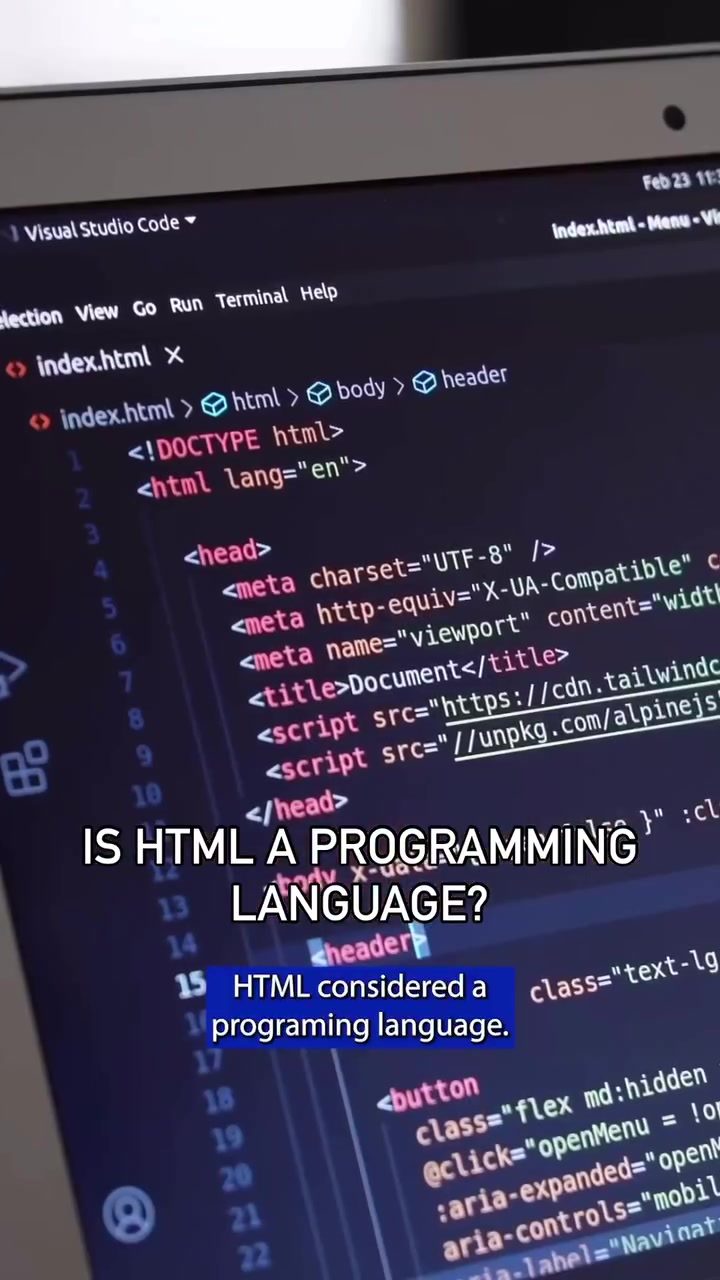
HTML: Programming Language or Markup Language?
HTML, or Hypertext Markup Language, is a fundamental technology for creating and structuring content on the web. However, the question of whether HTML is a programming language is a topic that often sparks debate among tech professionals.
Context / Why This Matters
Understanding the distinction between HTML and programming languages is crucial for anyone involved in web development. It helps clarify the roles of different technologies and how they work together to build functional and visually appealing websites. This knowledge is particularly important for beginners who are just starting to learn web development and for professionals who need to communicate effectively with their teams.
Main Discussion
The Technical Debate
The debate surrounding HTML's classification as a programming language hinges on its technical definition. HTML is technically called a markup language. This distinction is essential because it highlights the differences between HTML and traditional programming languages like JavaScript, Python, or Java.
Markup languages, such as HTML, are used to annotate text with tags that define how content should be displayed. These tags provide structure to the content, making it easier to read and navigate. In contrast, programming languages are designed to instruct a computer to perform specific tasks and make decisions based on input.
The Role of HTML in Web Development
While HTML is not a programming language, it plays a critical role in web development. It is the backbone of modern websites, providing the structure and layout that define how content is displayed. Without HTML, web pages would lack organization, and users would struggle to navigate through the content.
Think of HTML as the blueprint of a building. Just as a blueprint outlines the structure and layout of a building, HTML outlines the structure and layout of a web page. While a blueprint doesn't construct the building, it is essential for the construction process. Similarly, HTML doesn't execute the logic or functionality of a web page, but it is essential for displaying the content.
The Importance of HTML in Web Development
HTML's role in web development cannot be overstated. It is the foundation upon which all other web technologies are built. Without HTML, it would be impossible to create interactive and dynamic web pages. HTML provides the structure that other technologies, such as CSS and JavaScript, rely on to enhance the visual appeal and interactivity of web pages.
HTML's importance is further highlighted by its inclusion in the core technologies of the web. Alongside CSS (Cascading Style Sheets) and JavaScript, HTML forms the trinity of web development. CSS is used to style and layout HTML content, while JavaScript is used to add interactivity and functionality to web pages.
Practical Tips
-
Learn the Basics First: Before diving into more complex programming languages, it's essential to have a solid understanding of HTML. This will provide a strong foundation for learning other web technologies.
-
Understand the Role of HTML: Recognize that HTML is used to structure and organize content on the web. It is not designed to perform complex tasks or make decisions, but it is crucial for defining the layout and structure of a web page.
-
Practice with HTML: Start by building simple web pages using HTML. Experiment with different tags and attributes to see how they affect the layout and structure of the content. This hands-on practice will help solidify your understanding of HTML.
-
Build Complete Projects: After mastering the basics of HTML, start building complete web projects that incorporate HTML, CSS, and JavaScript. This will give you a well-rounded understanding of how these technologies work together to create functional and visually appealing web pages.
Important Takeaways
-
HTML is a markup language, not a programming language: Understanding this distinction is crucial for anyone involved in web development.
-
HTML provides the structure for web pages: Without HTML, web pages would lack organization, and users would struggle to navigate through the content.
-
HTML is essential for web development: It is the foundation upon which all other web technologies are built. Without HTML, it would be impossible to create interactive and dynamic web pages.
-
HTML's importance lies in its role as the blueprint of the web: Just as a blueprint outlines the structure and layout of a building, HTML outlines the structure and layout of a web page.
Conclusion
HTML is a cornerstone of web development, providing the structure and layout that define how content is displayed on the web. While it is not a programming language, its role in web development is indispensable. Understanding the distinction between HTML and programming languages is essential for anyone involved in web development. This knowledge will help clarify the roles of different technologies and how they work together to build functional and visually appealing websites.
Watch the Reel
Questions readers ask
What is the primary function of HTML in web development?
HTML's primary function is to structure and organize content on the web. It uses a series of tags to define elements like headings, paragraphs, links, and images, ensuring that the content is properly formatted and accessible on various devices and browsers.
How does HTML differ from programming languages like JavaScript or Python?
While HTML defines the structure and layout of web content, programming languages like JavaScript or Python focus on functionality and logic. HTML uses a set of predefined tags and does not support complex operations or algorithms, unlike programming languages.
Why is it important to understand HTML as a markup language, not a programming language?
Recognizing HTML as a markup language helps clarify its role in web development. This understanding is essential for effective communication among developers, as it distinguishes HTML's purpose from that of programming languages, which handle dynamic content and user interactions.
What are some basic components of HTML syntax?
Basic components of HTML syntax include opening and closing tags, attributes, and elements. For example, an HTML paragraph tag is written as <p> for opening and </p> for closing, and it can have attributes like class or id to provide additional information about the element.
Can HTML be used to create interactive web pages on its own?
HTML alone is not sufficient for creating interactive web pages. While it structures the content, HTML relies on other technologies like CSS for styling and JavaScript for interactivity. These technologies work together to create a rich and functional web experience.
What are some common HTML markup tags that beginners should know?
Beginners should familiarize themselves with common HTML tags such as <html>, <head>, <title>, <body>, <h1> to <h6>, <p>, <a>, <img>, <ul>, <ol>, and <li>. These tags form the foundation of web content structure and are essential for creating well-organized and accessible web pages.
How does HTML contribute to the overall structure of a web page?
HTML contributes to the structure of a web page by defining a hierarchy of content using nested tags. This structure allows browsers to interpret and display the content correctly, ensuring that headings, paragraphs, lists, and other elements are presented in a logical and coherent manner.
Related deep dives
Similar reads based on topic and creator.


Recent articles
Fresh deep dives from the latest Reels we unpacked.




Comments
Be the first to comment.