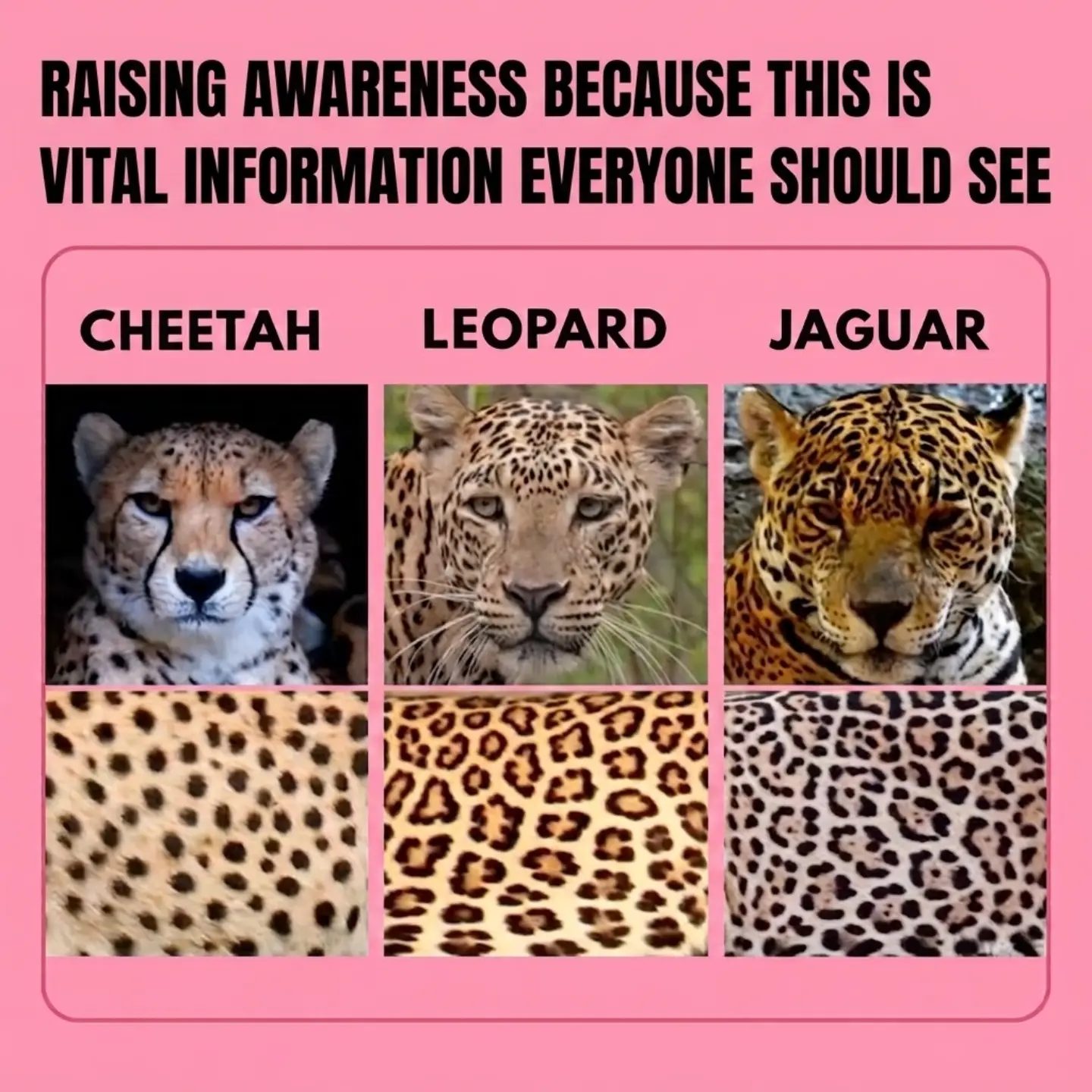
Big Cat Identification: A Quick Guide
Ever come across a big cat and wondered which species you were looking at? Big cats are fascinating and powerful animals, but their similarities can make identification a challenge. This guide will help you distinguish between three magnificent big cats: cheetahs, leopards, and jaguars.
Why This Matters
Identifying big cats accurately is more than just an interesting skill; it's crucial for conservation efforts, wildlife management, and environmental awareness. Knowing how to tell these animals apart can help you appreciate their unique roles in their ecosystems and understand the threats they face.
Main Discussion
Cheetahs: The Speedsters
Cheetahs are renowned for their incredible speed, making them one of the fastest land animals on Earth. Their distinctive features make them easily identifiable:
- Spot Pattern: Cheetahs have single, solid black spots that cover their entire body. These spots are not hollow like those of leopards or jaguars.
- Tear Tracks: One of the most recognizable features of cheetahs are the "tear tracks" or black stripes that run from the corners of their eyes down to the sides of their mouth.
- Build: Cheetahs have a slim, athletic build designed for pure speed and agility.
Leopards: The Climbers
Leopards are known for their exceptional climbing abilities and powerful rosette patterns:
- Rosettes: Leopards have hollow, rose-like ring patterns called rosettes. These rosettes have no spots inside and have a distinctive empty center.
- Habitat: Leopards are often found in dense forests and wooded areas, where their climbing skills are particularly useful.
- Build: Leopards have a muscular build that allows them to climb trees effortlessly and haul large prey up into branches.
Jaguars: The Powerhouses
Jaguars are the largest cats in the Americas and are known for their powerful build and unique rosettes:
- Rosettes with Spots: Jaguars have rosettes similar to leopards, but with a key difference—each rosette contains smaller spots inside.
- Head and Frame: Jaguars have a much broader head and a more stocky frame compared to cheetahs and leopards, giving them a powerful and robust appearance.
- Habitat: Jaguars are typically found in tropical rainforests, grasslands, and deserts, where they are at the top of the food chain.
Practical Tips
Spot the Differences
When trying to identify a big cat, start by looking at the fur patterns. Cheetahs' solid spots and leopards' hollow rosettes are the most noticeable differences. Jaguars' rosettes with spots inside are a clear indicator of their species. Additionally, observe the animal's build: cheetahs are slim and agile, leopards are muscular and climb trees, and jaguars boast a powerful, stocky frame.
Know the Habitat
Each big cat species has a preferred habitat. Cheetahs are often seen in open savannahs, leopards in forests and woodlands, and jaguars in a variety of habitats from rainforests to deserts.
Important Takeaways
Cheetahs are built for speed, with solid spots and distinctive tear tracks. Leopards are climbers with hollow rosettes and a muscular build. Jaguars are powerful, with rosettes containing smaller spots and a broader, stockier frame.
Knowing these differences can greatly enhance your appreciation for these magnificent animals and their unique roles in nature.
Conclusion
Identifying big cats can be a rewarding experience that deepens your connection to the natural world. Whether you're a wildlife enthusiast, a conservationist, or simply someone who loves nature, being able to tell cheetahs, leopards, and jaguars apart is a valuable skill. So, next time you see a big cat, take a moment to observe its features and appreciate the diversity of these incredible animals.
Watch the Reel
Questions readers ask
What are the key differences between cheetah and leopard spots?
Cheetahs have distinctive black spots all over their body, while leopards have rosettes, which are larger, darker spots with small spots inside. Additionally, cheetahs have unique tear marks running from the corners of their eyes to their mouth, which are absent in leopards.
How can I tell if it is a leopard or a jaguar?
Leopards and jaguars both have rosettes, but jaguars have small spots inside their rosettes. Leopards are typically found in Africa and Asia, while jaguars are native to the Americas. Additionally, jaguars have a more muscular build and a more stocky body than leopards.
Why are cheetah tear marks important for identification?
Cheetah tear marks are a unique feature that sets them apart from other big cats. These distinctive marks run from the corners of the cheetah's eyes down to the sides of their nose, resembling tear streaks. This feature is not present in leopards or jaguars, making it a key identifier for cheetahs.
What are jaguar rosettes and how do they differ from leopard spots?
Jaguar rosettes are distinctive circular markings that cover the jaguar's body. Unlike leopard spots, jaguar rosettes often have small spots inside them. This unique pattern is a key identifier for jaguars and helps distinguish them from leopards, which have rosettes without small spots inside.
How does the behavior of cheetahs, leopards, and jaguars differ?
Cheetahs are known for their incredible speed and often hunt by running down their prey. Leopards, on the other hand, are excellent climbers and often drag their prey up into trees to keep it safe from competitors. Jaguars are powerful swimmers and often hunt by ambushing their prey from the water or by climbing trees.
Can a black jaguar be mistaken for a leopard?
A black jaguar, also known as a black panther, can be mistaken for a leopard due to their similar dark coloration. However, black jaguars have the same distinctive rosette pattern with small spots inside, which can be seen if the lighting is bright enough. Leopards, on the other hand, have rosettes without small spots inside and are typically more slender than jaguars.
What should I do if I encounter a big cat in the wild?
If you encounter a big cat in the wild, it is important to keep a safe distance and never approach or provoke the animal. Observe from afar and use binoculars or a camera with a telephoto lens to get a closer look. If you are in an area with big cats, always follow local guidelines and be aware of your surroundings.
Related deep dives
Similar reads based on topic and creator.


Recent articles
Fresh deep dives from the latest Reels we unpacked.


Comments
Be the first to comment.