The Cycle of Fear: Understanding and Overcoming Universal Anxiety
Fear is a powerful and universal emotion that affects every living being. From the smallest cockroach to the most dominant human, everyone has something they fear. This "Cycle of Fear" is a concept that illustrates the interconnected nature of fear, showing how one entity's fear is another's power. Understanding this cycle can provide valuable insights into our own fears and how to manage them.
Why This Matters
Fear is a natural and often necessary emotion that has evolved to keep us safe. It triggers our fight-or-flight response, helping us to avoid danger. However, when fear becomes overwhelming or irrational, it can limit our potential and hinder our ability to live fulfilling lives. Recognizing the universality of fear and the role it plays in our daily lives is the first step in managing it effectively.
The Cycle of Fear
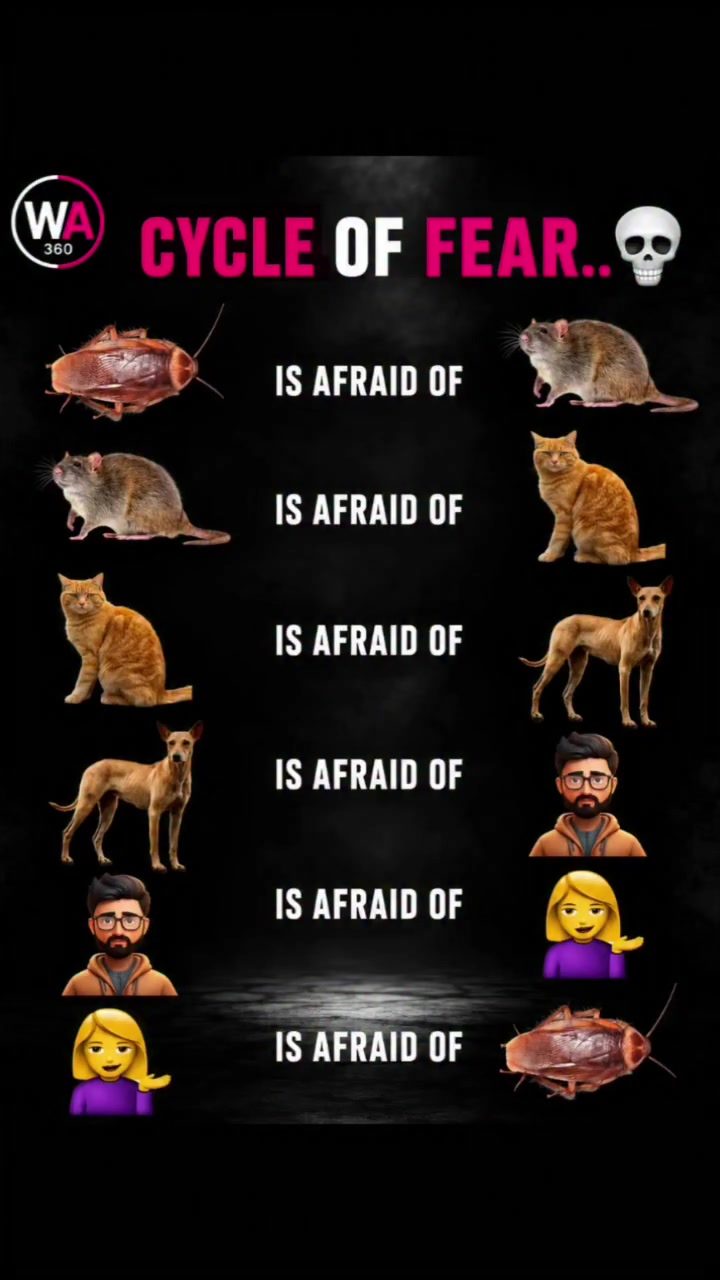
The Cycle of Fear is a visual representation of how fear connects different beings in a never-ending chain. Here’s a breakdown of the cycle:
The Chain of Fear
- Cockroach fears a rat: Cockroaches are small and vulnerable, making them easy prey for rats.
- Rat fears a cat: Rats, while small, are still larger than cockroaches and have a larger territory to defend. Thus a cat is more threatening.
- Cat fears a dog: Cats are agile and independent, but they are still smaller than many dogs and can be hunted by them.
- Dog fears a human: Dogs, despite their size and strength, are domesticated and depend on humans for care and companionship.
- Human fears...: Humans, at the top of the food chain, have complex fears that range from the physical to the psychological, like fear of failure, rejection, and the unknown.
This cycle illustrates that fear is not a sign of weakness but a natural response to perceived threats. By understanding this, we can begin to see that everyone, regardless of their position in the hierarchy, has fears to overcome.
Breaking the Cycle
The key to breaking the cycle of fear is not to eliminate fear entirely but to learn how to manage and overcome it. Here are some steps to help you break free from the grip of fear:
- Accept Fear as a Natural Emotion: The first step is to acknowledge that fear is a natural and necessary part of life. It is okay to feel afraid, and it does not define your strength or courage.
- Identify Your Fears: Take the time to identify what you are afraid of. This could be anything from public speaking to financial insecurity. Once you identify your fears, you can start to address them.
- Face Your Fears: Confronting your fears head-on can be challenging, but it is often the most effective way to overcome them. This could mean taking small steps towards your fear or seeking professional help if necessary.
- Build Confidence: Confidence is key to overcoming fear. You can build confidence by setting and achieving small, manageable goals. Each success will give you the courage to take on larger challenges.
- Seek Support: Don’t be afraid to reach out to friends, family, or professionals for support. Sometimes, just talking about your fears can make them seem less daunting.
Practical Tips for Overcoming Fear
Start Small
When facing your fears, it’s essential to start small. Break down your fears into smaller, manageable parts and tackle them one at a time. For example, if you fear public speaking, start by practicing in front of a small group of friends or family before moving on to larger audiences.
Practice Mindfulness
Mindfulness and meditation can help you stay grounded and focused when facing your fears. These practices can help you stay present and reduce anxiety, making it easier to manage your fears.
Reframe Your Thoughts
The way you think about fear can significantly impact how you experience it. Instead of viewing fear as a negative emotion, try to reframe it as a natural response to a challenge. This shift in perspective can help you see fear as an opportunity for growth rather than a barrier to success.
Develop a Support Network
Having a support network of friends, family, or professionals can provide valuable encouragement and guidance as you face your fears. Surround yourself with people who believe in you and can offer support when you need it.
Important Takeaways
Understanding the Cycle of Fear can provide valuable insights into our own fears and how to manage them. By accepting fear as a natural emotion, identifying our fears, and actively working to overcome them, we can break free from the cycle of fear and live more fulfilling lives.
Remember, courage is not the absence of fear but the ability to move forward despite it. The strongest people are not those who never feel fear but those who refuse to let fear define their future. By choosing confidence over doubt and action over hesitation, you can overcome any obstacle and become stronger than ever before.
Conclusion
Fear is a powerful and universal emotion that affects every living being. By understanding the Cycle of Fear and taking practical steps to manage and overcome our fears, we can break free from its grip and live more fulfilling lives. Whether it's public speaking, financial insecurity, or any other fear, remember that everyone experiences fear, and it is okay to seek help and support. Embrace your fears as opportunities for growth, and you will find the strength and courage to overcome them.
Watch the Reel
Questions readers ask
What is the 'Cycle of Fear' and how does it relate to humans and animals?
The 'Cycle of Fear' is a concept that shows how fear in one living being can create a power or threat to another. Fear is a universal emotion that affects all living beings, from humans to animals, and understanding this cycle can help to manage and overcome personal fears. It is a way to understand that fear is a shared experience and is a natural response to perceived threats.
How can recognizing fear as a universal emotion help in managing it?
Recognizing fear as a universal emotion can empower individuals by showing that everyone, including animals, experience fear. This perspective can help individuals understand that their fears are a normal part of life and can be managed. When we recognize that fear is a shared experience, we can start to confront it and overcome it.
What is the 'fight-or-flight' response and how is it related to the Cycle of Fear?
The 'fight-or-flight' response is a natural reaction to fear that triggers our body to either confront or avoid a perceived threat. This response is a key part of the 'Cycle of Fear' as it is the natural response that individuals and animals experience when they feel threatened. It is a way to understand how fear can be a chain reaction, and how one entity's fear is another's power.
How can understanding the Cycle of Fear help in confronting personal fears?
Understanding the Cycle of Fear provides insights into our own fears as well as the fears of others, including animals. By recognizing that fear is a natural response and a shared experience, individuals can begin to confront and manage their anxieties. It can help individuals to build and strengthen their confidence by understanding that fear is a universal emotion that can be managed.
What are some practical steps to build confidence from fear?
Recognizing fear as a natural response is a crucial first step. Then, you can gradually confront your fears in a safe environment. Start with small steps and build up as you become more comfortable. Seek support from others, such as friends, family, or professionals, as they can provide encouragement and guidance. Remember, the goal is not to eliminate fear but to manage it and use it to your advantage.
Related deep dives
Similar reads based on topic and creator.




Recent articles
Fresh deep dives from the latest Reels we unpacked.




Comments
Be the first to comment.