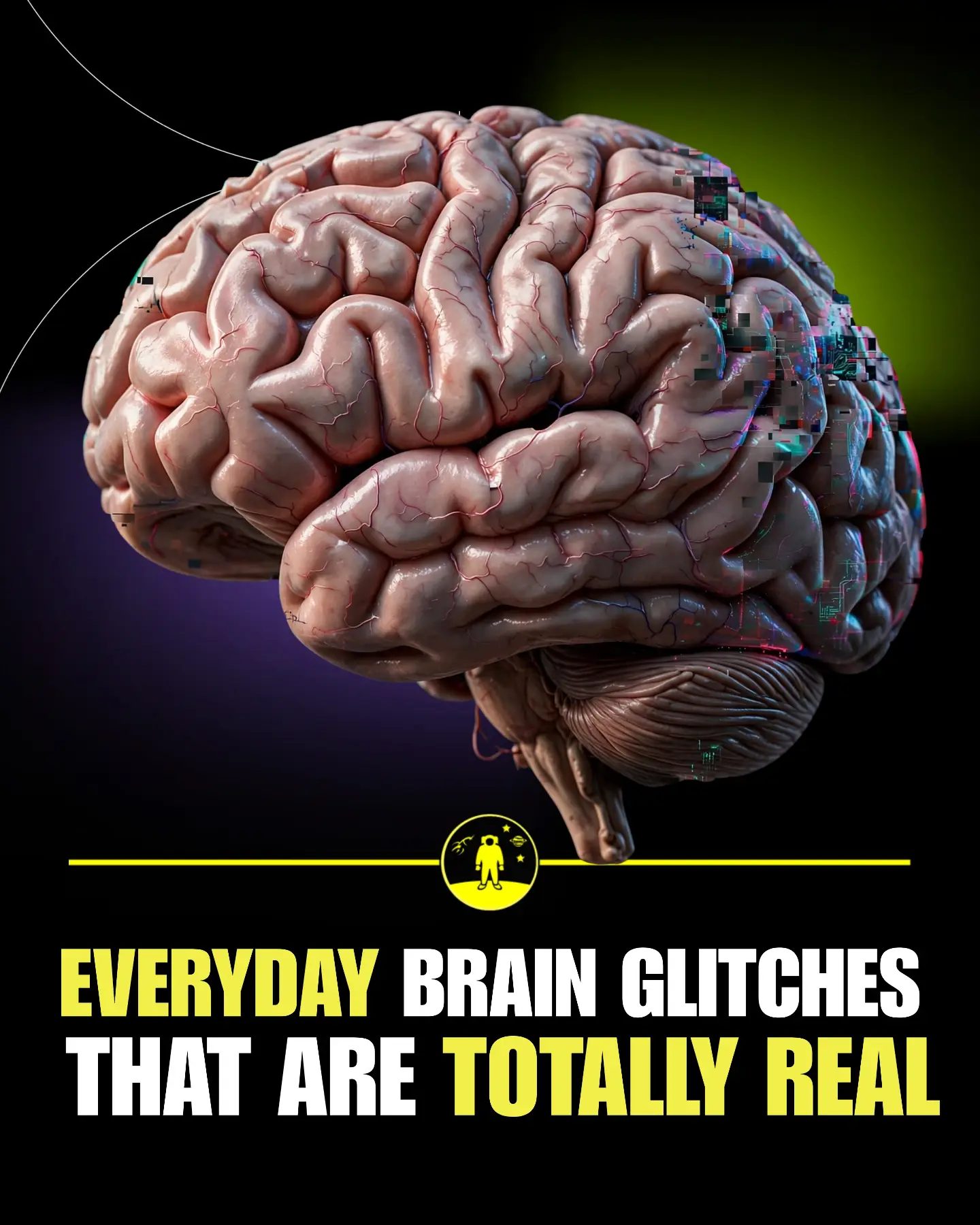
Brain Glitches and Everyday Illusions
The brain is an intricate and complex organ. To better understand it, we need to recognize its limitations, how it handles the world, and how it corrects itself when something unexpected happens.
Why This Matters
Understanding how the brain works helps shed light on the common, seemingly glitches that we experience every day. These brain glitches are a testament to the brain's constant predictions and corrections that allow us to navigate the world smoothly. However, these minor errors can also remind us that our perception of reality is not as flawless as we might think.
The Brain's Predictive Power
The Brain's Predictive Model
The brain is constantly predicting what should happen next based on past experiences and patterns. The visual cortex, for example, processes about 11 million pieces of information per second. By taking in only a small central area of sharp vision, the brain can efficiently analyze our environment. It combines peripheral information, eye movements, and past experiences to create a cohesive and stable picture of the world.
Missing a Step
When the brain's predictions are correct, our movements flow smoothly without a hitch. However, when a prediction is incorrect, the result can be startling. This is why missing a step on a staircase can feel so terrifying. The brain has prepared the body for one movement, but reality delivers another. This sudden prediction error can cause a jolt that makes us stumble or fall. It's not the lack of steps that is the most frightening; it's the discrepancy between the brain's prediction and the actual reality.
Chronostasis
Another common brain glitch is chronostasis, the illusion that the second hand on a clock pauses briefly when you first look at it. While watching the clock, the brain is making rapid movements to focus on the second hand, and it temporarily misinterprets the time. Chronostasis occurs during rapid eye movements, when the brain is processing a lot of information quickly. Our perception of time can be distorted, making us think that the second hand has stopped or slowed down.
The Doorway Effect
The doorway effect is a common experience where you walk into a room and forget why you entered. This phenomenon reflects a shift in context. Essentially, the doorway serves as a barrier that separates the past thought from the present action, making it harder to retrieve the previous thought. This effect highlights the brain's tendency to organize information based on context and location, which can sometimes lead to frustration and confusion.
The Brain's Memory Mechanisms
Memory is not a perfect recording device. Each time you recall an event, the brain reconstructs it anew, which means details can gradually change or become distorted over time. Memories are not replayed like a video; instead, they are pieced together each time they are recalled. This reconstruction process can lead to inaccuracies and alterations in the remembered details.
Rapid Eye Movements and Visual Sensitivity
The brain's ability to process information is remarkable, especially during rapid eye movements called saccades. During these brief moments, visual sensitivity is temporarily reduced to prevent the world from appearing to smear. However, the claim that you lose 30 to 40 minutes of vision every day or lose two seconds every time you sneeze is an oversimplification. The brain is continuously making reality feel smooth, stable, and understandable.
Practical Tips
To better understand and manage these brain glitches, consider the following:
Pay Attention to Your Surroundings
Being aware of your environment can help reduce the impact of brain glitches. By focusing on your surroundings, you can minimize the chances of experiencing a jolt from a prediction error.
Improve Memory Recall
To enhance memory recall, try to associate new information with familiar concepts or locations. This can help create a stronger context for the memory, making it easier to retrieve later.
Monitor Your Vision
Pay attention to how your eyes move and how your brain processes visual information. Understanding the limitations of rapid eye movements can help you appreciate the complexity of your visual experience.
Important Takeaways
- Brain Glitches: They are a common occurrence and can be attributed to the brain's constant predictions and corrections.
- Predictive Power: The brain's ability to predict future events based on past experiences is crucial for smooth navigation.
- Memory Reconstruction: Each time a memory is recalled, it is reconstructed, which can lead to changes in details over time.
- Rapid Eye Movements: These movements play a significant role in visual processing and can temporarily reduce visual sensitivity.
Conclusion
The brain is a complex and dynamic organ that continuously processes, predicts, and corrects information. Brain glitches are a natural part of this process, and understanding them can help us appreciate the brain's remarkable capabilities. These glitches remind us that our perception of reality is not always as flawless as we might think, but it is a testament to the brain's constant efforts to make sense of the world around us.
Watch the Reel
Questions readers ask
What are some common examples of everyday brain illusions?
Everyday brain illusions can manifest in various ways, such as missing a step on a staircase or perceiving a clock's second hand to pause. These illusions are a result of the brain's continuous predictions and corrections, which, while normally helpful, can sometimes lead to these subtle perception errors.
Why does the brain create these illusions?
The brain creates illusions as a byproduct of its constant effort to predict and make sense of the world. By anticipating what will happen next based on past experiences, the brain helps us navigate our environment efficiently. However, these predictions can occasionally lead to slight inaccuracies in our perception.
How does the brain's predictive model work?
The brain's predictive model operates by continuously generating expectations about future events based on patterns and past experiences. When these predictions match reality, we perceive the world smoothly. However, when there's a mismatch, our perception can be slightly off, leading to everyday brain illusions and glitches.
Can these brain glitches be prevented?
These brain glitches are a natural part of how the brain functions and are generally not preventable. However, being aware of them can help us understand that our perception of reality is not always perfect. Recognizing these illusions can enhance our appreciation of the brain's complex processes.
Why is it important to understand brain illusions?
Understanding brain illusions provides insight into the brain's intricate processes and its role in shaping our perception of reality. This knowledge can foster a deeper appreciation for how the brain handles the world and helps us recognize that minor errors in our perception are a normal part of everyday life.
Related deep dives
Similar reads based on topic and creator.



Recent articles
Fresh deep dives from the latest Reels we unpacked.




Comments
Be the first to comment.