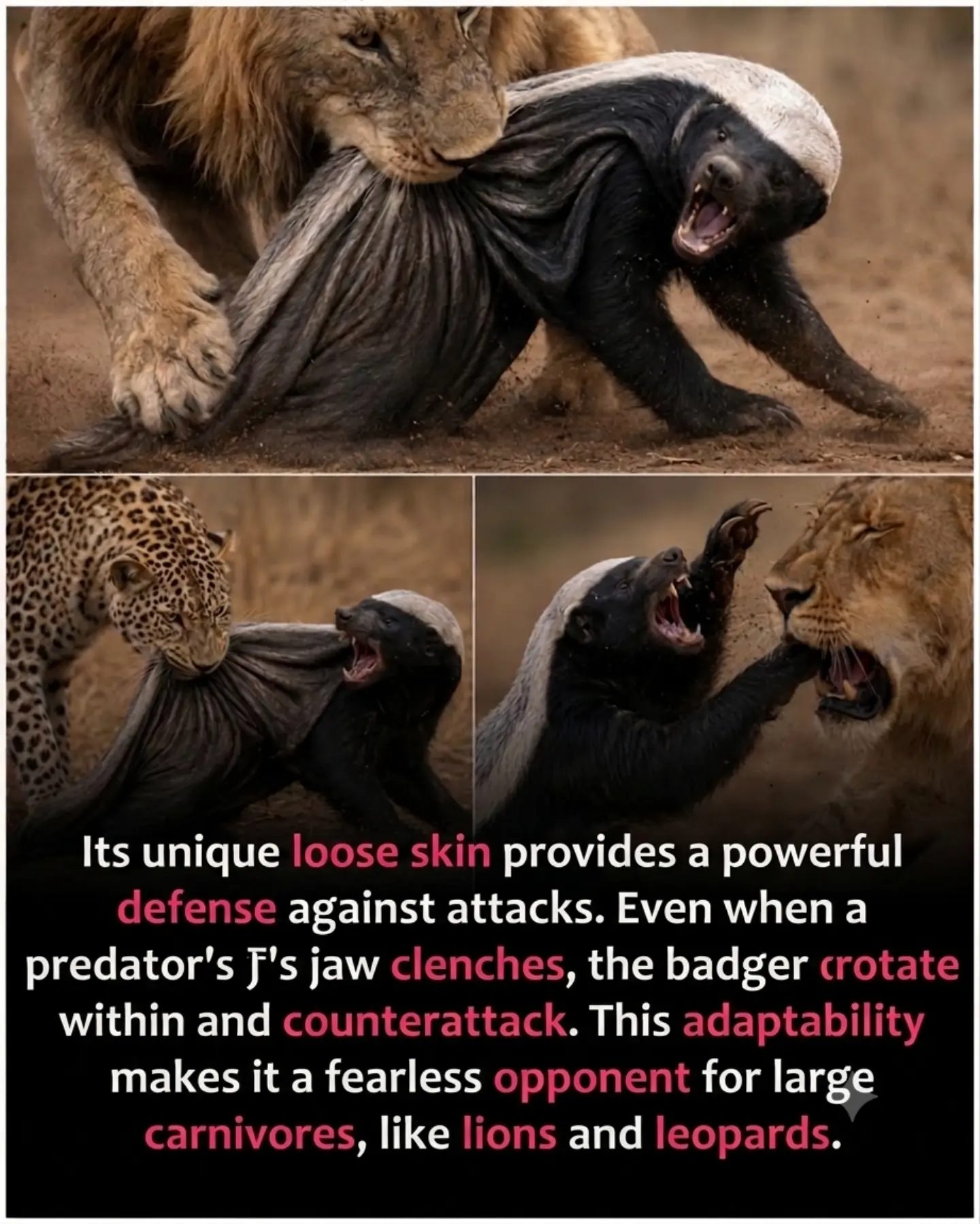
Honey Badger Defense Mechanism: The Unstoppable Survivor
The honey badger (Mellivora capensis) is a formidable creature known for its remarkable ability to survive encounters with formidable apex predators like lions and leopards. This adaptability is due to several unique physiological traits that make it a fearless and notoriouly difficult opponent in the wild. Let's dive in to understand the extraordinary mechanisms that allow this small mammalian carnivore to stand its ground against much larger predators.
Context: Why This Matters
Understanding the honey badger’s defense mechanisms helps us appreciate the diverse strategies animals have evolved to survive in the wild. While it may not seem immediately relevant, these evolutionary adaptations offer insights into the resilience and ingenuity of nature. They also highlight the importance of biodiversity and the intricate balance of ecosystems, where even the smallest creatures can play significant roles.
Main Discussion
Unique Loose Skin
The honey badger’s most notable defense is its exceptionally loose and tough skin. This unique physiological trait serves as a powerful barrier against attacks. When a predator, such as a lion or leopard, manages to grab or bite the badger, the loose skin allows the badger to twist and rotate its entire body within the predator's grip. This twisting motion enables the badger to counterattack fiercely, even while firmly held.
This adaptability is not just about flexibility; it’s also about resilience. The honey badger’s skin is both loose and tough, providing a double layer of protection. The outer layer is thick and rubbery, which helps resist the teeth and claws of predators. The inner layer, being loose, allows for the rotational movement that helps the badger escape or counterattack.
Counterattack Strategy
The honey badger's counterattack strategy is as impressive as its skin. When a predator bites down, the badger can rotate within the predator's jaws, turning around to bite and claw at the predator’s face or eyes. This strategy is not only effective but also incredibly audacious, making the badger a fearless opponent. By targeting the predator's vulnerable points, the badger can often dislodge itself from the grip and even inflict serious damage on the predator.
These defensive maneuvers are particularly effective against larger predators. The badger's small size and agility allow it to quickly change direction and position, making it difficult for the predator to maintain a secure grip. This, combined with the badger's relentless and aggressive nature, makes it a formidable opponent.
Thick, Rubbery Epidermis
The honey badger’s thick, rubbery epidermis is another critical component of its defense mechanism. This tough outer layer provides additional protection against the sharp teeth and claws of predators. The epidermis is designed to withstand significant force, making it difficult for predators to penetrate and cause fatal injuries.
This thickness, combined with the loose skin, creates a multi-layered defense system. The outer layer protects against initial attacks, while the loose skin allows for mobility and counterattacking maneuvers. This dual-layered design is a testament to the honey badger’s evolutionary adaptations, making it one of the most resilient and fearless creatures in the wild.
Practical Tips
While the honey badger's defense mechanisms are fascinating, they also offer insights into survival strategies that can be applied in various contexts. Here are some practical tips inspired by the honey badger’s tactics:
Stay Flexible
Just as the honey badger uses its loose skin to adapt and maneuver, staying flexible in your approach to challenges can help you navigate difficult situations. This flexibility can mean being open to new strategies, adjusting your plans as needed, and thinking outside the box.
Focus on Core Strength
The honey badger’s thick, rubbery epidermis is a metaphor for core strength. In any context, building a strong foundation can help you withstand challenges and resist setbacks. Whether it’s physical fitness, emotional resilience, or professional skills, investing in your core strength can pay off in the long run.
Target Vulnerabilities
The honey badger’s counterattack strategy involves targeting the predator’s vulnerable points. In a competitive or challenging situation, identifying and addressing the weaknesses of your adversaries can give you a strategic advantage. This could mean focusing on key areas of weakness in a business plan, targeting specific skills for improvement, or addressing underlying issues in a relationship.
Adaptability
The honey badger’s ability to adapt and change its strategy in the face of danger is a key to its survival. In a rapidly changing world, being adaptable can help you stay ahead. This might involve learning new skills, adopting new technologies, or adjusting your mindset to embrace new opportunities.
Important Takeaways
The honey badger’s defense mechanisms are a marvel of evolutionary ingenuity. Its exceptionally loose and tough skin, combined with its counterattack strategy and thick, rubbery epidermis, make it a formidable opponent against much larger predators. These adaptations not only ensure its survival but also highlight the importance of resilience, adaptability, and strategic thinking in navigating challenges.
From the honey badger, we learn that staying flexible, focusing on core strength, targeting vulnerabilities, and embracing adaptability are key strategies for overcoming obstacles. These lessons can be applied in various contexts, from personal development to professional success, offering valuable insights into how to thrive in a competitive world.
Conclusion
The honey badger’s defense mechanisms are a testament to the wonders of nature and the remarkable adaptations that allow animals to survive and thrive. By understanding these mechanisms, we gain a deeper appreciation for the intricacies of the natural world and the resilience of its inhabitants. Whether you’re a nature enthusiast or simply curious about the survival strategies of wild animals, the honey badger’s story offers a wealth of information and inspiration.
Watch the Reel
Questions readers ask
How does the honey badger's skin help it defend against predators like lions and leopards?
The honey badger's skin is exceptionally loose and tough, allowing it to twist and turn while being held or attacked. This unique adaptation enables the honey badger to counterattack even when gripped by a much larger predator, greatly enhancing its chances of survival.
What aggressive strategies does the honey badger employ against big cats?
Honey badgers are known for their fearless and aggressive fighting style. They will actively pursue and attack predators such as lions and leopards, using their strong claws and sharp teeth to inflict significant injuries. This proactive approach often catches larger predators off guard.
Can a honey badger really defeat a lion or leopard?
While honey badgers are formidable opponents, it's important to note that outright victories against lions or leopards are rare. However, their extraordinary defenses enable them to survive and escape from such encounters more often than other prey animals, making them a challenge for even the most fearsome predators.
What makes the honey badger's defense mechanisms unique among small mammals?
The honey badger's combination of loose, tough skin and aggressive behavior is quite unique. This allows it to not only withstand attacks from much larger predators but also to counterattack effectively, making it one of the most resilient small mammals in the wild.
How does the honey badger's adaptability contribute to its survival?
The honey badger's adaptability is evident in its ability to survive encounters with a variety of formidable predators. Its unique physiological traits and aggressive strategies enable it to confront and escape from threats that would overwhelm most other animals of its size.
What are the key traits that make the honey badger a resilient predator?
Several key traits contribute to the honey badger's resilience. Its loose, tough skin allows for exceptional mobility during attacks, while its aggressive nature and strong physical attributes enable it to stand its ground against much larger opponents. These traits work together to make the honey badger a formidable and adaptable survivor.
Related deep dives
Similar reads based on topic and creator.




Recent articles
Fresh deep dives from the latest Reels we unpacked.




Comments
Be the first to comment.