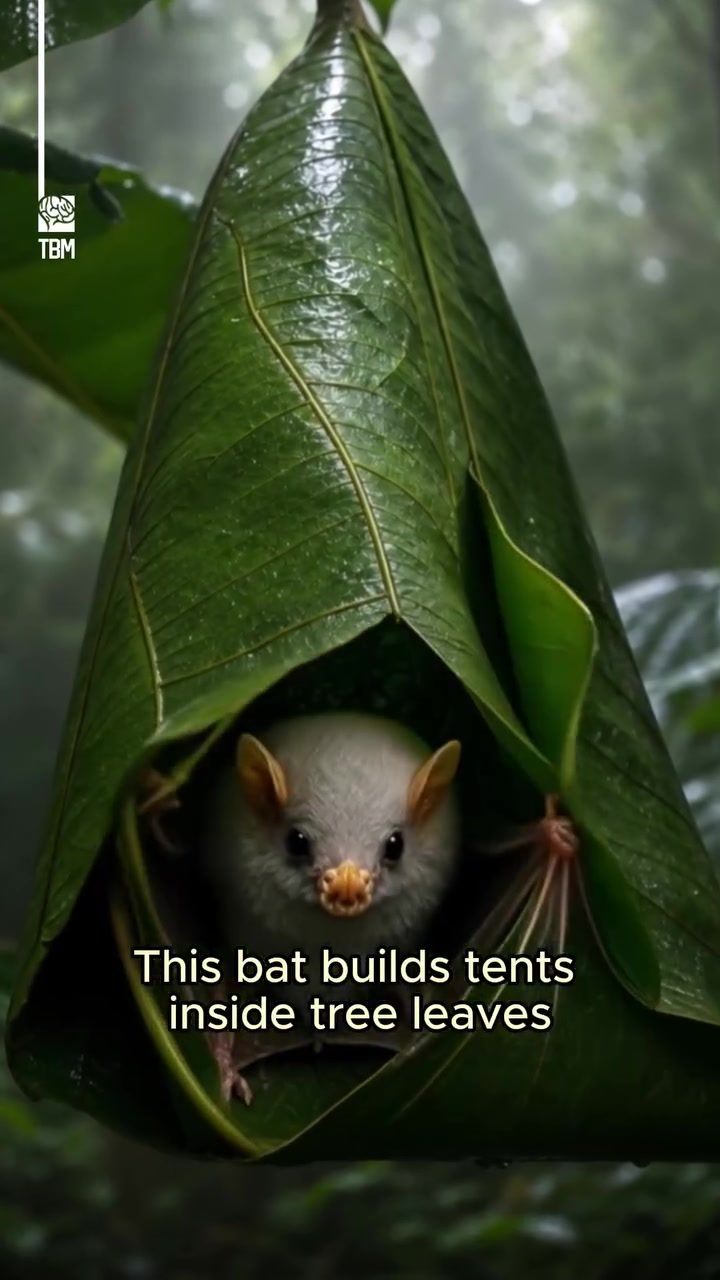
Honduran White Bat Leaf Tent Architecture
The Honduran white bat's remarkable ability to create leaf tent shelters showcases nature's ingenuity. These tiny, snow-white bats transform large leaves into protective homes by carefully slicing the veins, causing the leaf to fold into a tent-like structure. This extraordinary feat not only provides shelter from predators and harsh weather but also offers a safe haven for the colony to rest during the day.
Why This Matters
Understanding the Honduran white bat's leaf tent construction offers insights into the adaptability and resourcefulness of bats. These bats live in the tropics, where rainforests provide ample leaves for their shelters. The ability to build these tents showcases the animal's unique survival strategies in the wild, where adaptability is critical. These tents are more than just shelters; they represent a symbiotic relationship between the bats and the leaves they use, highlighting the intricate balance of ecosystems.
Main Discussion
The Leaf Tent Construction Process
The process of creating a leaf tent begins with the Honduran white bat selecting a large leaf. Using its sharp teeth, the bat meticulously slices the veins of the leaf. By cutting specific veins, the bat manipulates the leaf's structure, causing it to fold into a perfect tent shape. This precision engineering is crucial for the tent's stability and durability.
Protection and Safety
Once the leaf tent is constructed, it serves multiple purposes for the bat colony. The curved shape of the tent hides the bats from predators, providing a safe haven where they can rest undisturbed during the day. The tent also shields the bats from rain and harsh sunlight, ensuring their comfort and safety.
The Unique Appearance of Honduran White Bats
The Honduran white bat's striking appearance adds to the enchantment of their leafy homes. With snow-white fur and bright yellow noses and ears, these bats look almost magical when seen inside their green leaf tents. This unique coloration helps them blend in with their surroundings while also making them easily identifiable.
The Importance of Leaf Tents in Bat Colonies
Leaf tents play a crucial role in the social structure of Honduran white bat colonies. These tents provide a communal space where bats can gather, rest, and socialize. The tents are essential for the survival and well-being of the colony, offering protection and a sense of security.
Practical Tips
While observing these remarkable structures can provide valuable insights, it is essential to approach bat habitats responsibly. Here are some practical tips for those interested in observing or learning more about Honduran white bats and their leaf tents:
- Respect the Habitat: When visiting areas where Honduran white bats are known to reside, be mindful of their habitats. Avoid disturbing their leaf tents, as this could disrupt the bats' daily routines and compromise their safety.
- Use Binoculars: For a closer look at the bats and their tents, use binoculars. This allows you to observe their behavior without getting too close, minimizing the risk of disturbing them.
- Consult with Experts: If you're planning to study these bats, consider consulting with experts in bat conservation. They can provide valuable guidance and ensure that your observations are conducted ethically and responsibly.
Important Takeaways
- Honduran white bats are skilled engineers, creating leaf tents by slicing the veins of large leaves.
- These tents provide essential protection from predators, rain, and harsh sunlight.
- The bats' unique appearance adds to the enchantment of their leafy homes.
- Leaf tents are crucial for the social structure and well-being of Honduran white bat colonies.
- Observing these bats and their habitats responsibly can offer valuable insights into their behavior and survival strategies.
Conclusion
The Honduran white bat's ability to construct leaf tents is a testament to nature's ingenuity and the adaptability of wildlife. By transforming large leaves into protective shelters, these bats not only ensure their survival but also create a remarkable ecosystem within the rainforests. Understanding and appreciating these natural wonders can foster a deeper connection with the environment and a greater respect for the intricate balance of ecosystems.
Watch the Reel
Questions readers ask
How do Honduran white bats build their leaf tents?
Honduran white bats create their leaf tents by carefully slicing the veins of large leaves, which causes the leaf to fold into a tent-like structure. This process provides a protective shelter for the bats to rest and hide from predators and harsh weather.
Why do Honduran white bats construct leaf tents?
The primary reason Honduran white bats build leaf tents is for protection. These tents serve as safe havens from predators and harsh weather conditions, ensuring the bats' survival in their tropical habitats.
What materials do Honduran white bats use for their shelters?
Honduran white bats use large leaves found in tropical rainforests to construct their shelters. By modifying these leaves, the bats create sturdy and camouflaged tents that blend seamlessly into their surroundings.
How do leaf tents benefit the Honduran white bat colonies?
Leaf tents provide Honduran white bat colonies with a safe place to rest during the day, protected from predators and adverse weather conditions. This ensures the bats' well-being and contributes to the overall health of the colony.
What can we learn from the Honduran white bats' shelter-building behavior?
The shelter-building behavior of Honduran white bats demonstrates their remarkable adaptability and resourcefulness. Observing how these bats modify their environment to create protective shelters offers valuable insights into the unique survival strategies of these animals.
Are Honduran white bats the only species that build leaf tents?
While Honduran white bats are known for their remarkable leaf tent-building skills, they are not the only species with this behavior. Other bats and animals, such as tent caterpillars, also exhibit similar leaf tent construction behaviors, but Honduran white bats are notably skilled at this task.
What role do leaf tents play in the Honduran white bats' ecosystem?
Leaf tents play a crucial role in the Honduran white bats' ecosystem by providing them with a safe and camouflaged shelter. This contributes to the intricate balance of tropical ecosystems, as the bats' survival and shelter construction impact the local flora and fauna.
Related deep dives
Similar reads based on topic and creator.




Recent articles
Fresh deep dives from the latest Reels we unpacked.




Comments
Be the first to comment.