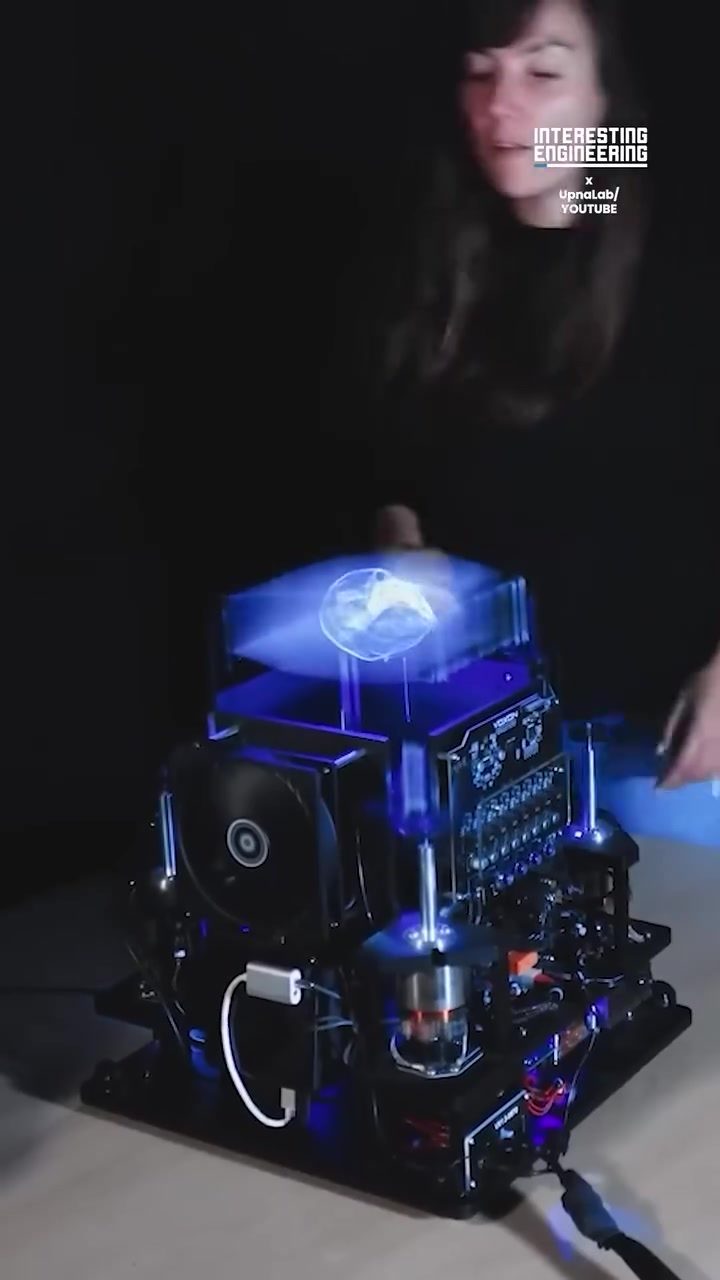
Vibrating Garter Bands and Holographic Displays: The Future of Interaction
The use of vibrating garter bands to interact with holographic displays is a cutting-edge innovation that has the potential to revolutionize how we engage with digital content. The concept, showcased in recent demonstrations, involves utilizing mechanical vibrations to create tangible feedback from projected holograms. This breakthrough, featured on FlexiVol's YouTube channel, raises intriguing possibilities for the future of holographic interactions.
Context / Why this matters
Imagine being able to touch and manipulate holograms as if they were physical objects. This is the promise of the vibrating garter band technology. By integrating tactile feedback into holographic displays, users can experience a more immersive and intuitive interaction. This innovation has far-reaching implications, from enhanced gaming experiences to more intuitive educational tools. It also opens doors to new applications in fields such as medicine, where tactile feedback could improve surgical simulations and patient care.
Main discussion
The Technology Behind Vibrating Garter Bands
Vibrating garter bands work by producing mechanical vibrations that simulate the sensation of touch. These vibrations are precisely controlled to align with the movements of the projected hologram, creating a seamless and immersive experience. The bands are designed to be lightweight and unobtrusive, making them suitable for a variety of applications.
How It Works
The technology relies on advanced haptic feedback systems. When a user interacts with a projected hologram, the garter bands receive signals that correspond to the hologram's position and movement. These signals are translated into vibrations that mimic the sensation of touch, allowing users to feel as if they are interacting with a real object.
Components and Integration
The vibrating garter bands system consists of several key components:
- Haptic Feedback Units: These are the parts that generate the vibrations. They are typically small and lightweight, making them easy to integrate into various devices.
- Control Units: These units manage the synchronization between the holographic display and the haptic feedback. They ensure that the vibrations align precisely with the hologram's movements.
- Software Interface: The software is responsible for interpreting user inputs and triggering the appropriate vibrations. It also manages the calibration of the haptic feedback units to ensure a consistent and accurate experience.
Applications and Use Cases
The applications of vibrating garter bands are vast and varied. Here are a few potential uses:
Gaming
In the gaming industry, vibrating garter bands can significantly enhance the immersive experience. Imagine playing a first-person shooter game where you can feel the recoil of a gun or the impact of a punch. This level of tactile feedback can make games more engaging and realistic.
Education
In educational settings, vibrating garter bands can be used to create interactive models and simulations. For example, students can learn about anatomy by feeling the texture and shape of virtual organs. This hands-on approach can make learning more intuitive and memorable.
Medical Training
For medical professionals, vibrating garter bands can provide realistic simulations for surgical procedures. Surgeons can practice complex operations on virtual patients, feeling the resistance and texture of tissue and organs. This can improve their skills and preparedness for real-life situations.
Engineering Custom 3D Printers
While the vibrating garter bands technology is groundbreaking, it's worth taking a look at another fascinating engineering project to see how innovative minds are working to solve problems.
The UpnaLab 3D Printer
UpnaLab, a well-known name in the engineering community, showcased an intricate 3D printing project. This custom-built 3D printer features multiple components and glowing lights, indicating a high level of sophistication and precision. The printer is designed to handle complex tasks, making it a valuable tool for engineers, designers, and hobbyists alike.
Practical tips
Building Your 3D Printer
If you're interested in building your own 3D printer, here are some practical tips to get you started:
- Choose the Right Components: Select high-quality components that are compatible with each other. This includes the frame, extruder, control board, and motors.
- Design Your Layout: Plan the layout of your printer carefully. Consider the size of the build area, the placement of the components, and the overall stability of the structure.
- Calibration: Calibration is crucial for achieving accurate and consistent prints. Take the time to calibrate your printer thoroughly, adjusting settings such as temperature, extrusion rate, and layer height.
- Safety First: Always prioritize safety when working with 3D printers. Ensure proper ventilation, handle hot components with care, and follow all safety guidelines.
Integrating Vibrating Garter Bands
To incorporate vibrating garter bands into your projects, consider the following:
- Choose the Right Components: Select haptic feedback units and control units that are compatible with your project requirements.
- Software Integration: Ensure that your software interface can handle the synchronization between the holographic display and the haptic feedback units.
- Calibration: Calibrate the haptic feedback units to ensure accurate and consistent vibrations.
- Testing: Conduct thorough testing to ensure that the vibrations align precisely with the hologram's movements and provide a seamless experience.
Important takeaways
- Vibrating garter bands offer a revolutionary way to interact with holographic displays by providing tactile feedback.
- This technology has wide-ranging applications in gaming, education, and medical training.
- Building a custom 3D printer involves careful selection of components, precise calibration, and a focus on safety.
- The future of holographic interactions looks promising with innovations like vibrating garter bands and advanced 3D printing technologies.
Conclusion
The use of vibrating garter bands to interact with holographic displays represents a significant leap forward in immersive technology. This innovation, combined with advancements in 3D printing and other engineering projects, opens up a world of possibilities. Whether you're a gamer, educator, or engineer, the future of tactile feedback and holographic interactions is exciting and full of potential. As technology continues to evolve, we can expect even more groundbreaking developments that will transform how we engage with digital content.
Watch the Reel
Questions readers ask
How do vibrating garter bands enhance holographic displays?
Vibrating garter bands enhance holographic displays by providing tactile feedback. When users interact with holograms, the bands vibrate to simulate the sensation of touch, making the digital experience more immersive and realistic.
Which industries can benefit from this vibrating bands technology?
The vibrating bands technology is particularly beneficial in gaming, medicine, and more. In gaming, it can make virtual environments more engaging, and in medicine, it can aid in surgical training and remote patient care.
What is the role of FlexiVol in this technology?
FlexiVol is a key player in advancing this technology. They have demonstrated the concept on their YouTube channel, showcasing how vibrating garter bands can be used to create tangible feedback from projected holograms.
How does tactile feedback improve holographic interactions?
Tactile feedback improves holographic interactions by making them more intuitive and immersive. When users can feel the holograms, it bridges the gap between the digital and physical worlds, allowing for more natural and effective manipulation.
Can this technology be used in engineering and design?
Yes, this technology has great potential in engineering and design. It can allow professionals to interact with 3D models and prototypes in a more tangible way, enhancing their ability to design, test, and refine products.
What makes vibrating garter bands a significant advancement in holographic display technology?
Vibrating garter bands are significant because they enable users to physically interact with holograms. This breakthrough could revolutionize how we engage with digital content, making interactions more intuitive and immersive.
How does this technology work with holographic gaming?
In holographic gaming, vibrating garter bands can create a more immersive experience by providing physical feedback to match the visuals. This means players can feel the impact of in-game actions, enhancing the realism and excitement of the game.
Related deep dives
Similar reads based on topic and creator.


Recent articles
Fresh deep dives from the latest Reels we unpacked.




Comments
Be the first to comment.