CO2 Emissions Over Time: A Visualization of Global Changes
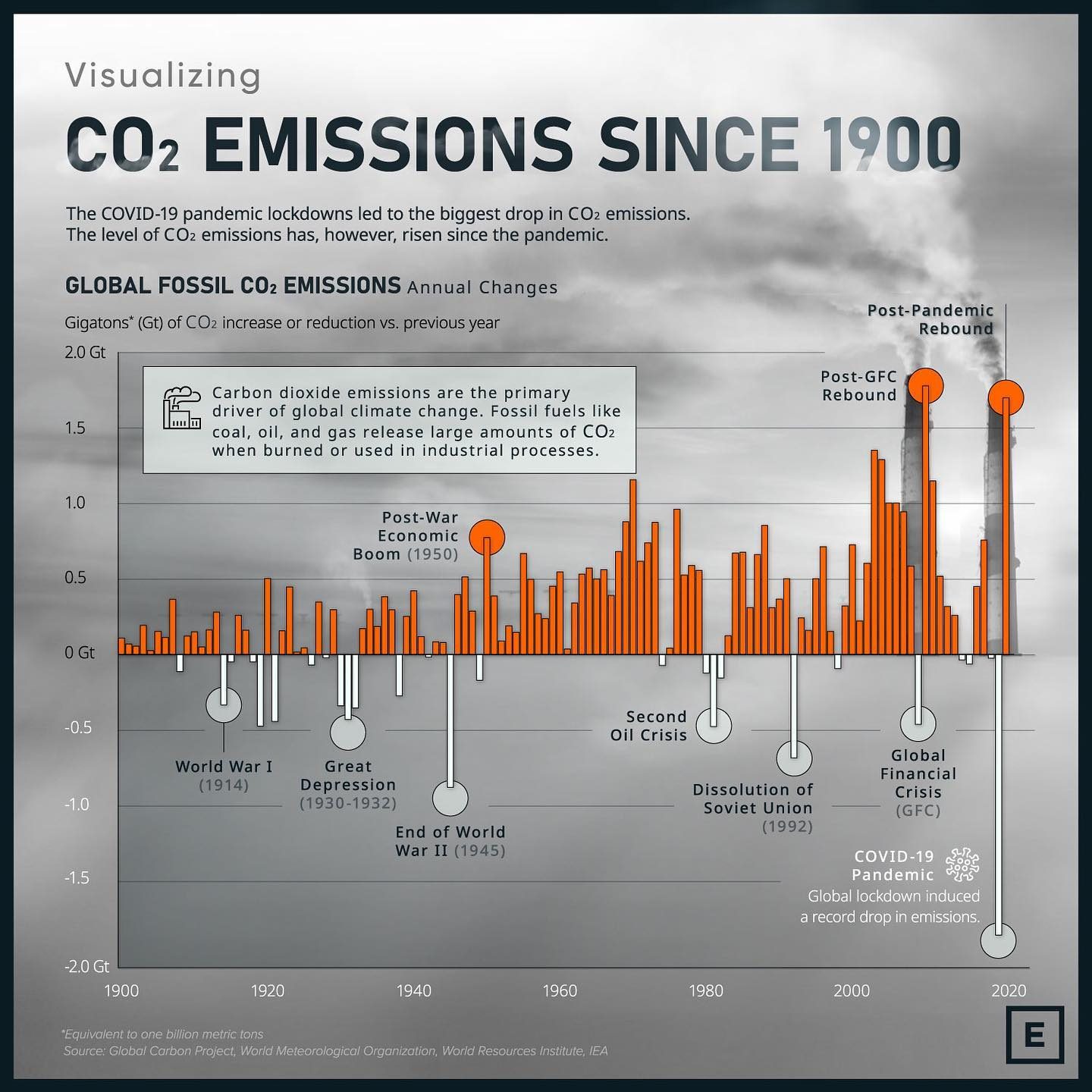
Global CO2 emissions have fluctuated significantly over the past century, shaped by a series of historical events and economic shifts. Understanding these changes provides valuable context for current climate discussions, especially as global leaders convene to address climate action. This visualization of global CO2 emissions from 1900 to 2020 offers a clear perspective on the challenges and progress in mitigating climate change.
Why This Matters
The infographic on global CO2 emissions is not just a historical record; it serves as a critical reference point for understanding the current state of climate change. By examining the trends and fluctuations in emissions over the past 120 years, we can better appreciate the impact of major global events and gauge the effectiveness of various policy initiatives and economic shifts. This data is particularly relevant as world leaders gather in Egypt for the UNFCCC COP27 to discuss climate action, making it a crucial time to reflect on past trends and future goals.
Historical Events and Their Impact on CO2 Emissions
Early 20th Century: Industrialization and World War I
The 20th century saw a rapid increase in CO2 emissions, largely due to industrialization. World War I, starting in 1914, had a notable impact on global emissions. The wartime economy, with its increased production and consumption, led to a spike in emissions. However, the post-war period also saw significant changes as economies shifted and rebuilt.
Interwar Period: The Great Depression
The Great Depression, which began in 1930, marked a significant downturn in global economic activity. This period saw a sharp decline in CO2 emissions as industrial production slowed and energy consumption decreased. The economic slowdown during this time highlights the direct relationship between economic activity and CO2 emissions.
Post-War Economic Boom
The end of World War II in 1945 ushered in a period of unprecedented economic growth and industrial expansion, known as the Post-War Economic Boom. This boom, which spanned the 1950s and beyond, saw a dramatic increase in CO2 emissions as economies rebuilt and modernized. The rapid industrialization and increased energy use during this period are reflected in the steep rise in emissions.
Oil Crises and Economic Shifts
The 1970s brought the Second Oil Crisis, a period marked by significant fluctuations in oil prices and global economic instability. This crisis had a temporary impact on CO2 emissions, causing a brief dip as energy consumption adjusted to the new economic realities. The 1990s saw the Dissolution of the Soviet Union, which also had a notable impact on global emissions as the former Soviet countries underwent significant economic and industrial changes.
21st Century: Global Financial Crisis and COVID-19 Pandemic
The 21st century has been marked by significant economic and environmental events. The Global Financial Crisis of 2008 led to a temporary decrease in CO2 emissions as economic activity slowed. However, the most notable recent event is the COVID-19 pandemic. The global lockdown induced by the pandemic in 2020 led to a record drop in emissions, highlighting the direct impact of reduced human activity on CO2 output.
Carbon Dioxide and Climate Change
Carbon dioxide emissions are the primary driver of global climate change when burned or used in industrial processes. Understanding the fluctuations in emissions over time provides a clearer picture of the challenges faced in mitigating climate change. The data from the Global Carbon Project, World Meteorological Organization, World Resources Institute, and the International Energy Agency (IEA) underscore the importance of addressing these emissions to combat climate change effectively.
Practical Tips for Reducing CO2 Emissions
Individual Actions
Reducing CO2 emissions starts with individual actions. Simple lifestyle changes, such as reducing energy consumption, using public transportation, and adopting renewable energy sources, can make a significant difference. For example, carpooling, cycling, or using public transportation can help reduce emissions from personal vehicles.
Community and Government Initiatives
Community and government initiatives play a crucial role in reducing CO2 emissions. Policies that promote renewable energy, energy efficiency, and sustainable infrastructure can lead to long-term reductions in emissions. Initiatives like carbon taxes, subsidies for electric vehicles, and investments in renewable energy projects are essential steps in combating climate change.
Industrial and Economic Strategies
Industrial sectors and economic policies also need to be aligned with climate goals. This includes transitioning from fossil fuels to renewable energy sources, adopting sustainable manufacturing practices, and implementing carbon capture and storage technologies. Economic policies that incentivize green technologies and sustainable practices can drive significant reductions in CO2 emissions.
Important Takeaways
Understanding the historical trends in global CO2 emissions provides valuable insights into the challenges and opportunities in the fight against climate change. Key takeaways include:
- Impact of Major Events: Major historical events, such as wars, economic crises, and pandemics, have significantly impacted CO2 emissions.
- Technological and Economic Shifts: Technological advancements and economic changes have driven both increases and decreases in emissions.
- Policy and Initiative Significance: Effective policies and initiatives at both individual and community levels are crucial for reducing emissions and mitigating climate change.
Conclusion
The visualization of global CO2 emissions from 1900 to 2020 offers a comprehensive view of how emissions have fluctuated over time. This historical perspective is essential for understanding the current challenges and future goals in the fight against climate change, especially as global leaders meet to discuss climate action. By examining the impact of historical events, economic shifts, and policy initiatives, we can better appreciate the need for sustained efforts to reduce CO2 emissions and address the broader challenges of climate change.
Watch the Reel
Questions readers ask
How did the World Wars impact global CO2 emissions between 1900 and 2020?
The World Wars led to significant fluctuations in global CO2 emissions. During wartime, industrial activity shifted towards military production, causing emissions to temporarily decrease. Post-conflict periods saw rapid industrialization and reconstruction, leading to increased emissions. The Second World War, in particular, had a pronounced effect on emissions due to its global scale and intensity.
What was the impact of the Great Depression on global CO2 emissions?
The Great Depression, which began in 1929, resulted in a significant decrease in global CO2 emissions. Economic slowdown and reduced industrial activity during this period led to lower fossil fuel consumption and, consequently, lower emissions. The economic recovery post-depression then led to a surge in emissions as industries ramped up production.
How did the oil crisis of the 1970s affect global CO2 emissions?
The oil crisis of the 1970s had a notable impact on global CO2 emissions. The sudden increase in oil prices led to a temporary decrease in emissions as countries sought alternative energy sources and reduced their dependence on oil, which was then the dominant energy source. This shift, however, was relatively short-lived, and emissions began to rise again as economies adapted to the new energy landscape.
What influence did the dissolution of the Soviet Union have on global CO2 emissions?
The dissolution of the Soviet Union in 1991 resulted in a significant drop in global CO2 emissions. The collapse of heavy industries and the economic turmoil in the region led to a substantial reduction in carbon output. However, as economies in the former Soviet states stabilized and began to grow, emissions gradually increased, reflecting the broader trend of economic growth and industrialization.
How have post-pandemic emissions changed compared to historical trends?
Post-pandemic, global CO2 emissions saw a temporary dip due to widespread lockdowns and reduced industrial activity. However, as economies began to recover, emissions rebounded. This pattern is similar to historical trends, where economic downturns lead to short-term reductions in emissions, followed by increases as economic activity resumes and industrial production ramps up.
What role did economic booms play in shaping global CO2 emissions over the 20th and 21st centuries?
Economic booms, such as those following World War II and in the late 20th century, significantly increased global CO2 emissions. These periods of rapid economic growth were characterized by increased industrial activity, urbanization, and energy consumption, all of which contributed to higher emissions. Understanding these trends is crucial for formulating policies that mitigate the impact of future economic growth on climate change.
Related deep dives
Similar reads based on topic and creator.




Recent articles
Fresh deep dives from the latest Reels we unpacked.




Comments
Be the first to comment.