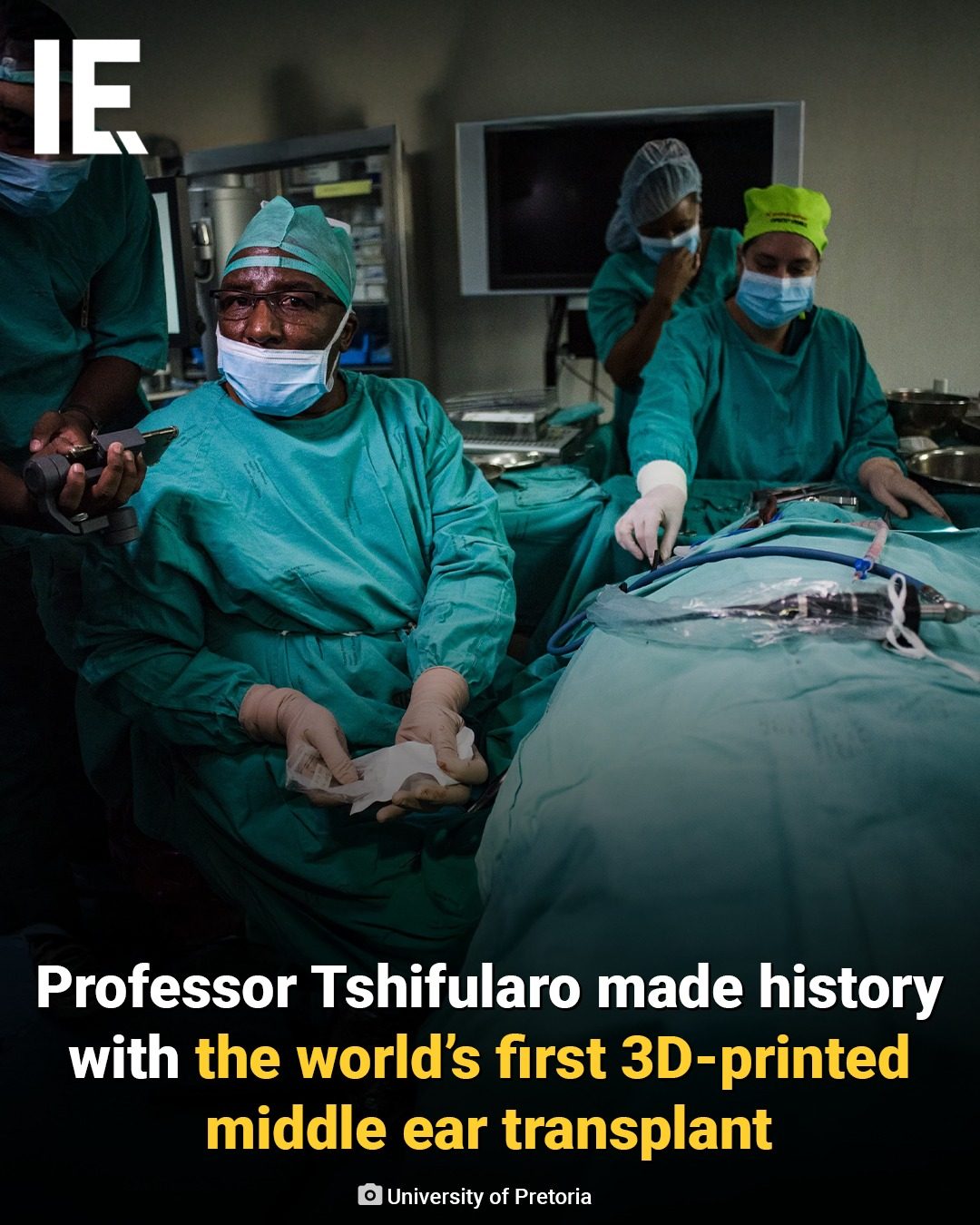
The World's First 3D-Printed Middle Ear Transplant: A Breakthrough in Hearing Restoration
On 13 March 2019, Professor Mashudu Tshifularo and his team at the University of Pretoria made medical history with a groundbreaking procedure. They performed the world’s first surgery to replace the middle ear's ossicles using 3D-printed implants. This innovative medical procedure marked a significant milestone in personalized auditory repair, offering new hope to individuals with conductive hearing loss.
Context: Why This Matters
Hearing loss affects millions of people worldwide, significantly impacting their quality of life. Conductive hearing loss, in particular, is caused by problems in the outer or middle ear, which prevent sound from being conducted to the inner ear. Traditional treatments for this condition have involved surgical reconstruction using autografts or allografts. However, these methods come with limitations, including donor site morbidity and challenges in matching the exact shape and size of the ossicles.
The advent of 3D-printed implants has revolutionized the field of audiology. By using medical imaging to create precise replicas of the middle ear's ossicles—the hammer, anvil, and stirrup—surgeons can now perform more accurate and effective repairs. This advancement not only improves the outcomes for patients but also opens up new possibilities for personalized medicine.
Main Discussion
The Procedure and Its Significance
The groundbreaking procedure involved the use of titanium 3D-printed implants, which were meticulously shaped to replicate the exact structure of the middle ear's ossicles. The surgery, performed endoscopically, took approximately two hours and was completed by Professor Tshifularo and his team at the University of Pretoria.
The use of 3D-printed implants offers several advantages over traditional methods. The precision afforded by 3D printing allows for a more exact match to the patient’s anatomy, reducing the risk of complications and improving the overall success rate of the procedure. Additionally, the endoscopic approach minimizes invasiveness, leading to faster recovery times and reduced scarring.
The Role of 3D Printing in Medical Advancements
3D printing technology has been rapidly advancing, and its applications in the medical field are vast. From creating custom prosthetics to printing organ tissues, 3D printing is transforming how medical professionals approach various conditions. In the case of the middle ear transplant, 3D printing enabled the creation of implants that were tailored to the unique anatomy of the patient, ensuring a precise fit and optimal functionality.
The Impact on Patients
For patients with conductive hearing loss, the ability to restore hearing through a minimally invasive procedure is a game-changer. The 3D-printed implants not only improve hearing but also offer a more permanent solution compared to traditional hearing aids. This breakthrough brings new hope to many individuals who have long struggled with hearing impairments, allowing them to regain a significant aspect of their quality of life.
Future Implications
The success of this procedure paves the way for further advancements in personalized auditory repair. Researchers and medical professionals are now exploring the potential of 3D printing for other medical applications, such as reconstructive surgery, dental implants, and even tissue engineering. The precision and customization offered by 3D printing are set to revolutionize various fields within medicine, improving patient outcomes and enhancing the overall efficiency of medical treatments.
Practical Tips for Understanding 3D-Printed Medical Devices
If you are considering or curious about 3D-printed medical devices, here are some practical tips to keep in mind:
Research the Technology
Before undergoing any procedure involving 3D-printed implants, it’s important to educate yourself about the technology. Understand how the 3D printing process works, the materials used, and the benefits it offers over traditional methods.
Consult with Specialists
Seek the advice of specialists who have experience with 3D-printed medical devices. They can provide detailed information about the procedure, its risks, and potential outcomes. This will help you make an informed decision about your treatment options.
Understand the Materials Used
Different materials are used in 3D printing, and each has its own advantages and limitations. For example, titanium is often used for medical implants due to its biocompatibility and durability. Be sure to ask your healthcare provider about the materials used in your specific case.
Evaluate the Success Rates
Look for studies and clinical trials that demonstrate the success rates of 3D-printed medical devices. This information can give you a clearer picture of the procedure's effectiveness and reliability.
Consider the Long-Term Benefits
While 3D-printed medical devices offer immediate benefits, it’s also important to consider the long-term implications. Discuss with your healthcare provider how the implant will function over time and what maintenance or follow-up care might be required.
Important Takeaways
The world’s first 3D-printed middle ear transplant performed by Professor Tshifularo and his team at the University of Pretoria represents a significant leap forward in medical technology. This breakthrough highlights the potential of 3D printing in creating customized medical solutions that improve patient outcomes and quality of life.
Understanding the advantages and implications of 3D-printed implants can help individuals make informed decisions about their healthcare. As this technology continues to evolve, it promises to revolutionize various fields within medicine, offering new hope and improved treatment options for patients around the world.
Conclusion
The 3D-printed middle ear transplant is a testament to the power of innovation and technology in advancing medical care. By using 3D-printed implants, surgeons can now perform more precise and effective repairs, improving outcomes for patients with conductive hearing loss. This breakthrough not only represents a significant milestone in audiology but also opens up exciting possibilities for the future of personalized medicine.
Watch the Reel
Questions readers ask
What makes the 3D-printed middle ear surgery at the University of Pretoria significant?
The surgery is significant because it was the first of its kind to replace the middle ear's ossicles using 3D-printed implants. This advancement allows for personalized auditory repair, potentially improving outcomes for patients with conductive hearing loss.
Who led the groundbreaking 3D-printed middle ear transplant procedure?
Professor Mashudu Tshifularo led the surgical team at the University of Pretoria that performed the world's first 3D-printed middle ear transplant. The procedure was conducted on 13 March 2019, marking a significant milestone in medical history.
What is conductive hearing loss, and how does this surgery address it?
Conductive hearing loss occurs when sound cannot pass from the outer or middle ear to the inner ear, often due to problems with the middle ear's ossicles. The 3D-printed middle ear surgery replaces these problematic ossicles, allowing sound to travel through the ear more effectively.
How do 3D-printed ossicles improve hearing repair procedures?
3D-printed ossicles offer a tailored solution for patients, as they can be customized to match the unique anatomy of each individual's ear. This personalization enhances the precision of the repair and can lead to better hearing outcomes compared to traditional methods.
What are the potential benefits of using 3D-printed implants in ear surgery?
3D-printed implants can provide several benefits, including a perfect fit, reduced surgery time, and improved patient satisfaction. The implants are designed to mimic the exact shape and size of the patient's natural ossicles, offering a more precise and effective repair.
How has this 3D-printed ear surgery impacted the field of auditory repair in South Africa?
The successful 3D-printed ear surgery in South Africa has opened new possibilities for treating conductive hearing loss. It has demonstrated the potential of 3D printing in medicine, encouraging further innovation and offering new hope to patients seeking improved hearing solutions.
Related deep dives
Similar reads based on topic and creator.


Recent articles
Fresh deep dives from the latest Reels we unpacked.




Comments
Be the first to comment.