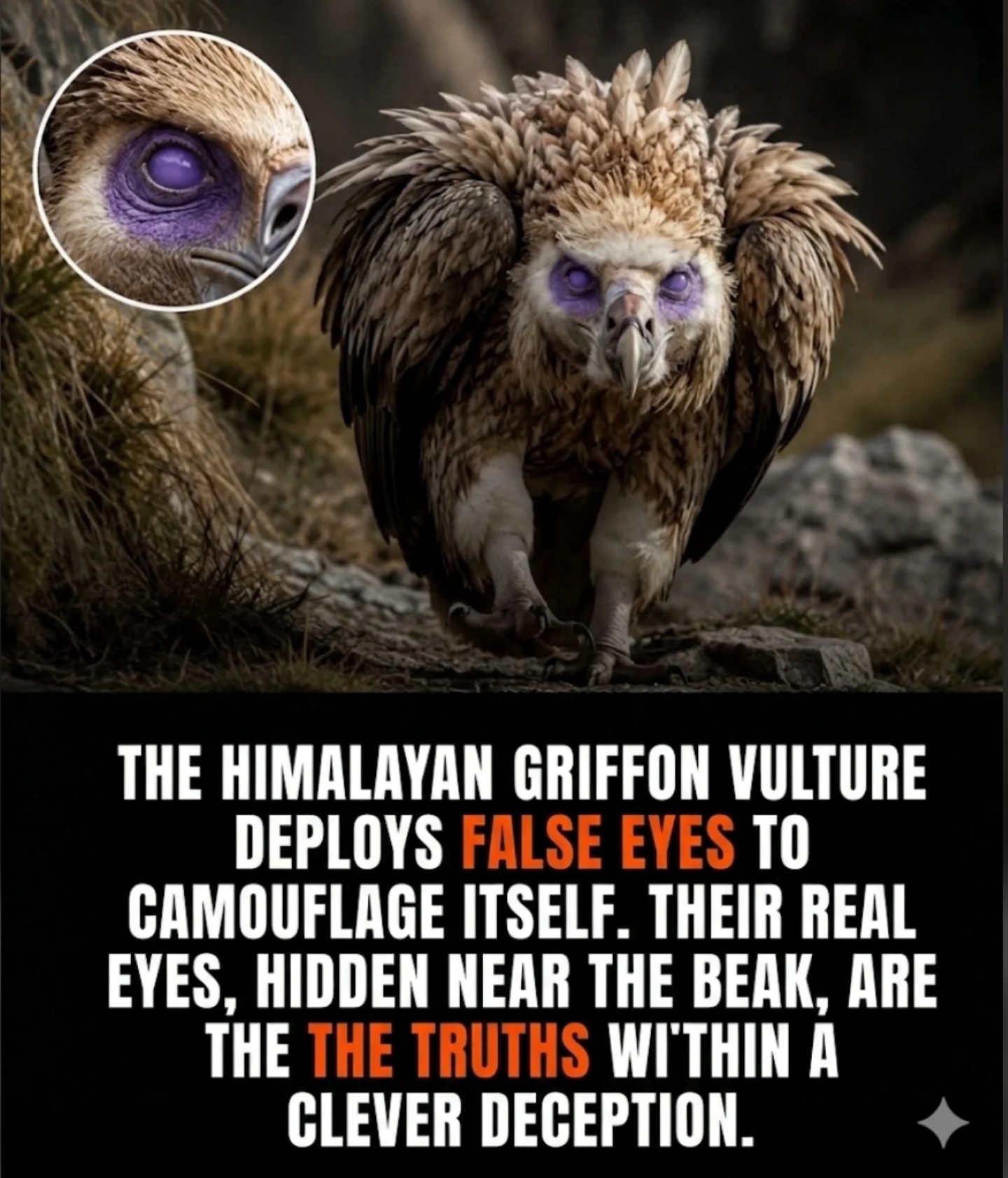
The Himalayan Griffon Vulture: Debunking the Myth of Hidden Eyes
The Himalayan Griffon Vulture is a fascinating bird known for its distinctive appearance and behavior. However, one popular online rumor suggests that these vultures possess hidden "real eyes" near their beak, which is actually inaccurate.
Context / Why this matters
Understanding the true nature of the Himalayan Griffon Vulture's unique features helps clarify misconceptions and fosters greater appreciation for these birds. Their distinctive characteristics are not just intriguing but also provide insight into their survival strategies and adaptations.
Main discussion
The Misconception of False Eyes
Many people believe that the large, pale, oval structures on the sides of the Himalayan Griffon Vulture's head are false eyes. This misconception likely arises from the fact that when these vultures sleep or feel threatened, they close their eyes, revealing these distinctive, pale-colored eyelids. These eyelids can easily be mistaken for massive, blank eyes, leading to the false assumption that these structures are fake markings or a camouflage mechanism.
The Truth About the Griffon Vulture's Eyes
In reality, these large, pale ovals are completely closed eyelids, not false markings. The actual eyes of the Himalayan Griffon Vulture are located exactly where these structures are. This means that the vultures do not possess a second, hidden set of eyes near their beak.
The Importance of Correct Identification
Understanding these details is crucial for both bird enthusiasts and researchers. Correct identification of these features helps in studying the vulture's behavior, particularly its sleeping and defensive mechanisms. This knowledge can also aid in conservation efforts by providing a clearer picture of the vulture's adaptations and survival strategies.
Practical tips
Understanding Vulture Behavior
When observing Himalayan Griffon Vultures, pay close attention to their eye movements and eyelid behavior. This can provide valuable insights into their state of alertness or relaxation. For instance, if you see the pale ovals, it indicates that the vulture is either sleeping or feeling threatened.
Photography Tips
For those interested in bird photography, these distinctive eyelids offer a unique opportunity to capture striking images. When the vulture closes its eyes, the pale ovals provide a dramatic contrast against the rest of the bird's dark plumage. Capturing these moments can make for compelling and visually interesting photographs.
Conservation Awareness
By debunking myths about the Himalayan Griffon Vulture, we can foster a deeper appreciation for these birds and their unique characteristics. This understanding can motivate more people to support conservation efforts, ensuring the survival of these remarkable creatures.
Important takeaways
- The large, pale oval structures on the sides of the Himalayan Griffon Vulture's head are not false eyes but closed eyelids.
- These eyelids are revealed when the vulture sleeps or feels threatened.
- The actual eyes of the vulture are located where these structures appear.
- Correct identification of these features is essential for understanding the vulture's behavior and supporting conservation efforts.
Conclusion
The Himalayan Griffon Vulture is a fascinating bird with unique adaptations that have often been misunderstood. By clarifying the true nature of their distinctive features, we can gain a deeper appreciation for these birds and contribute to their conservation. Whether you are a bird enthusiast, a photographer, or a researcher, understanding the Himalayan Griffon Vulture's true characteristics can enhance your experience and knowledge.
Watch the Reel
Questions readers ask
What are the pale ovals on the Himalayan Griffon Vulture's head?
The pale ovals on the Himalayan Griffon Vulture's head are not hidden 'false eyes' but rather the vulture's closed eyelids. This feature is a key aspect of the vulture's unique appearance and behavior, not a deception tactic.
Why do people think Himalayan Griffon Vultures have false eyes?
The misconception arises from the distinctive pale ovals on the vulture's head, which some people mistake for hidden eyes. This myth is likely spread through online rumors and misunderstandings of the vulture's anatomy.
What is the purpose of the closed eyelids on a Himalayan Griffon Vulture?
The closed eyelids serve a protective function, shielding the vulture's eyes from harsh conditions and potential injuries. This adaptation is crucial for the vulture's survival in its natural habitat.
Do Himalayan Griffon Vultures have any unique survival strategies related to their head structures?
While the closed eyelids are not a deception tactic, they do contribute to the vulture's overall survival. The unique head structures help the vulture regulate its body temperature and protect its eyes from debris while scavenging.
Are there any other misconceptions about the Himalayan Griffon Vulture's appearance?
One common misconception is that the structures near the vulture's beak are hidden eyes. In reality, these are part of the vulture's beak and facial features, not additional eyes.
How do the Himalayan Griffon Vulture's closed eyelids aid in camouflage?
The closed eyelids contribute to the vulture's camouflage by making it blend in with its surroundings. The pale ovals can be mistaken for other natural features, helping the vulture avoid detection while scavenging.
Related deep dives
Similar reads based on topic and creator.




Recent articles
Fresh deep dives from the latest Reels we unpacked.




Comments
Be the first to comment.