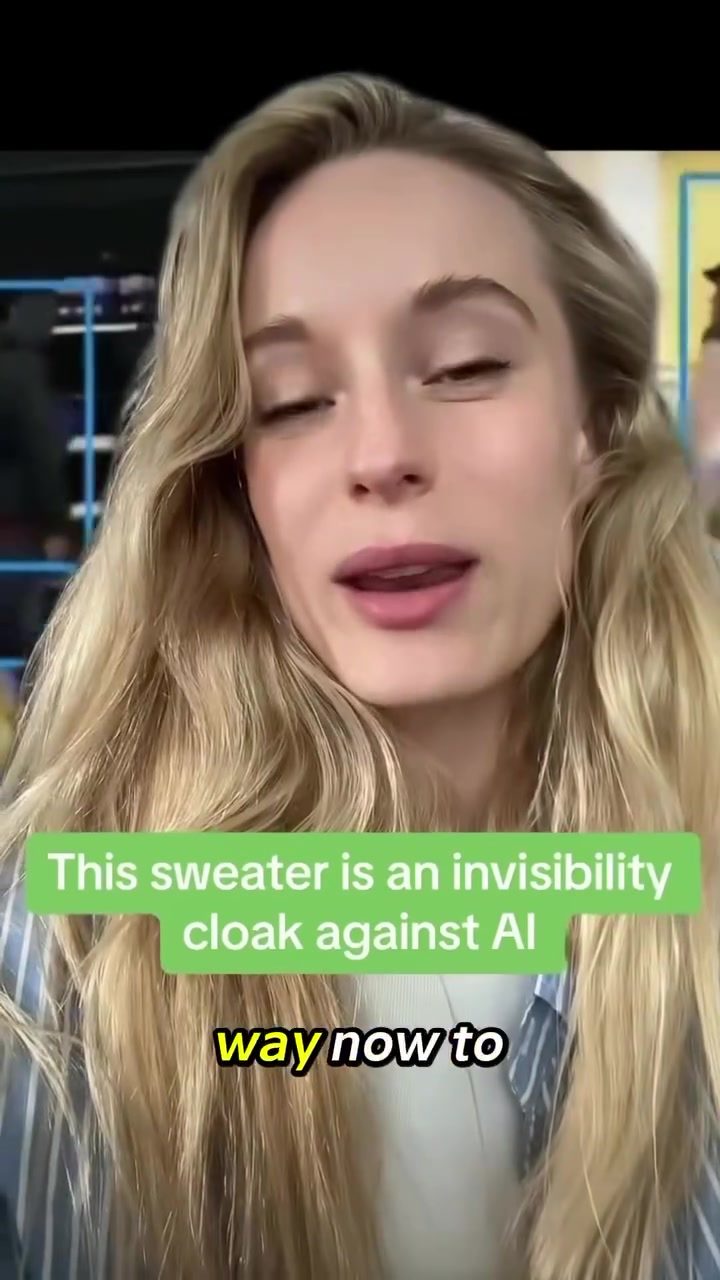
The Invisibility Sweater: How Adversarial Patterns Hide You From AI
Computer vision technology has become ubiquitous in everyday life. From retailers tracking customers to employers monitoring employees, the use of AI for surveillance is on the rise. However, a unique solution has emerged to combat this trend: the "invisibility sweater." Developed by the University of Maryland, this garment uses adversarial patterns to make the wearer virtually invisible to person-detecting machine learning models.
Why This Matters
As AI and computer vision become more prevalent in public and private spaces, concerns about privacy and surveillance are growing. The invisibility sweater offers a tangible way to evade this kind of tracking, raising important questions about the future of AI surveillance and personal privacy.
The Science Behind the Sweater
The invisibility sweater is designed with a specific pattern that confuses AI algorithms. These adversarial patterns are engineered to disrupt the way machine learning models recognize and track human figures. When a person wears the sweater, the AI struggles to detect their presence, effectively making them invisible to the system. As a result, the person can move through surveillance areas undetected.
How the Sweater Works
The key to the sweater's effectiveness lies in its intricate design. The patterns on the fabric are not random; they are carefully crafted to interfere with the algorithms that power computer vision systems. When the AI attempts to process the image, the patterns cause it to misinterpret the data, leading to a failure in recognizing the human form.
Main Discussion
The Development Process
The University of Maryland's research team developed the invisibility sweater as a practical application of adversarial machine learning. Adversarial patterns are designed to exploit the vulnerabilities in AI algorithms, making them ineffective in certain scenarios. The team tested the sweater in various environments, including workplaces and retail spaces, to ensure its effectiveness against different types of person-detecting systems.
Real-World Applications
The invisibility sweater has several potential applications, particularly in environments where privacy is a concern. For instance, employees in tightly monitored workplaces could use the sweater to evade constant surveillance. Similarly, shoppers in stores with advanced tracking systems could benefit from the garment's ability to obscure their presence from AI.
Social and Ethical Implications
The introduction of the invisibility sweater brings up significant ethical and social questions. While it offers a straightforward method to bypass AI surveillance, it also raises concerns about the ways in which AI is used and the potential for misuse. For example, individuals who use the sweater to avoid tracking may be perceived as suspicious, leading to unnecessary scrutiny.
Legal and Regulatory Considerations
As the use of AI and computer vision expands, so does the need for legal and regulatory frameworks to govern their application. The existence of the invisibility sweater underscores the importance of designing these systems with privacy considerations in mind. It also highlights the need for transparency in how AI is deployed and who has access to the data it collects.
Public Opinion and Future Outlook
As more people become aware of the invisibility sweater, its potential impact on public perception of AI and privacy will become clearer. Some may view it as a necessary tool for maintaining personal privacy, while others may see it as a threat to the effectiveness of surveillance systems designed to protect public safety.
Practical Tips
If you're interested in using an invisibility sweater to protect your privacy, here are a few practical tips to keep in mind:
Choosing the Right Sweater
Ensure that the sweater you choose has the correct adversarial patterns. Not all sweaters are designed with the same level of effectiveness, and some may not work as intended in all scenarios.
Where to Use It
Consider the environments where you want to use the sweater. Retail spaces, workplaces, and public areas with AI surveillance are ideal candidates. However, be aware of the potential reactions from those who might question your motives.
Stay Updated
Keep an eye on the latest research and developments in the field of adversarial machine learning. As AI technology evolves, so too will the methods used to circumvent it.
Important Takeaways
The invisibility sweater represents a significant advancement in the field of adversarial machine learning. Its ability to obscure the wearer from AI surveillance systems highlights the potential for innovative solutions to protect privacy in an increasingly monitored world.
Privacy and Surveillance
The use of AI and computer vision for surveillance is a growing trend, and the invisibility sweater offers a unique way to counteract it. However, it also raises important questions about the ethical, social, and legal implications of such technology.
Transparency and Accountability
As AI becomes more integrated into our daily lives, it is crucial to demand transparency and accountability from the organizations that deploy these systems. The invisibility sweater serves as a reminder of the need for privacy considerations in the design and implementation of AI.
Future of AI
The development of the invisibility sweater is just the beginning of a new wave of adversarial technologies. As AI continues to evolve, so too will the methods used to both exploit and protect against its capabilities.
Conclusion
The University of Maryland's invisibility sweater is a groundbreaking invention that leverages adversarial patterns to evade AI surveillance. While it offers a practical solution for maintaining privacy in a world increasingly reliant on AI, it also raises important questions about the future of surveillance and the ethical implications of such technology. As we move forward, it will be essential to consider these issues and work towards a balanced approach that respects both privacy and public safety.
Watch the Reel
Questions readers ask
What are adversarial patterns and how do they work in the invisibility sweater?
Adversarial patterns are specifically designed images or designs that interfere with the way AI algorithms process visual information. In the invisibility sweater, these patterns are integrated into the fabric to confuse person-detecting machine learning models, making the wearer less detectable by AI surveillance systems.
Can the invisibility sweater be worn in any setting?
The invisibility sweater is designed to be worn like any other piece of clothing, making it suitable for various settings. However, its effectiveness in evading AI surveillance may depend on the specific algorithms and camera systems in use, so it's not guaranteed to work in all situations.
How does the invisibility sweater impact personal privacy?
The invisibility sweater provides a novel way to reduce the visibility of individuals to AI surveillance systems. By making it harder for AI to detect and track people, this garment empowers individuals to take control of their own privacy.
Are there other types of AI avoidance clothing available?
While the invisibility sweater is a notable example, there are other experimental designs and concepts in the realm of AI avoidance clothing. These garments often use similar principles of adversarial patterns or other techniques to disrupt AI tracking and surveillance.
Can the invisibility sweater be used to evade all forms of surveillance?
The invisibility sweater is specifically designed to evade AI and computer vision surveillance. However, it does not provide protection against other forms of tracking, such as traditional CCTV cameras without AI enhancement, or other surveillance technologies.
Is the invisibility sweater a solution to all privacy issues related to AI?
The invisibility sweater offers a practical and innovative way to address specific privacy concerns related to AI surveillance. However, it is just one tool in a broader conversation about privacy and the ethical use of AI technology in society.
Related deep dives
Similar reads based on topic and creator.


Recent articles
Fresh deep dives from the latest Reels we unpacked.




Comments
Be the first to comment.