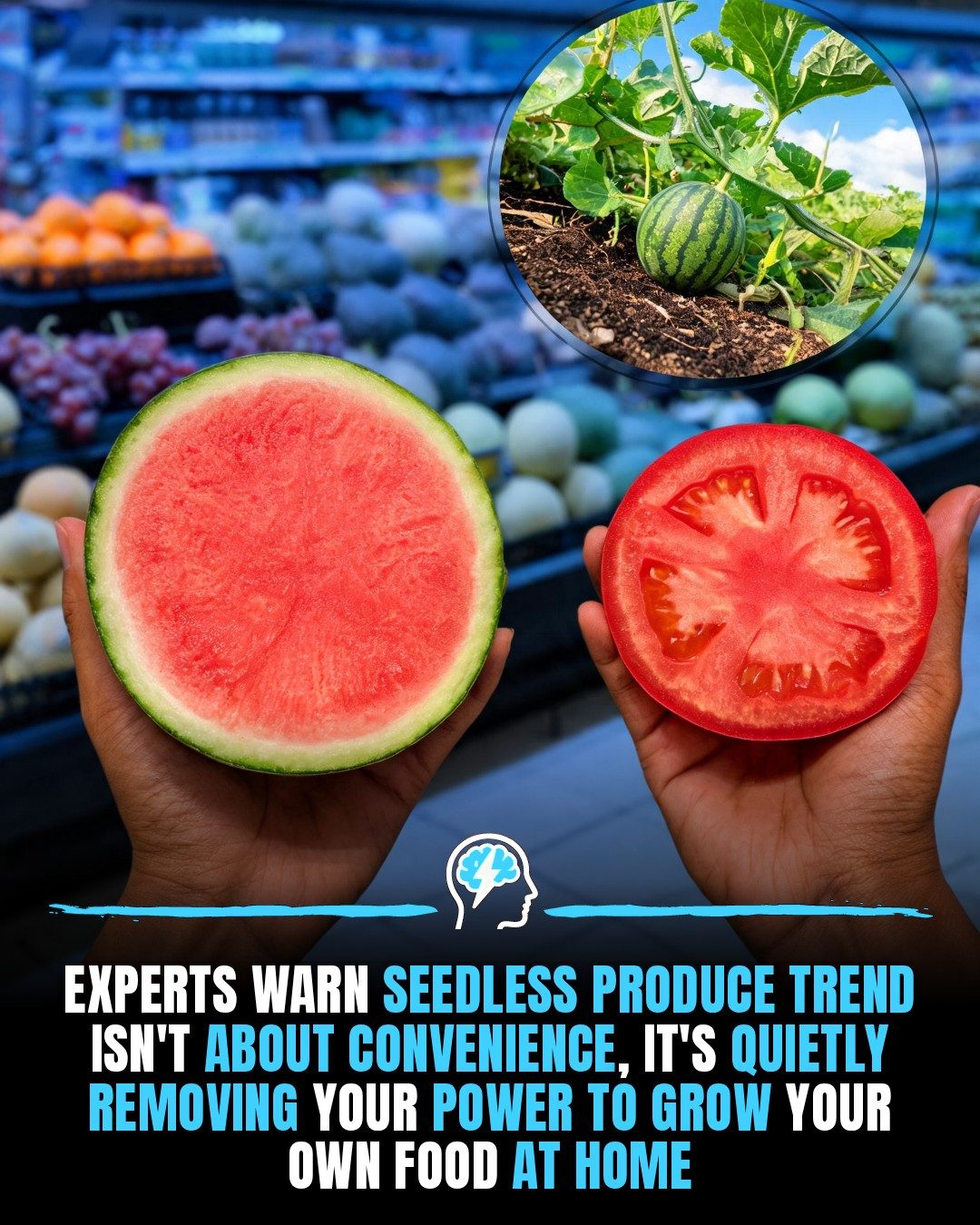
Understanding the Impact of Seedless Produce
Seedless produce, such as watermelon, grapes, and navel oranges, has become a staple in many households. These fruits are convenient, requiring no mess or effort in handling the seeds. However, the convenience of seedless produce comes with a hidden cost that affects both individual growers and the broader food ecosystem.
Why This Matters
The trend towards seedless produce is not just about convenience, it's quietly removing the power to grow your own food at home. Growing your own food has been a key part of human sustainability for thousands of years. Seedless produce disrupts that cycle by making it difficult for consumers to save seeds and replant them the next season. The shift towards seedless varieties has a significant impact on the diversity and self-sufficiency of our food system, making it crucial to understand the broader implications.
The Science Behind Seedless Produce
Watermelons
Seedless watermelons are typically produced by crossing a diploid (two sets of chromosomes) with a tetraploid (four sets of chromosomes). The resulting seed is a triploid, which is sterile. This means that a seedless watermelon cannot produce a new watermelon plant, effectively breaking the cycle of seed saving and replanting.
Grapes
Seedless grapes are produced through a process known as stenospermocarpy. In this process, the seed begins to form but then aborts, leading to a seedless fruit. This technique ensures consistent, seedless produce, but it also means that the grapes cannot be replanted from the seeds, making them dependent on commercial nurseries for propagation.
Navel Oranges
Navel oranges are clones, each tracing back to a single mutated tree in Brazil. This tree has been kept alive through grafting for centuries, ensuring that every navel orange produced is a direct descendant of the original tree. This method of propagation ensures consistent fruit but also means that navel oranges cannot be grown from seeds, making them entirely dependent on commercial nurseries.
The Quiet Cost of Seedless Produce
For thousands of years, people have saved seeds from their harvests and replanted them the next season. This practice was an essential part of food autonomy, allowing communities to be self-sufficient without relying on external sources for seeds. Seedless produce breaks this cycle, forcing consumers to depend on nurseries and seed companies every single season. This dependency can limit food autonomy and reduce the diversity of the food supply.
Who Benefits from Seedless Produce?
The shift towards seedless produce benefits large agribusinesses that hold patents and propagation rights on the most popular varieties. These companies control the supply chain from seed to shelf, ensuring a consistent product but also reducing genetic diversity. As heirloom and seeded varieties disappear from shelves, so does the genetic diversity that has been cultivated over centuries. This shift towards seedless produces trade a self-sustaining food system for convenience, turning growers into permanent buyers.
Practical Tips for Growers
Choose Seeded and Heirloom Varieties
To counteract the impact of seedless produce, consider choosing seeded and heirloom varieties. These varieties not only offer the ability to save seeds for future planting but often come with better flavor and nutritional value. By planting seeds that can be saved, you regain some control over your food supply and contribute to genetic diversity.
Support Local Farmers and Gardeners
Support gardening and small farming communities that grow seeded and heirloom varieties. These local growers are crucial in maintaining the genetic diversity of our food system. By purchasing from them and learning from their practices, you can help keep traditional seed-saving methods alive.
Start a Grow-it-Yourself Practice
Begin growing your own produce, starting with varieties that can be saved for future seasons. This practice not only provides fresh, homegrown food but also reintroduces the skill of seed saving. Over time, you can expand your home garden to include a variety of fruits and vegetables, further increasing your food autonomy.
Join the Seed-Saving Community
Join or form a seed-saving community in your area. These communities share knowledge, seeds, and resources to help each other grow a variety of produce. Through these networks, you can learn new techniques, access rare varieties, and contribute to the preservation of our food heritage.
Engage in Seed Swaps
Participate in seed swaps, either online or in person. Seed swaps allow you to exchange seeds with other growers, increasing the diversity of your garden while helping others do the same. These events are also a great opportunity to learn about new varieties and gardening techniques.
Important Takeaways
Seedless produce, while convenient, has significant implications for food autonomy and genetic diversity. By understanding the science behind seedless produce and its broader impacts, you can make more informed decisions about the fruits and vegetables you consume. Seeking out seeded and heirloom varieties and supporting local growers are practical steps that can help preserve traditional food systems and contribute to a more self-sustaining food supply.
Conclusion
Seedless produce is a double-edged sword. On one hand, it offers unmatched convenience, free from the mess and effort of handling seeds. On the other, it removes the power to grow and save seeds, turning consumers into perpetual buyers. By choosing seeded and heirloom varieties, supporting local growers, and engaging in seed-saving practices, you can regain control over your food supply and contribute to a more diverse and resilient food ecosystem.
Watch the Reel
Questions readers ask
What is seedless produce and why has it become popular?
Seedless produce refers to fruits like watermelon, grapes, and navel oranges that have been bred to be seedless for convenience. They have gained popularity due to the ease of consumption, as they eliminate the need to deal with seeds, making them a favorite for many households.
How does seedless produce affect my ability to grow my own food?
Seedless produce makes it challenging to save seeds for replanting. Since these fruits are often sterile or produce non-viable seeds, consumers cannot easily grow new plants from them, which disrupts traditional seed saving techniques and the cycle of replanting.
What are the broader implications of the trend towards seedless produce?
The shift towards seedless produce has significant impacts on food autonomy and sustainability. It reduces the ability of individuals to rely on saved seeds for future plantings which weakens local food systems and the practice of growing your own food.
Can I grow seedless grapes from seeds found in seedless grapes?
No, seedless grapes typically do not produce viable seeds. Even if seeds are present, they usually do not germinate. To grow seedless grapes, you would need to obtain them through grafting or cutting techniques, which require specific knowledge and resources.
Are all seedless fruits created through genetic modification?
Not all seedless fruits are created through genetic modification. Some seedless varieties, like seedless watermelon, are developed through traditional breeding methods that involve crossing different plant varieties to produce seedless offspring.
What are some alternatives to seedless produce for maintaining food autonomy?
To maintain food autonomy, consider growing traditional seed-bearing fruits and vegetables. These allow you to save seeds for future planting. Look for heirloom varieties and open-pollinated seeds, which are well-suited for seed saving and replanting.
Related deep dives
Similar reads based on topic and creator.



Recent articles
Fresh deep dives from the latest Reels we unpacked.




Comments
Be the first to comment.