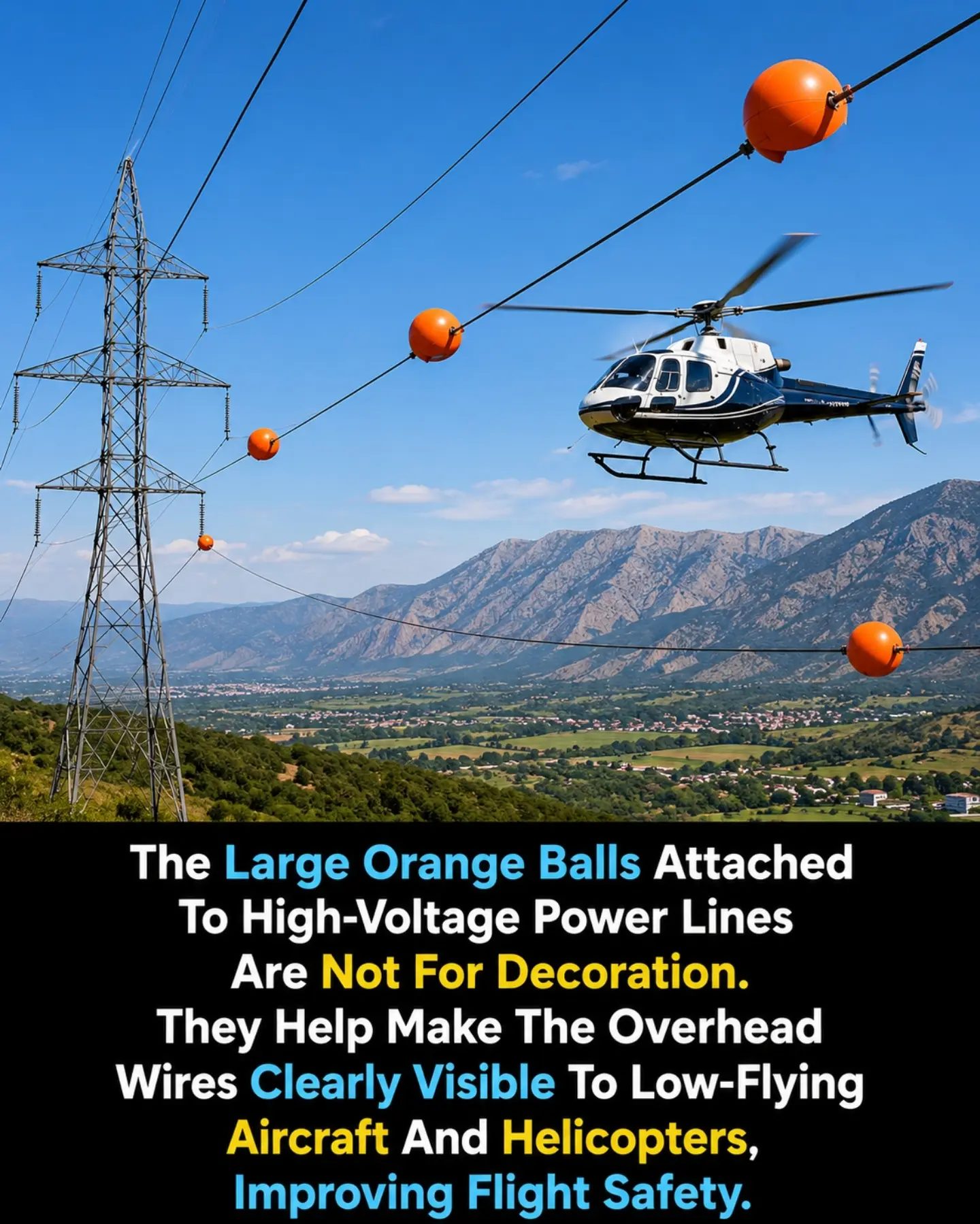
Aircraft Safety near Power Lines
Flying a helicopter near high-voltage power lines is a critical maneuver that requires utmost caution, especially when the lines are not easily visible. The orange balls attached to these power lines serve a vital purpose in enhancing flight safety.
Why This Matters
Aviation safety is paramount, especially for low-flying aircraft and helicopters. These vehicles often navigate through terrains where power lines are prevalent, making visibility and awareness of these lines crucial. The presence of orange balls on power lines is a simple yet effective measure that significantly improves safety during flight operations.
Understanding the Importance of Orange Balls on Power Lines
What Are These Orange Balls?
The large orange balls attached to high-voltage power lines are not mere decorative elements. Their primary function is to make the overhead wires more visible to low-flying aircraft and helicopters. These markers act as visual cues, helping pilots identify the presence of power lines even from a distance.
Why Are They Important for Flight Safety?
Power lines, especially in rural or densely forested areas, can be difficult to spot from the air. The orange balls enhance the visibility of these lines, reducing the risk of collisions. This is particularly important for helicopters, which often operate at lower altitudes and in varied terrains.
How Do They Improve Flight Safety?
The visibility provided by these orange balls allows pilots to maintain a safe distance from power lines, minimizing the risk of accidents. By making the power lines more conspicuous, these markers help pilots navigate more safely, especially in areas with dense vegetation or poor lighting conditions.
Visual and Practical Benefits
The bright orange color of the balls contrasts sharply against the background, making them easily visible from various angles and distances. This high contrast is essential for ensuring that pilots can spot the power lines in different weather and lighting conditions. The practical benefits of these markers are not limited to visibility alone; they also play a crucial role in emergency situations where pilots need to quickly assess their surroundings.
Practical Tips for Pilots
Regular Training
Pilots should regularly undergo training that emphasizes the importance of identifying and avoiding power lines. This training should include simulations and practical exercises that help pilots recognize the orange markers and understand their significance.
Equipment Checks
Helicopter operators should ensure that their aircraft are equipped with the latest safety features, including advanced navigation systems and obstacle detection technology. Regular maintenance and updates to these systems can further enhance safety during flight operations.
Pre-Flight Preparation
Before every flight, pilots should conduct a thorough pre-flight check that includes reviewing the route and identifying potential hazards, such as power lines. This preparation ensures that pilots are aware of the terrain and can plan their flight path accordingly.
Weather Awareness
Weather conditions can significantly impact visibility. Pilots should be aware of the forecast and plan their flights during times when visibility is optimal. In case of poor weather, pilots should consider alternative routes or delay the flight to ensure safety.
Important Takeaways
The orange balls attached to high-voltage power lines are crucial for aviation safety, particularly for low-flying aircraft and helicopters. Their role in enhancing visibility cannot be overstated. By making these markers a standard part of safety protocols, the aviation industry can significantly reduce the risk of accidents and ensure safer flight operations.
Conclusion
The safety of low-flying aircraft and helicopters is greatly enhanced by the presence of orange balls on power lines. These markers are a simple yet effective measure that contributes to safer flight operations. By understanding their importance and implementing practical tips, pilots can navigate more safely and ensure the well-being of both the crew and the passengers.
Watch the Reel
Questions readers ask
What is the main purpose of orange balls on power lines?
The primary purpose of orange balls on power lines is to increase the visibility of high-voltage power lines, particularly in rural or forested areas. This enhanced visibility helps pilots, especially those flying low-altitude missions, to better navigate and avoid potential collisions with power lines.
Why are these markers particularly important for helicopter safety?
Helicopters often need to fly at low altitudes and navigate through varied terrains where power lines may not be easily visible. The orange balls serve as clear visual cues, helping pilots maintain a safe distance from power lines and reducing the risk of accidents.
How do orange balls on power lines help prevent helicopter crashes?
These markers make power lines more conspicuous, especially in low-visibility conditions. By providing a distinct visual reference, orange balls enable pilots to quickly identify and avoid power lines, thus significantly reducing the likelihood of collisions and crashes.
What are the benefits of using orange balls on power lines in rural areas?
In rural or forested areas, where power lines may be obscured by trees or other obstacles, orange balls enhance visibility, making it easier for pilots to recognize and avoid these hazards. This is particularly beneficial for helicopters flying in these environments during search and rescue or utility missions.
Why are helicopter power line collisions so dangerous?
Power line collisions are extremely dangerous for helicopters because they can cause immediate destruction of the rotor system, leading to catastrophic crashes. Additionally, the high voltage carried by these lines poses an electrocution risk to the pilot and passengers.
Recent articles
Fresh deep dives from the latest Reels we unpacked.




Comments
Be the first to comment.