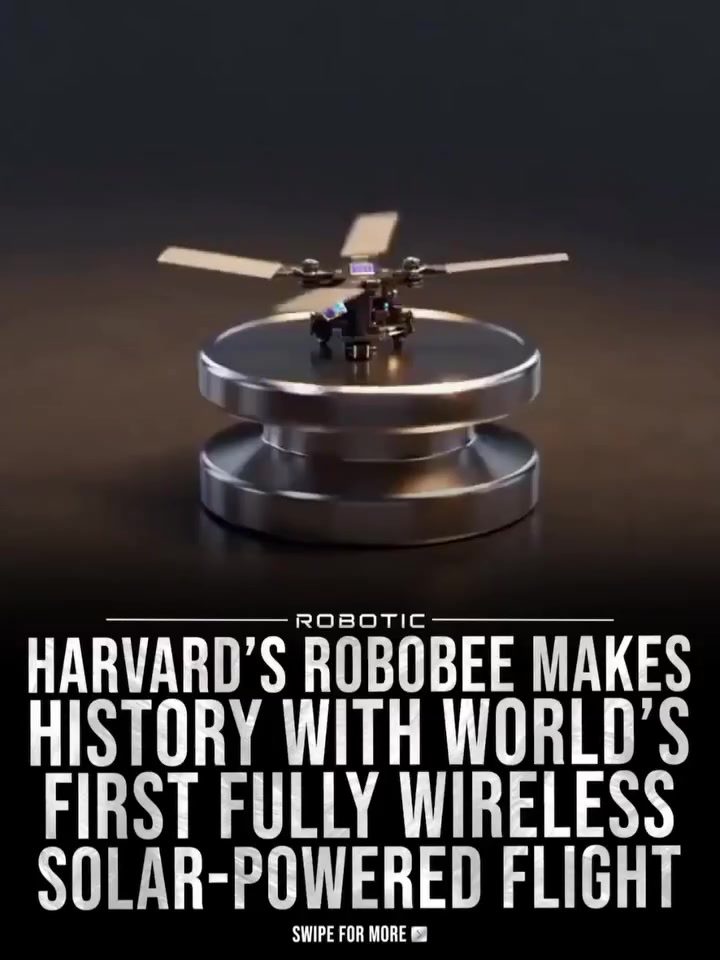
RoboBee: The First Fully Wireless Solar-Powered Drone
Harvard’s RoboBee has achieved what was once considered impossible: the world's first fully wireless solar-powered flight of an insect-sized drone. This tiny marvel weighs just 259 mg and flaps its X-shaped wings at an astonishing 170 times per second. This breakthrough isn't just a technological feat; it opens up new possibilities for the future of micro-robots in various fields.
Why This Matters
The significance of this achievement lies in its potential applications. The RoboBee's ability to fly wirelessly and autonomously using only solar power could revolutionize several industries. Imagine swarms of these micro-robots used for environmental monitoring, search-and-rescue missions, and precision agriculture. The implications are vast and could lead to more efficient and effective solutions in these areas.
The Technology Behind RoboBee
Harnessing Solar Power
One of the most impressive aspects of the RoboBee is its ability to fly without batteries or cables. Instead, it uses solar power to sustain its flight. This is a significant advancement in robotics, as it eliminates the need for heavy batteries and complicated wiring systems. The drone's lightweight design and efficient use of solar energy make it an ideal candidate for prolonged missions where power supply is limited.
Ultra-Small Design
The RoboBee's size is one of its key advantages. Weighing only 259 mg, it's incredibly lightweight and agile. Its X-shaped wings allow it to perform complex maneuvers with precision. The combination of its small size and efficient design makes the RoboBee a versatile tool for tasks that require maneuverability and precision.
Applications and Future Potential
Environmental Monitoring
One of the most exciting potential applications of the RoboBee is in environmental monitoring. These tiny drones could be deployed in large numbers to gather data from hard-to-reach or hazardous areas. They could monitor air quality, track pollution levels, and even survey wildlife populations without disturbing the environment. Their small size and autonomous capabilities make them perfect for such tasks.
Search-and-Rescue Missions
In search-and-rescue operations, time is of the essence. The RoboBee's ability to fly wirelessly and autonomously makes it an invaluable tool in these scenarios. Swarms of RoboBees could quickly search large areas, providing real-time data to rescue teams. This could significantly improve the chances of finding missing persons or assessing damage in disaster areas.
Precision Agriculture
In agriculture, precision is key to maximizing crop yields and minimizing waste. The RoboBee could be used to monitor crop health, detect pests, and even apply pesticides or fertilizers with pinpoint accuracy. Its small size and autonomous capabilities make it a valuable tool for farmers looking to optimize their operations.
Practical Tips for Implementing RoboBee Technology
If you're interested in implementing RoboBee technology, here are some practical tips to get you started:
Understand the Limitations
While the RoboBee is an impressive piece of technology, it's important to understand its limitations. Currently, it can only fly for a short period using solar power. Future iterations may improve this, but it's essential to plan missions accordingly. Additionally, the RoboBee's small size means it can be easily affected by weather conditions, so consider this when deploying them in the field.
Plan for Maintenance
Even though the RoboBee is designed to be autonomous, it will still require regular maintenance. Ensure you have a plan for repairing and replacing damaged units. Given their size and the nature of their missions, it's likely that some units will be lost or damaged over time.
Integrate with Existing Systems
To maximize the benefits of RoboBee technology, consider integrating it with your existing systems. For example, if you're using the RoboBee for environmental monitoring, ensure it can communicate with your data collection and analysis platforms. This will allow you to leverage the data collected by the RoboBee more effectively.
Important Takeaways
- The RoboBee represents a significant advancement in drone technology, particularly in terms of size and power efficiency.
- Its potential applications are vast, ranging from environmental monitoring to search-and-rescue missions and precision agriculture.
- Despite its advantages, it's essential to understand the RoboBee's limitations and plan accordingly.
- Regular maintenance and integration with existing systems are key to making the most of RoboBee technology.
Conclusion
The RoboBee is more than just a technological marvel; it's a harbinger of things to come in the world of robotics. Its ability to fly wirelessly and autonomously using solar power opens up a world of possibilities for micro-robots. As the technology advances, we can expect to see more innovative applications and improvements in efficiency and capability. Whether it's for environmental monitoring, search-and-rescue, or precision agriculture, the RoboBee is poised to play a significant role in shaping the future.
Watch the Reel
Questions readers ask
How does the Harvard RoboBee's solar-powered system work?
The RoboBee harnesses energy from sunlight using tiny solar cells. These cells convert light into electrical power, which drives the drone's flight. This allows the RoboBee to operate wirelessly and autonomously, without the need for external power sources or batteries.
What makes the RoboBee's flight capabilities so impressive?
The RoboBee's flight is remarkable due to its size and speed. Weighing just 259 mg, it flaps its X-shaped wings at 170 times per second. This high wing beat frequency is comparable to that of a real bee, making it highly agile and maneuverable.
How does robotics like the RoboBee benefit environmental monitoring?
Swarms of RoboBees can be deployed to collect data in remote or hazardous environments, such as monitoring air quality, detecting pollutants, or tracking wildlife. Their small size allows them to access confined spaces and their solar power means they can operate continuously.
What are the advantages of using solar-powered drones like the RoboBee in precision agriculture?
RoboBees can help farmers by monitoring crop health, detecting pests or diseases, and optimizing the use of resources like water and pesticides. Their solar power means they can operate independently in the field.
What challenges did Harvard's robotic research team face in developing the RoboBee?
The team had to overcome significant hurdles in miniaturizing the solar cells and power management systems to fit the tiny drone. Additionally, achieving stable and controlled flight at such a small scale presented technical challenges.
How does the RoboBee's wireless drone flight capability enhance its potential applications?
The wireless capability means RoboBee can operate freely without the constraint of a power tether. This opens up possibilities for long-range monitoring, search-and-rescue in inaccessible areas, and extended missions for environmental monitoring and precision agriculture.
What other technological advancements were necessary for the RoboBee's solar-powered flight?
In addition to miniaturized solar cells, the development of lightweight and efficient power management systems was crucial. The team also had to make breakthroughs in flight control algorithms to stabilize the drone's flight at high wing beat frequencies.
Related deep dives
Similar reads based on topic and creator.

Recent articles
Fresh deep dives from the latest Reels we unpacked.




Comments
Be the first to comment.