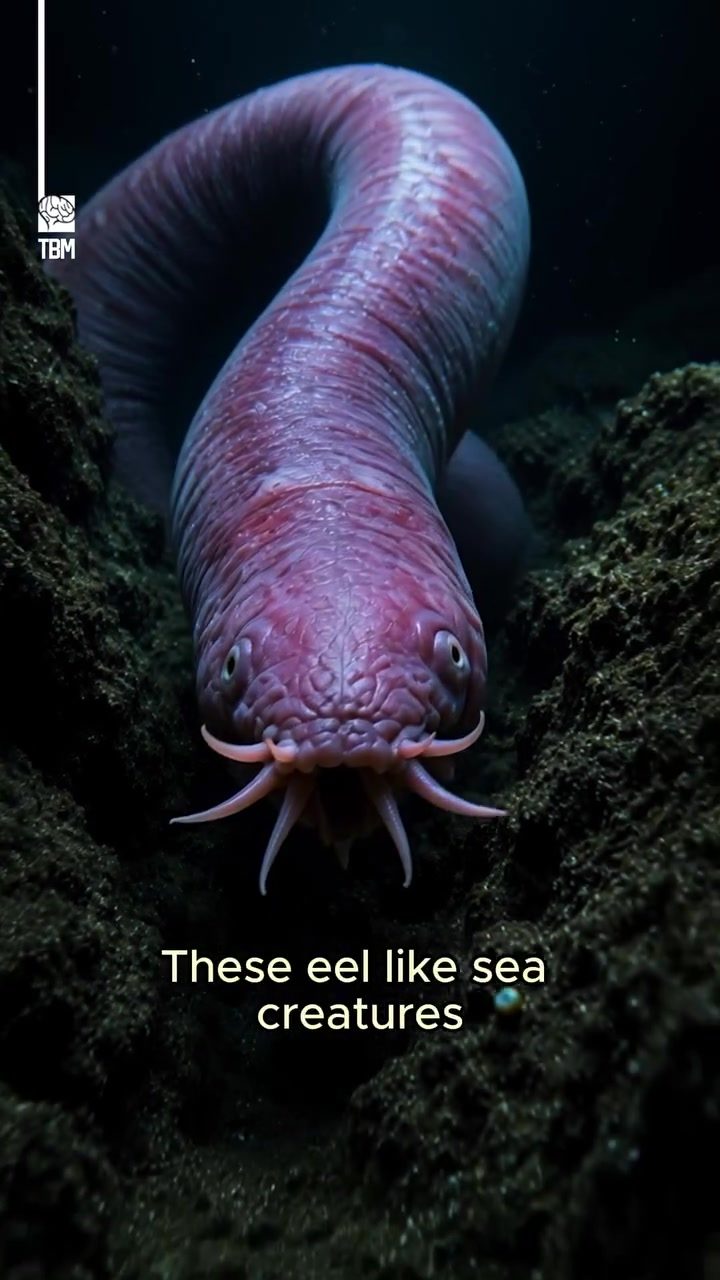
Hagfish: Nature’s Stickiest Defense
Hagfish are among the most peculiar creatures inhabiting the ocean depths. When threatened, these eel-like animals release immense quantities of thick, sticky slime. This slime can block a predator's gills and transform the surrounding water into an inescapable trap. To avoid becoming ensnared in their own defenses, hagfish employ a remarkable tactic: they tie their bodies into a knot and slide it from head to tail, effectively wiping the slime away like a living squeegee.
Why This Matters
Deep-sea ecosystems are often shrouded in mystery, and the adaptations of creatures like the hagfish offer insights into the unique challenges and survival strategies of deep-sea life. Understanding these adaptations can provide valuable context for marine biology and ecology, as well as inspire innovative solutions in various fields.
Hagfish: The Eel-Like Sea Creatures
Unique Physical Characteristics
Hagfish are known for their elongated, eel-like bodies and lack of jaws. These features, combined with their slime-producing glands, make them a formidable opponent for many deep-sea predators. Their slime is produced by specialized slime glands located along the sides of their bodies. When threatened, these glands release mucoid threads that can quickly expand and entangle predators.
The Slime Defense Mechanism
When a hagfish is attacked, it releases a large volume of slime, which can clog the gills of predators and impede their movement. Despite its effectiveness, this defense mechanism poses a problem for the hagfish itself. The slime can also trap the hagfish, making it difficult for the creature to escape.
The Slime-Wiping Knot Trick
To counter this issue, the hagfish has developed an ingenious technique. It ties its body into a knot and slides this knot from head to tail, effectively using its own body as a squeegee to wipe off the slime. This method allows the hagfish to maintain its mobility and escape from tight situations. This technique is not only used for self-cleansing but also for other purposes, such as gaining leverage when tearing apart food.
The Versatility of the Knot Technique
The hagfish's knot trick is not just a defensive maneuver; it serves multiple purposes. For instance, it helps the hagfish navigate through tight spaces and can be used to gain leverage when feeding. This versatility highlights the hagfish's remarkable adaptations and its ingenuity in surviving the challenging conditions of deep-sea life.
Practical Tips
For Marine Biologists
For those studying marine biology, observing the hagfish offers a unique opportunity to understand the defensive and adaptive mechanisms of deep-sea creatures. By closely examining the hagfish's slime and knot technique, researchers can gain insights into the evolutionary pressures driving these adaptations.
For Engineers and Innovators
The hagfish's slime and knot technique have inspired innovations in various fields. For example, the slime's properties are being studied for potential applications in biomedicine, such as developing new materials for wound dressings or adhesives. The knot technique could inspire new approaches in robotics and mechanical engineering, particularly in designing devices that can operate in challenging environments.
Important Takeaways
Hagfish are a testament to the strange and wondrous adaptations found in the deep sea. Their ability to produce and manage slime, combined with their unique knot technique, makes them a fascinating subject for both scientific research and innovative applications. Understanding the hagfish’s defenses can provide valuable insights into the broader field of marine biology and inspire novel solutions in various disciplines.
Conclusion
The hagfish’s slime and knot technique are remarkable examples of natural adaptation. By studying these creatures, we gain a deeper appreciation for the complexities of deep-sea life and the ingenious strategies that allow organisms to thrive in such extreme environments. Whether you’re a marine biologist, engineer, or simply curious about the natural world, the hagfish offers a wealth of knowledge and inspiration.
Watch the Reel
Questions readers ask
How does the hagfish produce its slime?
Hagfish produce their slime through specialized glands located along their body. These glands release a combination of proteins and mucus, which mix with seawater to create a thick, sticky substance.
What is the primary purpose of the hagfish's slime?
The primary purpose of the hagfish's slime is to act as a defense mechanism against predators. The slime can block a predator's gills, making it difficult for them to breathe, and can create a sticky trap in the water, allowing the hagfish to escape.
How do hagfish avoid getting trapped in their own slime?
Hagfish have a unique strategy to avoid getting trapped in their own slime. They tie their bodies into a knot and slide it from head to tail, effectively wiping the slime away. This behavior is often referred to as their 'knot-like slime' technique.
What are some of the unique adaptations of hagfish for deep-sea survival?
Hagfish have several unique adaptations for deep-sea survival, including their slime defense mechanism, and not needing to breathe. Their eel-like bodies also help them to navigate the harsh ocean depths.
How do hagfish use their slime to outmaneuver predators?
When threatened, hagfish release large amounts of slime, which can ensnare predators and block their gills. This allows the hagfish to create an opening to escape while the predator is incapacitated.
What are some of the challenges hagfish face in the deep sea?
Deep-sea environments are harsh and unpredictable, with extreme pressures, cold temperatures, and a lack of sunlight. Hagfish have had to develop unique survival strategies, such as their slime defense and resilience to low-oxygen environments, to thrive in these conditions.
Why is the hagfish's slime so effective against predators?
The hagfish's slime is effective against predators due to its thickness and stickiness. It can quickly expand and solidify when it comes into contact with seawater, making it difficult for predators to move or breathe.
Recent articles
Fresh deep dives from the latest Reels we unpacked.




Comments
Be the first to comment.