Sustainable Agriculture in Guyana
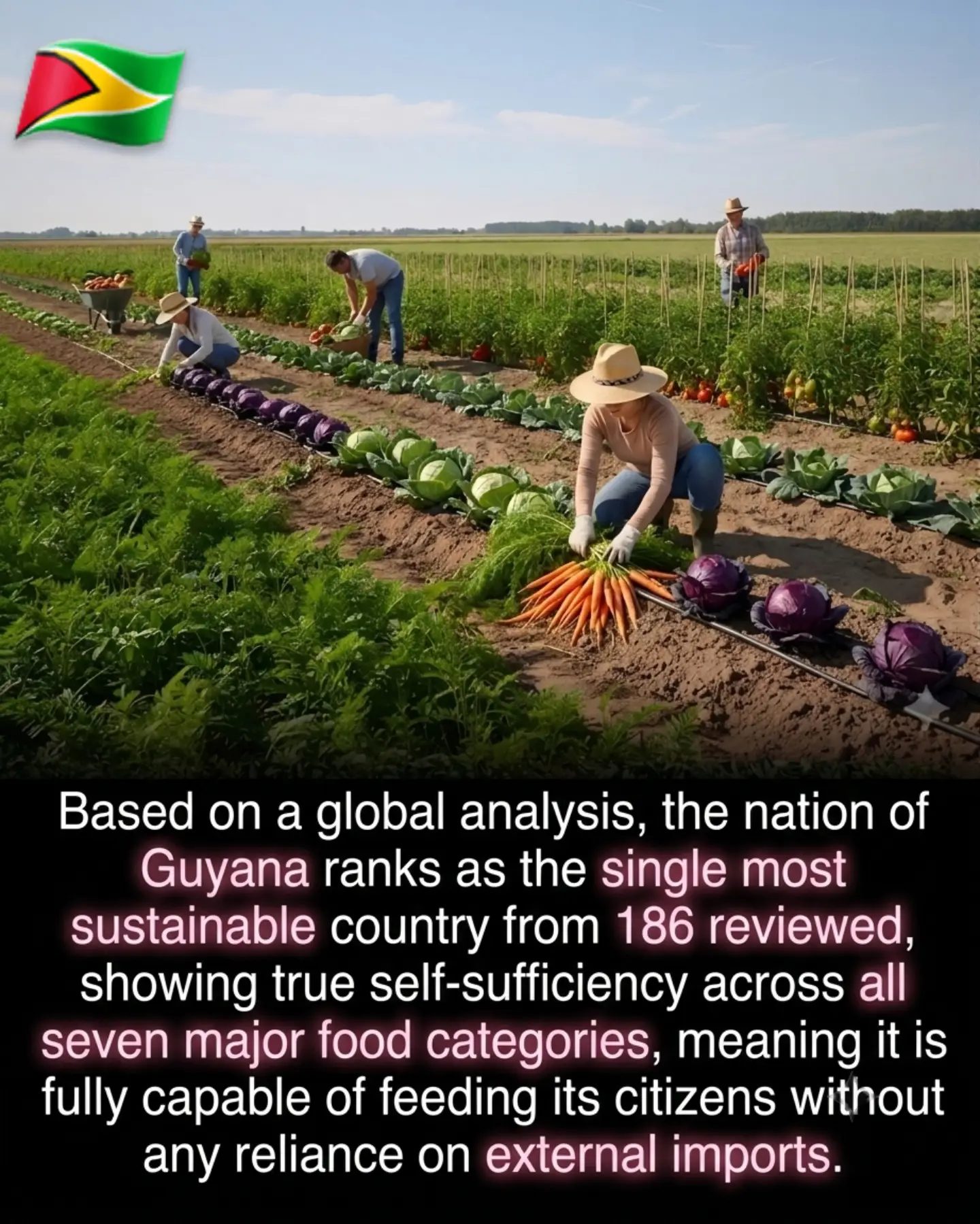
Guyana is a small nation on the northern coast of South America, known for its rich biodiversity and lush landscapes. It has recently gained significant attention for its achievements in sustainable agriculture. Guyana ranks as the most sustainable country out of 186 countries reviewed in a global analysis, demonstrating true self-sufficiency in food production. This means the nation is capable of feeding its citizens without relying on external imports, a remarkable feat in today's globalized world.
Why This Matters
Understanding Guyana's success in sustainable agriculture offers valuable insights into how other countries can achieve self-sufficiency and environmental sustainability. This is particularly relevant as the world grapples with climate change, food security, and the need for resilient agricultural systems. Guyana’s experience provides a model for integrating sustainable practices into agriculture, benefiting both the environment and local communities.
Main Discussion
The Significance of Guyana's rank
The global analysis that ranked Guyana as the most sustainable country highlights several key factors that contribute to its success. These include a strong focus on local food production, the use of sustainable farming practices, and a commitment to environmental conservation. Guyana's agricultural sector has been able to produce a wide variety of crops, including vegetables like carrots and cabbage, without relying on imported goods. This self-sufficiency not only ensures food security but also supports local economies and reduces the carbon footprint associated with food transportation.
Sustainable Farming Practices
Sustainable farming practices are at the heart of Guyana's success. These practices include:
Crop Rotation
Crop rotation is a fundamental practice in Guyana's agricultural landscape. Farmers rotate different crops in the same field to maintain soil health and prevent depletion of nutrients. This practice not only improves soil fertility but also helps in controlling pests and diseases.
Integrated Pest Management
Integrated Pest Management (IPM) is another crucial practice. Instead of relying on chemical pesticides, farmers in Guyana use a combination of biological, cultural, and physical methods to control pests. This approach reduces the environmental impact and helps in maintaining biodiversity.
Water Management
Efficient water management is essential in agricultural sustainability. Guyana's farmers use techniques like drip irrigation and rainwater harvesting to conserve water. These methods ensure that crops receive the right amount of water while minimizing wastage.
Self-sufficiency Across Major Food Categories
Guyana's self-sufficiency extends across all seven major food categories, including grains, fruits, vegetables, meat, dairy, and spices. This diversity in food production ensures a balanced diet for the population and reduces the need for imports. The country's ability to produce a wide range of food items is a testament to its robust agricultural infrastructure and the resilience of its farming community.
Practical Tips for Achieving Sustainable Agriculture
Adopting Sustainable Practices
Farmers and agricultural communities around the world can learn from Guyana's success. Adopting sustainable practices such as crop rotation, integrated pest management, and efficient water management can significantly enhance agricultural productivity and environmental sustainability. These practices not only improve soil health and crop yield but also contribute to long-term sustainability.
Investing in Local Food Production
Investing in local food production is crucial for achieving self-sufficiency. Governments and communities should support local farmers by providing access to resources, technology, and training. This support can help in building a resilient and sustainable agricultural sector that can meet the food needs of the population.
Promoting Environmental Conservation
Environmental conservation is an essential aspect of sustainable agriculture. Policies and practices that promote reforestation, soil conservation, and biodiversity protection can help in maintaining a healthy ecosystem. These efforts not only support sustainable farming but also contribute to overall environmental sustainability.
Important Takeaways
Guyana's success in sustainable agriculture offers valuable lessons for the rest of the world. The country's self-sufficiency in food production, diverse agricultural practices, and commitment to environmental conservation serve as a model for achieving sustainability. By adopting sustainable practices, investing in local food production, and promoting environmental conservation, other countries can also achieve similar results.
Conclusion
Guyana's achievements in sustainable agriculture are a testament to the country's commitment to environmental sustainability and self-sufficiency. By ranking as the most sustainable country in a global analysis, Guyana has set a benchmark for other nations to follow. The country's success in producing a wide range of food items without relying on imports highlights the importance of sustainable farming practices, local food production, and environmental conservation. By learning from Guyana’s experience, the rest of the world can work towards building resilient and sustainable agricultural systems, ensuring food security and environmental sustainability for future generations.
Watch the Reel
Questions readers ask
What makes Guyana a global leader in sustainable, self sufficient food production?
Guyana's leadership in this area is due to its strong focus on local agriculture and sustainable farming. The country has achieved true self-sufficiency. Guyana can feed its citizens without relying on external food imports, making it a model for other nations.
How does Guyana's sustainable agriculture benefit the environment?
Guyana's sustainable farming practices prioritize environmental conservation, making it a leader in this area. By focusing on local agriculture, the country reduces the need for food imports, lowering the carbon footprint associated with transportation. Additionally, sustainable practices help preserve Guyana's rich biodiversity and lush landscapes.
What are some key sustainable farming practices used in Guyana?
Guyana employs various sustainable farming techniques, such as crop rotation, composting, and integrated pest management. These methods help maintain soil fertility, reduce waste, and minimize the use of harmful chemicals. They are essential to maintaining Guyana's self-sufficiency in food production.
How does Guyana's approach to food production address global challenges?
Guyana's model of sustainable, self-sufficient food production addresses global challenges like climate change and food security. By demonstrating that a country can feed its population without relying on imports, Guyana provides a blueprint for other nations to follow. This is especially relevant as the world faces increasing environmental pressures.
What role does local agriculture play in Guyana's food security?
Local agriculture is at the heart of Guyana's food security strategy. By focusing on local production, Guyana ensures a steady supply of food for its citizens. This reduces dependence on external sources and builds resilience against global food supply disruptions.
What is Guyana's ranking in global sustainable agriculture?
Guyana ranks as the most sustainable country out of 186 countries reviewed in a global analysis. This ranking highlights the country's commitment to sustainable farming and its success in achieving self-sufficiency in food production. It underscores Guyana's leadership in sustainable agriculture and environmental conservation.
What can other countries learn from Guyana's approach to sustainable food production?
Other countries can learn from Guyana’s emphasis on local agriculture and sustainable farming practices. By adopting similar approaches, nations can work towards self-sufficiency in food production, reduce their environmental impact, and enhance food security. Guyana's model offers practical steps for achieving these goals.
Related deep dives
Similar reads based on topic and creator.




Recent articles
Fresh deep dives from the latest Reels we unpacked.




Comments
Be the first to comment.