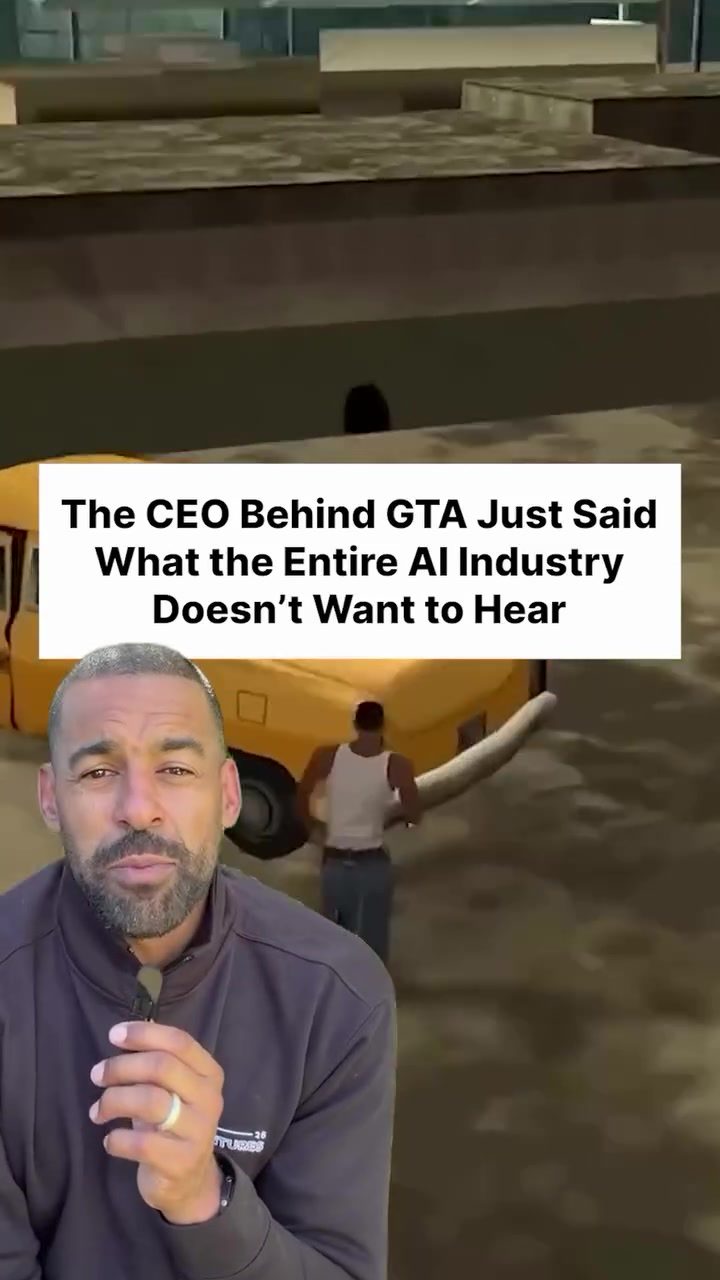
Grand Theft Auto and the Role of AI in Game Development
Grand Theft Auto (GTA) is often hailed as one of the most iconic video games of all time. With its immersive gameplay and massive fanbase, it's a title that has left an indelible mark on the gaming industry. Recently, the conversation around GTA has taken a significant turn with the insights shared by Strauss Zelnick, the CEO of Take-Two Interactive, the company behind GTA. Zelnick's comments have sparked a debate about the potential of AI in creating games as impactful as GTA.
Why This Matters
The discussion around AI's role in game development is crucial for understanding the future of the industry. As AI continues to evolve, its potential applications in game development are vast. Zelnick's perspective provides a unique insight into how industry leaders view the intersection of AI and creative genius.
The Argument Against AI-Generated Hits
Zelnick's stance on AI is clear: he believes that hits like GTA are created by genius, not by datasets and compute power. He argues that while AI can analyze past successes, it lacks the ability to innovate and come up with entirely new ideas. Datasets, he notes, can only tell you what worked in the past; they can't predict what nobody has thought of yet.
This argument highlights a fundamental difference between human creativity and AI's capabilities. While AI can generate volume—such as music, art, or even game mechanics—it struggles to generate taste. This is a critical point, as the success of a game like GTA relies heavily on its unique vision and execution, not just on the mechanics.
AI as a Support Tool
Despite his skepticism about AI's ability to create hits, Zelnick acknowledges that AI can serve as a valuable support tool. In the development of GTA 6, AI is being used to reduce mundane work, allowing creators to focus on the most creative parts of the job. This support tool role is significant, as it can streamline the production process and potentially reduce costs.
For instance, AI can assist in generating assets, writing code, and producing music. These tasks, while necessary, can be time-consuming and may not require the same level of human creativity as designing the core gameplay mechanics or crafting the narrative.
The Economics of Production
AI's ability to generate assets faster than any human team changes the economics of production. As Zelnick points out, this speed can be copied, but taste cannot. Speed is a valuable asset in reducing production times, but what truly sets a game apart is the unique vision that decides what to produce. In a competitive market, companies that can leverage AI to enhance their creative output will have a significant advantage.
Practical Tips for Game Developers
For game developers, the insights from Zelnick provide a roadmap for integrating AI into their workflows. Here are some practical tips:
- Leverage AI for Asset Creation: Utilize AI to generate assets, write code, and produce music. This can significantly speed up the production process and allow more time for creative tasks.
- Focus on Vision: Ensure that the unique vision and creativity of your game are at the forefront. AI can support this vision, but it cannot replace it.
- Creating Taste: Insist on a focus on creating things that evoke emotional responses, something that can only be achieved through meaningful storytelling and compelling gameplay.
Important Takeaways
The debate around AI in game development underscores several key points:
- Human Creativity vs. AI Efficiency: While AI can generate volume and reduce production times, it cannot replace human creativity and the ability to innovate.
- Support Tools: AI's role in game development is best suited as a support tool, reducing mundane tasks and allowing creators to focus on the most creative aspects of the job.
- Economic Impact: The speed and efficiency of AI can change the economics of game production, making it more cost-effective and faster to create high-quality games.
Conclusion
The future of AI in game development is both promising and challenging. While AI can support the creative process and reduce production times, it cannot replace the human genius required to create hits like GTA. As the industry continues to evolve, the companies that will succeed are those that leverage AI to enhance their creative output, focusing on the unique vision and taste that sets their games apart.
Watch the Reel
Questions readers ask
How does Strauss Zelnick view the role of AI in game development?
Strauss Zelnick, the CEO of Take-Two Interactive, acknowledges AI as a valuable tool in game development. He believes AI can significantly enhance various aspects of the game creation process. However, he emphasizes that human creativity is indispensable for producing breakthrough hits like Grand Theft Auto (GTA).
What is the significance of the debate around AI in game development?
The debate around AI in game development is crucial as it highlights the evolving landscape of the gaming industry. Understanding the potential and limitations of AI in this context can shape the future of game creation and player experiences. This debate is particularly relevant given the success of games like GTA, which have set high standards for the industry.
Can AI replace human creativity in game development?
According to Strauss Zelnick, AI cannot replace human creativity. While AI can assist in many facets of game development, the unique and innovative ideas that drive hits like GTA are a result of human ingenuity and cannot be replicated by AI.
How has AI been integrated into game development so far?
AI has been integrated into game development in various ways, such as level design, character behavior, and even creating interactive narratives. However, the extent to which AI can influence the creative vision and innovative concepts of a game remains a topic of ongoing debate.
What are the potential applications of AI in the future of game development?
AI has vast potential in game development, ranging from enhancing graphics and animation to creating more complex and dynamic game worlds. It could also improve the efficiency of game testing and quality assurance processes, leading to faster and more polished game releases.
How does the GTA AI debate influence the future of gaming?
The GTA AI debate highlights the importance of balancing technological advancements with human creativity. As AI continues to develop, the gaming industry will likely see more integration of AI tools, but the role of human creativity in driving innovation and producing memorable games will remain critical.
What is the current stance on AI vs. human creativity in gaming?
The current stance, as expressed by Strauss Zelnick, is that while AI can significantly enhance various aspects of game development, human creativity is essential for creating iconic and impactful games. The balance between leveraging AI's capabilities and maintaining human ingenuity will shape the future of game development.
Related deep dives
Similar reads based on topic and creator.



Recent articles
Fresh deep dives from the latest Reels we unpacked.




Comments
Be the first to comment.