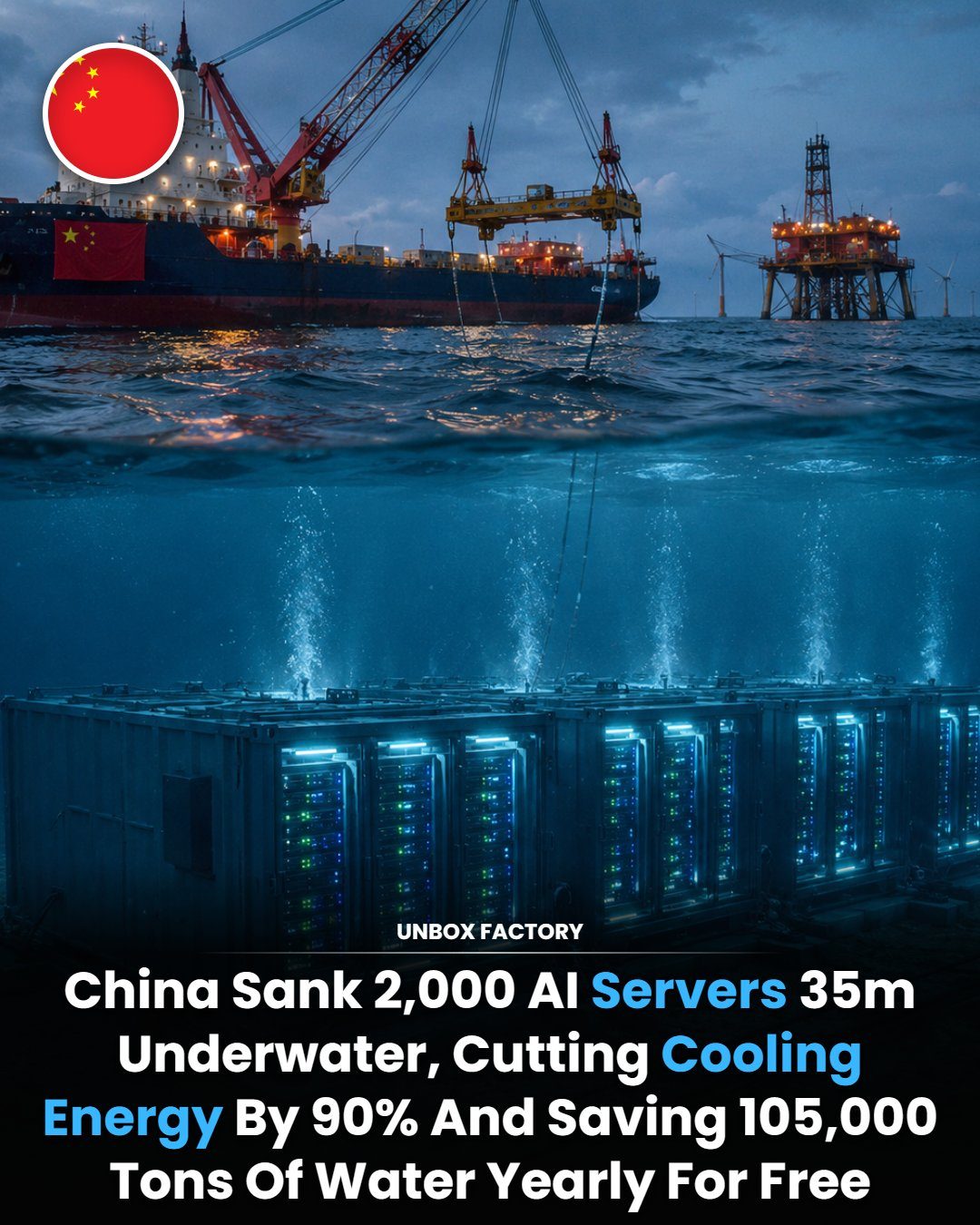
Underwater AI Servers: Revolutionizing Data Center Cooling
Underwater AI servers represent a cutting-edge approach to data center management, leveraging the natural cooling properties of seawater to significantly reduce energy consumption and water usage.
Context: Why This Matters
In the realm of artificial intelligence and data processing, the demand for robust and efficient data centers is ever-growing. Traditional data centers often rely on air-conditioning systems to keep servers from overheating, which can consume up to 30–40% of their total electricity use. This not only drives up operational costs but also places a substantial burden on freshwater resources used for cooling. The deployment of underwater data centers, as demonstrated by China's recent initiative, offers a promising solution to these challenges.
The Underwater Data Center Initiative
The Setup
China has pioneered the use of underwater data centers by submerging approximately 2,000 AI servers at a depth of 35 meters (115 feet). This innovative setup utilizes naturally cool seawater to regulate server temperatures, eliminating the need for traditional air-conditioning systems. The project, detailed in the Chinese Engineering Reports of 2026, highlights the potential of underwater data centers in addressing both energy and water conservation issues.
Energy Efficiency
One of the most compelling advantages of underwater data centers is their energy efficiency. By using seawater for cooling, these facilities can cut cooling energy consumption by up to 90%. This reduction not only lowers operational costs but also decreases the carbon footprint associated with data center operations. Given that cooling accounts for a significant portion of a conventional data center's electricity usage, this is a substantial benefit.
Water Conservation
Water conservation is another critical advantage of underwater data centers. Traditional data centers often rely on freshwater for cooling, contributing to water scarcity in regions where water resources are limited. The underwater data center initiative in China is projected to save an estimated 105,000 tons of freshwater annually. This represents a significant reduction in freshwater usage, making underwater data centers an attractive option for regions facing water shortages.
The Benefits of Submerged Data Centers
Enhanced Sustainability
Submerged data centers offer enhanced sustainability by reducing the reliance on traditional cooling methods. The natural cooling properties of seawater make these facilities more environmentally friendly, aligning with the global push for sustainable technologies. As AI computing continues to expand, the need for sustainable data center solutions becomes increasingly critical.
Operational Efficiency
Beyond environmental benefits, submerged data centers also offer operational efficiencies. By eliminating the need for large-scale air-conditioning systems, these facilities can reduce maintenance costs and improve overall operational efficiency. This makes them a viable option for businesses looking to optimize their data center operations while minimizing environmental impact.
Practical Tips for Implementing Underwater Data Centers
While the concept of underwater data centers is still in its early stages, several practical considerations should be taken into account for successful implementation.
Site Selection
Choosing the right site is crucial for the successful deployment of underwater data centers. Factors such as water depth, seawater temperature, and proximity to existing infrastructure should be carefully considered. Additionally, environmental impact assessments should be conducted to ensure minimal disruption to marine ecosystems.
Infrastructure Requirements
Building the necessary infrastructure for underwater data centers requires careful planning. This includes designing robust underwater enclosures that can withstand the pressures and conditions of deep-sea environments. Infrastructure should also be designed to facilitate easy maintenance and monitoring.
Regulatory Compliance
Ensuring compliance with local and international regulations is essential for the successful operation of underwater data centers. Regulations related to marine environmental protection, data security, and operational safety should be carefully reviewed and adhered to.
Important Takeaways
The deployment of underwater AI servers represents a significant advancement in data center technology. By leveraging the natural cooling properties of seawater, these facilities offer substantial energy and water savings, reducing the environmental impact of data center operations. Moreover, the operational efficiencies gained through the elimination of traditional cooling systems make underwater data centers an attractive option for businesses looking to optimize their operations.
Conclusion
As AI computing continues to grow, the demand for efficient and sustainable data centers will only increase. Submerged data centers, as pioneered by China, offer a promising solution to the challenges posed by traditional data center operations. By harnessing the cooling power of seawater, these facilities provide a path towards greater energy efficiency and water conservation, making them a critical component of the future of data center technology.
Watch the Reel
Questions readers ask
How do underwater AI server farms in China cool their servers?
These server farms utilize the natural cooling properties of seawater. By submerging the servers, they can effectively dissipate heat without relying on traditional air-conditioning methods, which reduces energy consumption significantly.
What are the primary benefits of using seawater for cooling servers?
Using seawater for cooling servers offers two main benefits: it reduces the energy consumption associated with cooling and decreases the reliance on freshwater resources. This makes data centers more sustainable and cost-effective.
How does the underwater AI server farm initiative in China impact energy consumption?
By leveraging seawater cooling, China's underwater AI server farms can cut energy consumption by up to 30-40% compared to traditional data centers that use air conditioning. This translates to substantial energy savings and lower operational costs.
What are submerged server farms and why are they important?
Submerged server farms, like those developed in China, are data centers located underwater that use the surrounding seawater for cooling. They are important because they address the challenges of high energy consumption and freshwater use in traditional data centers, promoting a more sustainable approach to data management.
How does underwater server cooling technology work?
Underwater server cooling technology involves placing servers in a submerged environment where the surrounding seawater acts as a natural coolant. This method takes advantage of the water's ability to absorb and dissipate heat efficiently, reducing the need for energy-intensive cooling systems.
What makes China's underwater AI farms innovative in the context of data center management?
China's underwater AI farms are innovative because they introduce a new paradigm in data center management by utilizing a renewable resource—seawater—for cooling. This not only makes the data centers more energy-efficient but also aligns with global sustainability goals by minimizing freshwater usage.
Are there any other benefits to using submerged AI server farms besides energy and water savings?
Yes, besides energy and water savings, submerged AI server farms can also benefit from enhanced security and protection from natural disasters. The underwater location can shield servers from physical threats and environmental hazards, ensuring more stable and reliable operations.
Related deep dives
Similar reads based on topic and creator.


Recent articles
Fresh deep dives from the latest Reels we unpacked.

Comments
Be the first to comment.