Greenland's Peterman Glacier: A Giant Stirs
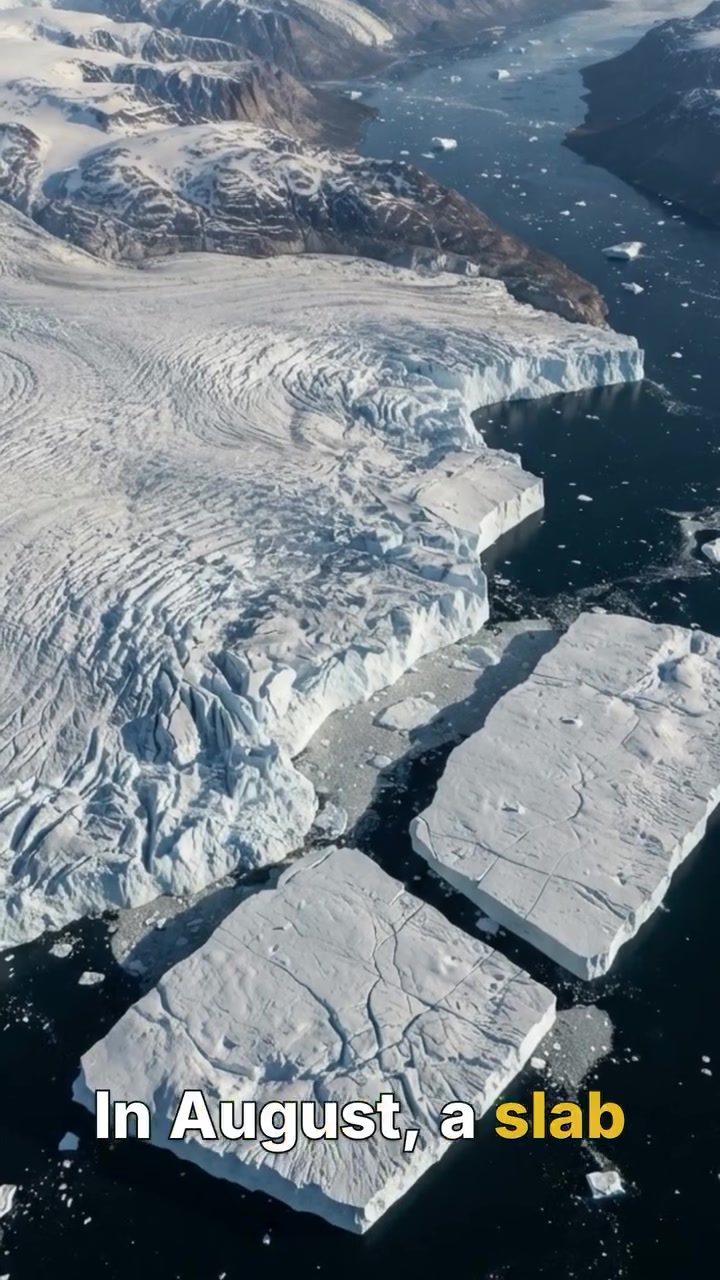
Greenland's Peterman Glacier recently sent a stark reminder of the power of glacial movement. In August, a massive ice slab, nearly the size of Manhattan, broke off from the glacier. This event is known as calving. The ice was broken off by the glacier and began to float free, driven by its own momentum rather than the tide or ocean currents. The loose slab moved from the Peterman Glacier down the Nares Strait and into the sea. The break was perhaps expected, but not the slab's resilience. Scientists anticipated that the massive slab of ice would shatter into smaller fragments as it moved through the Nares Strait. But unexpected structural integrity kept the fragment intact, even as the chunk of ice slammed into an island. The island remained largely unscathed, but the ice block did take a bit of damage at the point of impact. The mass of the ice is so great that kinetic energy, rather than gravitational force, seems to have driven the motion. While the slab's survival was unforeseen, researchers had been watching for signs of trouble. Indeed, August's calving was not unprecedented but a continuation of the glacier's retreat. Scientists identified this event as the largest calving since 2012. The Peterman Glacier is experiencing two more major cracks.
The Inexorable Retreat of the Peterman Glacier
With the recent ice fall, scientists have observed massive fractures on the glacier's surface. The cracks were so important that you could find them by tracking them using satellite imagery, which allows scientists to see where the ice meets the water. Two major cracks are widening and merging on the Peterman Glacier. In doing so, they reveal more ice that is primed to break free. The process isn't purely gravitational but rather a collision of temperature, time and motion. The longevity of the cracks suggests that another large iceberg could break off in the upcoming years. Such events had long been expected and tracked by scientists. Researches refer to the fractures as the largest ever recorded for the glacier. Both cracks are within the Nares Strait where the Peterman Glacier meets the sea. Once the fractures connect, a second enormous iceberg could break free. The slabs created by both calving events may well outmatch any previously documented, including the recent one. The glacier is currently undergoing a seaward retreat of the same magnitude and speed. The glacier is already showing signs of a dramatic retreat. Additional cracks and fractures suggest the glacier could break apart into more slabs, accelerating its retreat. The Peterman Glacier has been thinning for decades, with the process speeding up in recent years. The majority of the melting is happening underneath, hidden from view. Despite the glacier's size, water temperature is the key mechanism dictating the glacier's retreat, not atmospheric temperature.
The Collision of Ice and Data
Scientists are abuzz with the patterns that the August calving has revealed. Satellite data shows a thickening of the icebergs resulting from the calving. One of the newly emerged icebergs is of a size that rivals Greenland's Petermann iBay and is of similar shape. While this calving event was certainly notable, it may only be the beginning of a many events that could occur in the near future. Two fractures are forming in the glacier, growing and merging. The exact mechanism behind this process remains uncertain, but scientific investigations and theories are circulating. The fractures may be caused by glacier flexure, which could be the first or the last step in the calving process. The seaward retreat could be the outcome of temperature, time and motion — often caused by the flexing and splitting of the ice. Assessing the data sets provided by the satellites, GPS sensors, and even drones, the Peterman Glacier could be even more dynamic than previously understood. Scientists are working through patterns, correlations, and trends in ever-increasing amounts of data about glaciers and warming regions of the world. As for the Peterman Glacier, the August calving was not simply a fleeting news event.
Watch the Reel
Related deep dives
Similar reads based on topic and creator.
Recent articles
Fresh deep dives from the latest Reels we unpacked.
Comments
Be the first to comment.