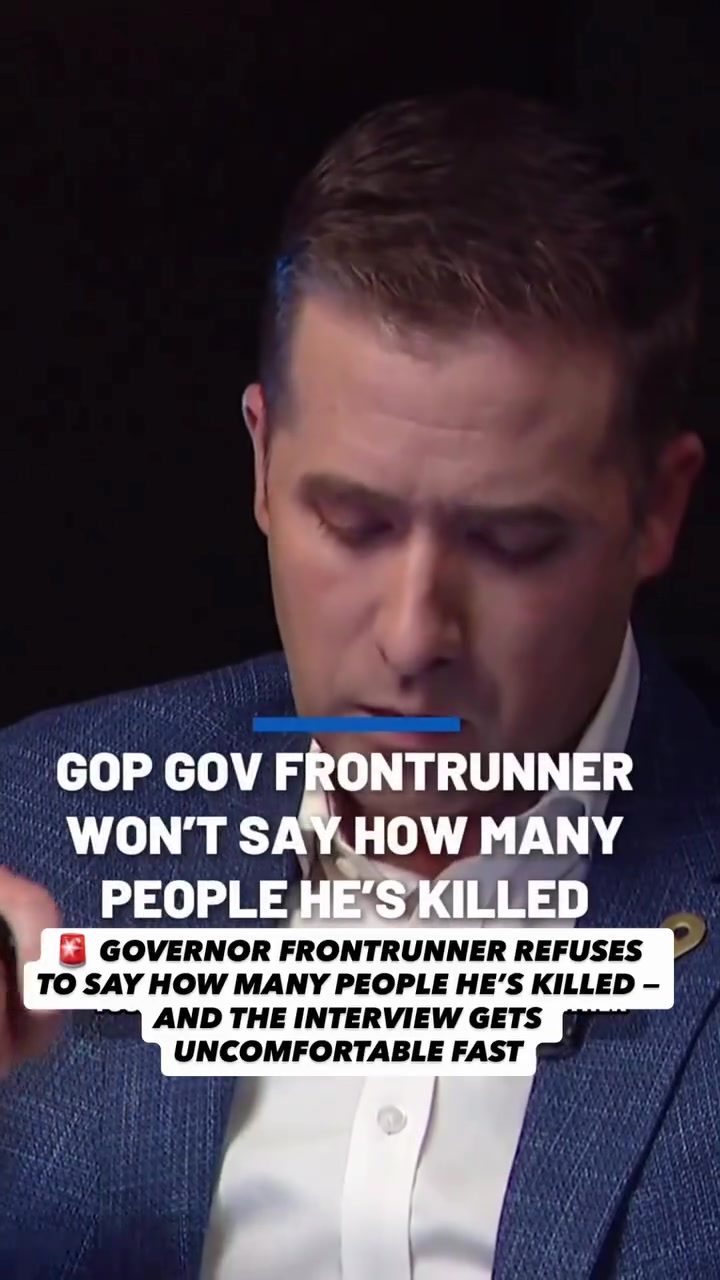
Governor Front-Runner's Refusal to Disclose Kill Count Sparks Controversy
A political interview involving a front-running gubernatorial candidate from Colorado has sparked intense debate after the candidate refused to disclose the number of people he has killed. The exchange, which quickly became uncomfortable, has raised questions about transparency, political strategy, and the candidate's past actions.
Context / Why this matters
The interview focused on the candidate's claims about past violent incidents, including a statement about being forced to kill a man at the age of seven by his abusive stepfather. The candidate's refusal to provide a specific number of people he has killed, coupled with his past statements about the necessity of killing, has left many viewers and commentators questioning his motives and credibility.
Main discussion
The Abusive Past
The interview began with a question about a deeply personal and disturbing claim: that the candidate's abusive stepfather forced him to kill a man when he was just seven years old. The candidate confirmed this claim without hesitation, stating that, as a child, he indeed killed a man under duress. This revelation set the stage for a series of uncomfortable questions and evasive answers.
Self-Defense and Overseas Incidents
When pressed about whether he had killed anyone else, particularly as an adult, the candidate's responses became more ambiguous. He acknowledged that people might have died as a result of his actions while defending himself overseas. However, he refused to provide a specific number or detail the circumstances, stating that it was not important information for voters.
The Airstrike Controversy
One of the most controversial claims made by the candidate was his involvement in facilitating a US military airstrike that allegedly killed 70 ISIS fighters. When asked to elaborate on how a civilian could facilitate such an airstrike, the candidate simply replied, "No." This refusal to provide details has only added to the mystery and controversy surrounding his claims.
The Necessity of Killing
Throughout the interview, the candidate made several statements about the necessity of killing in certain situations. He asserted that there are times when it is necessary to "eliminate the enemy" and that some people have to die. These comments, while controversial, are not uncommon in political rhetoric, particularly from candidates with military or law enforcement backgrounds. However, the candidate's refusal to provide specific details about his own actions has raised questions about his transparency and honesty.
Practical tips
For those interested in understanding the dynamics of political interviews and the strategies candidates use to navigate controversial topics, there are several key takeaways:
-
Preparation is Key: Candidates should be prepared to address controversial topics in a way that aligns with their campaign message and values. Refusing to answer questions can often backfire, as it did in this case.
-
Transparency Matters: While candidates do not have to disclose every detail of their past, transparency about major incidents can build trust with voters. Refusing to provide specific details can raise suspicions and undermine credibility.
-
Clarity in Messaging: Candidates should strive for clarity in their messaging, especially when discussing sensitive topics. Ambiguous statements can be misinterpreted and used against them.
Important takeaways
The interview with the Colorado governor front-runner highlights several important points about political discourse and candidate behavior:
-
Transparency and Honesty: Voters expect transparency and honesty from their leaders. Refusing to answer straightforward questions about past actions can erode trust and credibility.
-
Messaging and Strategy: Political candidates must carefully craft their messages to resonate with voters while being mindful of potential backlash. Evasive answers can lead to further scrutiny and criticism.
-
The Role of Controversy: Controversial statements and past actions can be a double-edged sword in politics. They can generate media attention and spark debate, but they can also alienate voters who prefer more straightforward and transparent candidates.
Conclusion
The interview with the Colorado governor front-runner has raised important questions about transparency, political strategy, and the role of controversial statements in public discourse. While the candidate's refusal to disclose the number of people he has killed has sparked controversy, it has also highlighted the complexities of political communication and the importance of clear, honest messaging. As the electoral process continues, candidates will need to navigate these challenges with careful consideration of their messages and the expectations of their constituents.
Watch the Reel
Questions readers ask
Why did the Colorado governor candidate refuse to disclose his kill count during the interview?
The candidate's refusal to disclose the number of people he has killed stems from his past claims about violent incidents, including a specific account of killing a man at the age of seven. By declining to provide a specific number, he has sparked controversy and raised questions about his transparency and political strategy.
What was the public's reaction to the candidate's silence on the kill count?
The public reaction has been intense and varied. Many viewers and commentators have expressed outrage and disbelief, questioning the candidate's motives and credibility. The silence has sparked a heated debate about transparency in politics and the appropriateness of the candidate's past actions.
How has the candidate's past claim about a violent incident at age 7 affected his current campaign?
The candidate's past claim about being forced to kill a man at the age of seven has significantly impacted his current campaign. It has raised serious questions about his past actions, his honesty, and his overall fitness for public office, making transparency more crucial than ever.
What does the candidate's refusal to disclose his kill count suggest about his political strategy?
The refusal to disclose the kill count suggests a political strategy that prioritizes avoiding detailed discussions about his past. By maintaining silence, the candidate may aim to deflect from controversial topics, but it has backfired by drawing even more attention to his past actions and raising suspicions about his transparency.
Why is transparency important in political interviews?
Transparency in political interviews is vital for building trust with voters. It allows candidates to address their past actions and statements openly, providing the public with the information needed to make informed decisions. In this case, the candidate's lack of transparency has led to significant controversy and doubt.
What are the implications of the candidate's silence for Colorado politics?
The candidate's silence has significant implications for Colorado politics, as it highlights the importance of honesty and openness in political campaigns. It has sparked a broader debate about the standards candidates should meet regarding their past actions and the information they disclose to the public.
Recent articles
Fresh deep dives from the latest Reels we unpacked.




Comments
Be the first to comment.