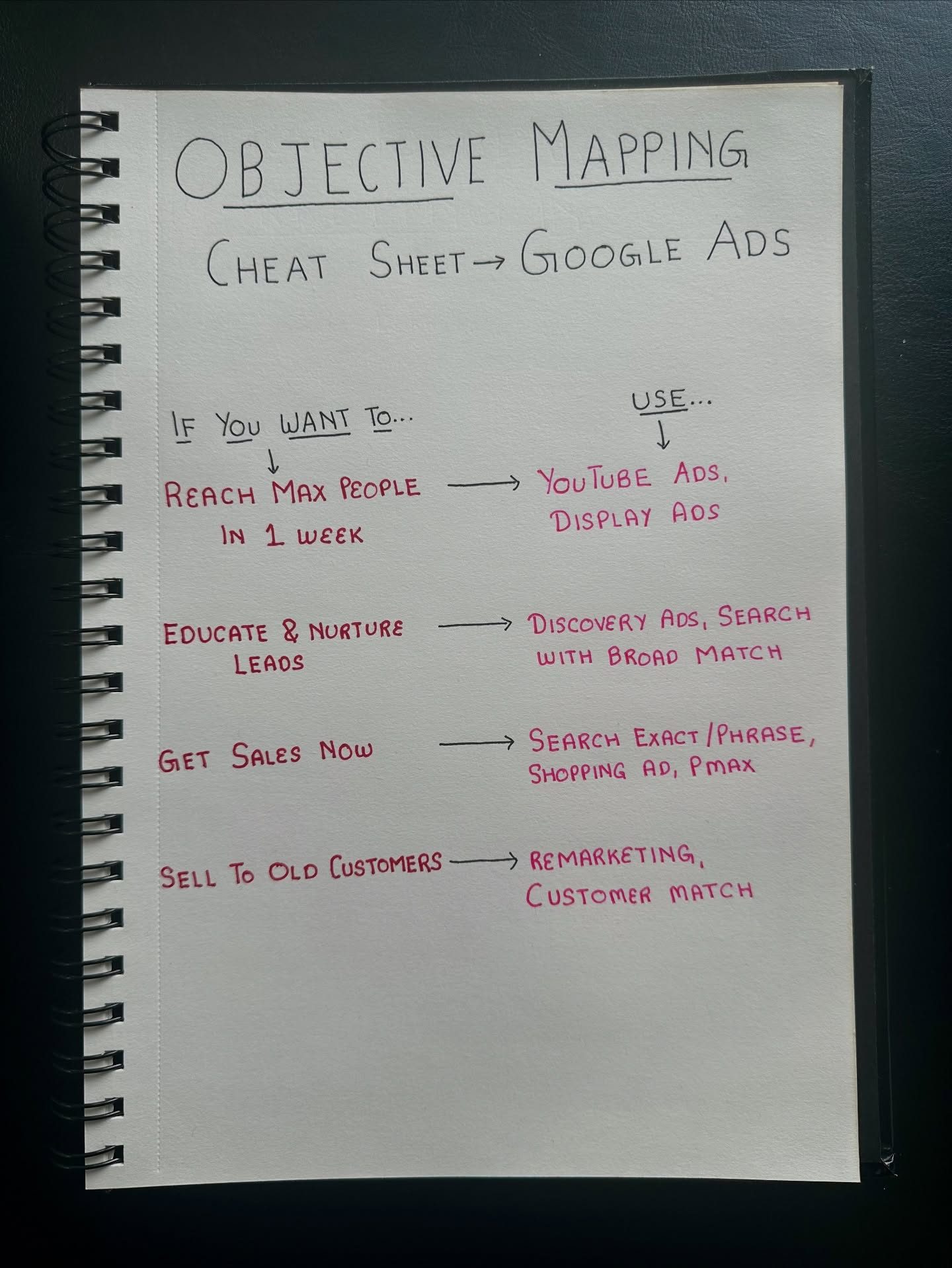
Google Ads: A Cheat Sheet for Matching Objectives to Ad Types
Navigating the world of Google Ads can be overwhelming, with numerous ad types and platforms to choose from. Understanding which ad type aligns with your specific marketing objectives is crucial for maximizing your return on investment. Here’s a cheat sheet to help you match your goals with the right ad types.
Why This Matters
Google Ads offers a variety of platforms and ad formats, each designed to achieve different marketing objectives. Whether you aim to reach a broad audience, nurture leads, generate immediate sales, or retarget existing customers, choosing the right ad type is essential. This cheat sheet provides a straightforward guide to help you select the most effective ad types for your goals.
Objectives and Ad Types
Reaching a Large Audience
If your primary goal is to reach as many people as possible within a short timeframe, such as one week, you should consider the following ad types:
- Display Ads: Display ads are highly effective for reaching a wide audience quickly. These ads appear on a network of websites and apps across the Google Display Network, allowing you to target users based on their interests, demographics, and online behavior.
Educating and Nurturing Leads
For businesses looking to educate and nurture potential leads, the following ad types are recommended:
-
Discovery Ads: Discovery ads are designed to help users discover new products and services. These ads appear in Google's Discovery feeds, which are highly visible and engaging. They provide an opportunity to showcase your brand and drive awareness.
-
Search with Broad Match: Broad match keywords allow your ads to appear on a wide range of relevant searches. This strategy is useful for reaching users who are in the early stages of their purchasing journey, helping to educate them about your brand and offerings.
Generating Immediate Sales
When your objective is to drive immediate sales, consider the following ad types:
-
Exact/Phrase Search: Exact and Phrase match keywords ensure that your ads appear only for searches that closely match your keywords. This precision is crucial for targeting users who are ready to make a purchase.
-
Shopping Ads: Shopping ads showcase your products directly in the search results, making it easier for users to find and purchase what they need. These ads include images, prices, and other essential details, driving higher click-through rates and conversions.
-
PMax (Performance Max): Performance Max campaigns automate the process of optimizing your ads across multiple platforms, including Google Search, Display, and YouTube. These campaigns use machine learning to find the best combinations of ad formats, targeting, and bidding strategies, resulting in higher sales.
Selling to Existing Customers
To sell to existing customers, consider:
-
Remarketing: Remarketing allows you to reach users who have previously interacted with your website or app. These ads remind users about your brand and encourage them to complete a purchase or take another desired action.
-
Customer Match: Customer Match enables you to target specific customers based on your existing data, such as email lists. This strategy is ideal for personalized marketing efforts and can help drive repeat business and customer loyalty.
Practical Tips for Using Google Ads
-
Define Your Objectives: Before choosing an ad type, clearly define your marketing objectives. Are you aiming to increase brand awareness, generate leads, or drive sales? Understanding your goals will help you select the most effective ad types.
-
Create Targeted Campaigns: Tailor your campaigns to specific objectives and audiences. For example, use Display Ads for broad reach and Remarketing for retargeting existing customers.
-
Monitor Performance: Regularly review your ad performance metrics, such as click-through rates, conversion rates, and return on ad spend. Adjust your strategies based on performance data to optimize your campaigns.
-
Utilize A/B Testing: Test different ad types, targeting options, and bidding strategies to see which combinations deliver the best results. Use the insights gained from A/B testing to refine your campaigns.
-
Update Your Keywords: Regularly update your keyword lists to include new, relevant terms and remove underperforming keywords. This practice ensures that your ads remain relevant and effective.
Important Takeaways
- Display Ads and YouTube Ads are ideal for reaching a broad audience quickly.
- Discovery Ads and Broad Match Search help educate and nurture leads.
- Exact/Phrase Search, Shopping Ads, and PMax are effective for generating immediate sales.
- Remarketing and Customer Match are valuable for selling to existing customers.
By aligning your marketing objectives with the right ad types, you can maximize the effectiveness of your Google Ads campaigns. Whether you're new to Google Ads or looking to refine your existing strategies, this cheat sheet provides a solid foundation for achieving your marketing goals.
Conclusion
Google Ads offers a diverse range of ad types, each suited to different marketing objectives. By understanding the strengths of each ad type and matching them to your specific goals, you can create more effective and efficient marketing campaigns. Whether you aim to reach a large audience, nurture leads, drive immediate sales, or sell to existing customers, this cheat sheet provides a practical guide to navigating the world of Google Ads.
Watch the Reel
Questions readers ask
What are the main Google Ads types and when should I use each one?
Google Ads offers several types, including Display, Search, and Discovery ads. Display ads are best for building brand awareness and reaching a broad audience. Search ads are ideal for capturing high-intent traffic and generating immediate sales. Discovery ads, meanwhile, are useful for engaging users who are actively exploring products or services.
How can I use Google Ads to nurture leads?
To nurture leads, consider using Display ads and Discovery ads. Display ads can keep your brand top-of-mind with retargeting campaigns, while Discovery ads can engage users who are already interested in your product category. You can also use Search ads with broad match keywords to capture a wider range of potential leads.
Which Google Ads type is best for immediate sales?
For immediate sales, Search ads are typically the most effective. These ads appear when users search for specific keywords related to your products or services, indicating a high intent to purchase. By targeting relevant keywords, you can reach potential customers who are ready to buy.
What are Display ads and when should I use them?
Display ads are visual ads that appear on websites, apps, and other digital platforms. They are ideal for building brand awareness and reaching a large audience. Use Display ads when your goal is to increase visibility, promote a new product, or retarget users who have previously visited your site.
What are Discovery ads and how do they differ from other ad types?
Discovery ads are designed to reach users who are actively exploring products or services but haven't made a decision yet. They appear in Google's Discover feed and other platforms where users browse content. Unlike Display ads, which focus on broad reach, Discovery ads target users who are in the consideration phase, making them useful for driving engagement and consideration.
How can I maximize my ROI with Google Ads?
To maximize your ROI, carefully match your ad types to your specific marketing goals. Use Search ads for immediate sales, Display ads for reaching a broad audience, and Discovery ads for engaging users in the consideration phase. Additionally, use broad match keywords to capture a wider range of potential customers and continuously monitor and adjust your campaigns based on performance data.
What are some tips for using Google Ads to engage existing customers?
To engage existing customers, use retargeting campaigns with Display ads or Discovery ads. These ad types allow you to reach users who have already shown interest in your products or services. By showing them relevant ads, you can encourage repeat purchases, upsells, or cross-sells, enhancing customer loyalty and lifetime value.
Recent articles
Fresh deep dives from the latest Reels we unpacked.




Comments
Be the first to comment.