Gold Production Over Time
Gold production has been a significant part of human history for millennia, and understanding its evolution over the past 200 years provides valuable insights into global economic and technological developments. The last two centuries have seen substantial changes in gold mining practices, locations, and outputs. Here, we delve into the global gold production trends, highlighting key events and shifts in production leadership.
Context / Why This Matters
Gold has long been a symbol of wealth and stability, serving as a cornerstone of various economies. Its extraction and distribution have significant implications for global trade, geopolitics, and financial markets. By examining the shifts in gold production, we gain a clearer picture of how different regions have risen and fallen in their significance to the global gold market. This understanding can inform investment decisions, resource management strategies, and economic policies.
Main Discussion
The Early Days: South Africa's Dominance
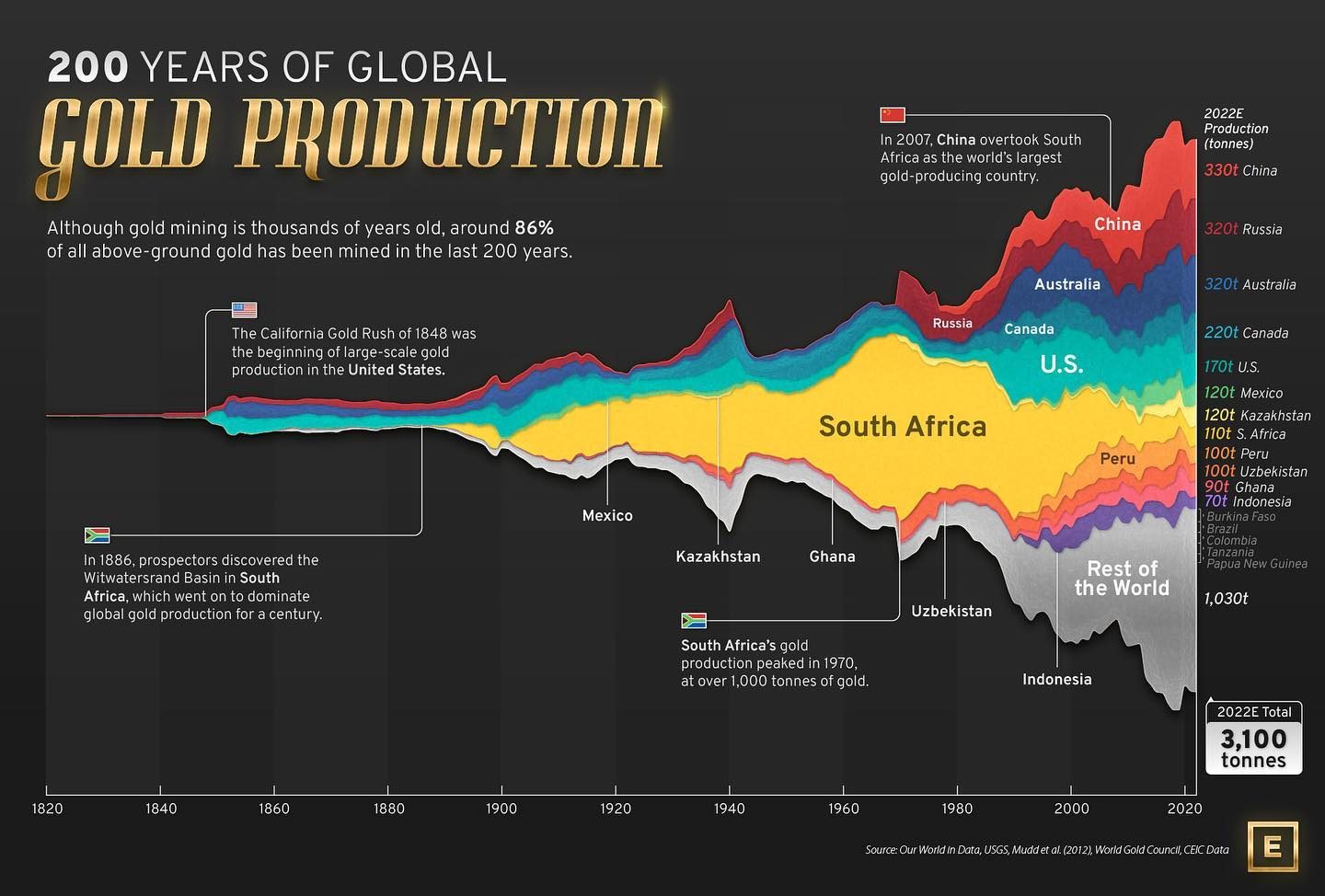
Gold mining began thousands of years ago, but the last 200 years have been particularly transformative. Gold mining in the 19th century was marked by significant discoveries, such as the Witwatersrand Basin in South Africa, which was uncovered in 1886. This discovery catapulted South Africa to the forefront of global gold production, a position it held for nearly a century. By 1970, South Africa's gold production peaked at over 1,000 tonnes, making it the world’s largest gold producer.
The Rise of China
In 2007, a notable shift occurred when China surpassed South Africa as the world's largest gold-producing country. This change reflects China's rapid industrialization and economic growth. China’s rise to the top of the gold production hierarchy was driven by a combination of modern mining technologies, extensive resources, and a strong demand for gold. China’s production has been pivotal in maintaining global gold supplies, contributing significantly to the approximately 3,100 tonnes of gold produced in 2022.
The United States: The California Gold Rush
Another pivotal moment in global gold production was the California Gold Rush of 1848, which marked the beginning of large-scale gold production in the United States. This event not only accelerated the development of the American West but also had far-reaching economic and social impacts. The Gold Rush sparked a wave of migration and investment, transforming the region and contributing to the nation’s economic growth.
Global Trends
Global gold production has undergone significant transformation over the years. While South Africa and the United States were once dominant players, the landscape has evolved to include new leaders like China. This shift highlights the increasingly global nature of gold mining, with various countries contributing to the overall production. In particular, China has played a crucial role in global gold production, becoming the world’s leading producer by 2007.
Key Events and Milestones
Several key events have shaped the trajectory of global gold production. The discovery of the Witwatersrand Basin in South Africa in 1886 was a pivotal moment, leading to South Africa’s dominance in gold production for nearly a century. The California Gold Rush in 1848 was another significant event, marking the beginning of large-scale gold production in the United States. These events, along with China's rise to the top, have collectively influenced the global gold market.
Sources and Data
The data presented in this analysis comes from reputable sources, including Our World in Data, the US Geological Survey (USGS), and the World Gold Council. These organizations provide comprehensive and reliable information on global gold production, ensuring the accuracy and reliability of the insights shared here.
Practical Tips
For investors, understanding the historical trends in gold production can provide valuable context for making informed decisions. Here are some practical tips:
- Stay Informed: Keep track of global gold production trends and the leading countries in this sector. This information can help anticipate market shifts and potential investment opportunities.
- Diversify Investments: Consider diversifying your investment portfolio to include various gold-producing countries. This strategy can mitigate risks associated with any single region’s economic or geological changes.
- Monitor Key Events: Pay attention to significant events in the gold industry, such as new discoveries or technological advancements. These events can influence production levels and market dynamics.
- Economic Indicators: Follow economic indicators in major gold-producing countries. Changes in economic policies, industrial growth, and technological advancements can impact gold production and prices.
Important Takeaways
- The last 200 years have seen significant changes in global gold production, with China emerging as the leading producer and South Africa historically dominating the market.
- Events like the California Gold Rush and the discovery of the Witwatersrand Basin have played crucial roles in shaping global gold production.
- Understanding the historical trends and key events in gold production can provide valuable insights for investors and policymakers.
- The global nature of gold mining continues to evolve, with various countries contributing to the overall production.
Conclusion
Gold production over the past 200 years tells a story of global economic development and technological advancement. From South Africa’s dominance to China’s rise, the evolution of gold mining has been marked by significant shifts and pivotal events. By examining these trends, we gain a deeper understanding of the complexities and dynamics of the global gold market, which can inform investment strategies and economic policies. Whether you are an investor, a policymaker, or simply interested in the history of gold, understanding these trends offers valuable insights into the past, present, and future of gold production.
Watch the Reel
Questions readers ask
Which countries have been the leaders in global gold production from 1820 to 2022?
South Africa was the dominant force in global gold production during the late 19th and early 20th centuries. However, China has since emerged as the leading gold producer, reflecting shifts in global mining landscapes and technological advancements.
How have technological advancements influenced gold production trends?
Technological innovations, such as improved mining techniques and processing methods, have significantly increased gold extraction efficiency. These advancements have allowed countries like China to ramp up production, influencing global gold mining leadership.
What role do geopolitical factors play in shaping gold production trends?
Geopolitical factors, including political stability, regulatory environments, and international trade policies, greatly impact gold production. For instance, South Africa's decline in gold production can be attributed to various geopolitical issues, while China's rise is linked to its economic and political environment.
Why is understanding the history of gold production important for global markets?
Gold's role as a store of value and its influence on financial markets makes understanding its production history crucial. Trends in gold production can indicate broader economic shifts, influencing investment strategies and market behaviors.
What are some key events in the history of global gold production between 1820 and 2022?
Key events include the Witwatersrand Gold Rush in South Africa, which led to a boom in gold production in the late 19th century, and the rapid expansion of Chinese gold mining operations in the late 20th and early 21st centuries, fueled by technological and economic growth.
How has the distribution of above-ground gold changed over the years?
The distribution of above-ground gold has shifted significantly, reflecting changes in production and ownership. Countries with historic gold mining leadership, like South Africa, have seen their above-ground gold reserves fluctuate due to production peaks and declines.
What insights can be gained from analyzing gold mining graphics and data from 1820 to 2022?
Analyzing gold mining graphics and data provides a visual and quantifiable understanding of production trends, highlights periods of boom and bust, and illustrates the rise and fall of mining giants. This data can reveal patterns influenced by technological progress, economic growth, and geopolitical changes.
Related deep dives
Similar reads based on topic and creator.



Recent articles
Fresh deep dives from the latest Reels we unpacked.




Comments
Be the first to comment.