Eye Colors Around the World
Eye color is a captivating feature that varies widely among different populations. Beyond their aesthetic appeal, eye colors offer insights into genetics, ancestry, and biology. Whether you have brown, blue, hazel, amber, gray, or green eyes, your eye color is a distinctive trait that tells a story.
Why This Matters
Understanding eye color distribution can provide valuable insights into human genetics and ancestry. Eye color is determined by the amount and type of melanin in the iris, which is influenced by genetics. The diversity in eye colors reflects the rich tapestry of human ancestry and evolution.
Main Discussion
Global Distribution of Eye Colors
Brown Eyes
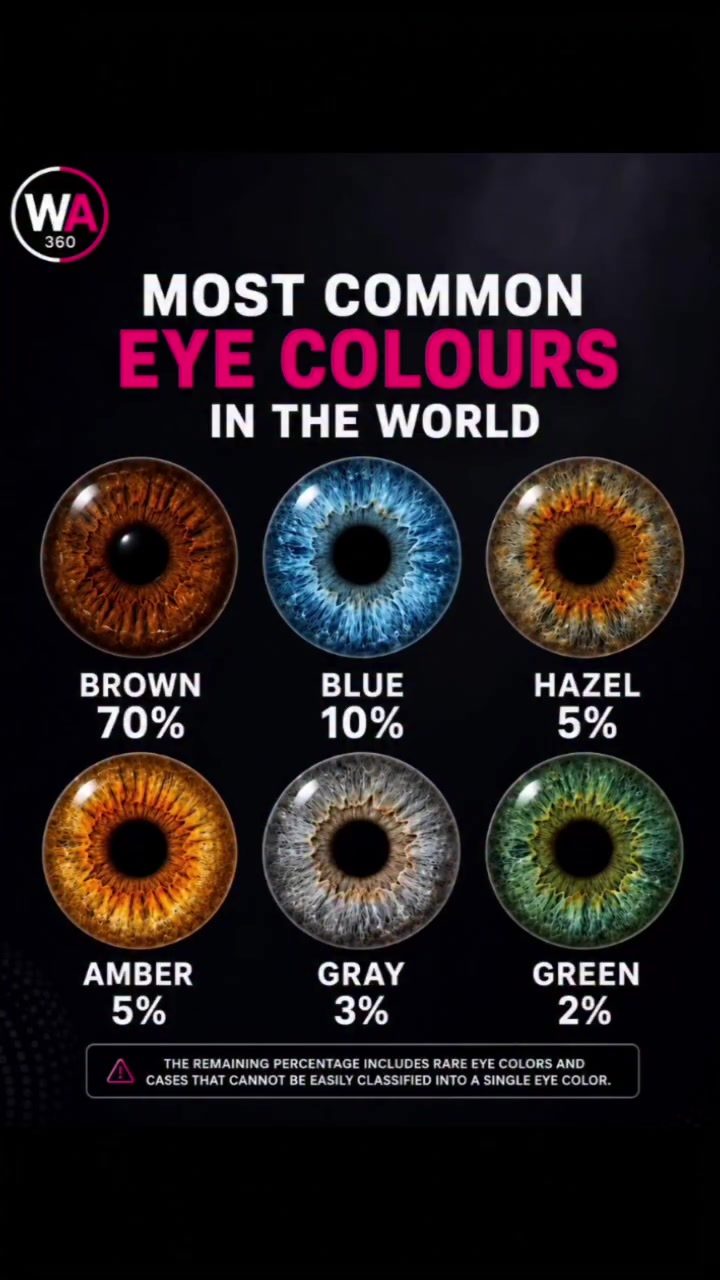
Brown eyes are the most prevalent, accounting for approximately 70% of the global population. This dominance is attributed to the high concentration of melanin in the iris, which is a protective adaptation against intense sunlight in regions closer to the equator. Brown eyes are common in Africa, Asia, and parts of Europe.
Blue Eyes
Blue eyes are the second most common, comprising around 10% of the global population. They are particularly prevalent in Northern and Eastern Europe, where genetic factors and evolutionary adaptations have resulted in a higher concentration of blue-eyed individuals. The light color is due to the scattering of light in the iris, which lacks the high concentration of melanin found in brown eyes.
Hazel Eyes
Hazel eyes, characterized by a mix of green, brown, and sometimes gold flecks, make up about 5% of the global population. These eyes are often found in Europe, the Middle East, and North Africa. Hazel eyes combine the genetic influences of both brown and green eye colors, resulting in a unique and varied appearance.
Amber Eyes
Amber eyes, similar in color to a cat's eye, are relatively rare, constituting around 5% of the global population. They are more common in areas with mixed ethnicity, such as Southeast Asia and parts of Europe. The amber hue is due to a moderate amount of lipochrome and a lack of melanin.
Gray Eyes
Gray eyes, with their distinctive silvery hue, are even rarer, making up about 3% of the population. They are most commonly found in Northern and Eastern Europe. The gray color is a result of minimal melanin and the scattering of light in the iris.
Green Eyes
Green eyes, with their vibrant and striking appearance, are the rarest, accounting for only 2% of the global population. They are predominantly found in Northern and Central Europe, particularly in countries like Ireland, Scotland, and Scandinavia. The green color is due to a combination of low levels of melanin and the presence of lipochrome, a pigment that scatters light in a way that gives the eye its green hue.
The Science Behind Eye Colors
The variety of eye colors is primarily determined by the amount and type of melanin in the iris. Melanin is a pigment that contributes to the color of the skin, hair, and eyes. The iris contains two types of melanin: eumelanin, which is brown or black, and pheomelanin, which is red or yellow. The combination and concentration of these pigments determine the final eye color.
Genetics play a crucial role in eye color inheritance. Eye color is a polygenic trait, meaning it is influenced by multiple genes. The primary genes involved in eye color are OCA2 and HERC2, located on chromosome 15. Mutations in these genes can result in various eye colors, including blue, green, and hazel.
Eye Color and Ancestry
Eye color can also provide clues about a person's ancestry. For example, blue eyes are more common in Northern and Eastern Europe, while brown eyes are prevalent in Africa, Asia, and parts of Europe. Hazel eyes are often found in regions with a mix of European and Middle Eastern ancestry. Understanding the distribution of eye colors can help trace ancestral origins and migration patterns.
Rare and Unique Eye Colors
While the primary eye colors are brown, blue, hazel, amber, gray, and green, there are also rare and unique eye colors that do not fit neatly into these categories. These include:
Hetereochromia
Heterochromia is a condition in which a person has two different eye colors or different-colored eyes. This can be due to genetic mutations or injuries. Heterochromia can occur in one of two ways: complete heterochromia, where each eye is a different color, or sectoral heterochromia, where a portion of one eye is a different color.
Red Eyes
Red eyes are extremely rare and are usually a sign of an underlying medical condition, such as albinism or a genetic disorder. In some cases, red eyes can also be a result of a condition called sectoral heterochromia iridis, which causes a portion of the iris to appear red.
Violet Eyes
Violet eyes are extremely rare and are often associated with specific genetic mutations. The violet color is a result of the Tyndall effect, where light is scattered in such a way that it appears violet. This is a very uncommon occurrence and is often due to a combination of genetic factors and environmental influences.
Practical Tips
If you are interested in learning more about your eye color and its genetic origins, consider the following steps:
- Consult a Geneticist: A geneticist can provide insights into your eye color and its genetic basis. They can also help you understand how your eye color might be passed down to future generations.
- Family Tree: Explore your family tree to see the distribution of eye colors among your relatives. This can provide valuable clues about your genetic heritage and the inheritance of eye color.
Important Takeaways
Eye color is a fascinating and complex trait that provides insights into human genetics and ancestry. Here are the key points to remember:
- Brown eyes are the most common, making up 70% of the global population.
- Blue eyes are the second most common, comprising 10% of the population.
- Hazel, amber, gray, and green eyes are less common, each accounting for 5-3% of the population.
- Eye color is influenced by the amount and type of melanin in the iris, as well as genetic factors.
- Understanding the distribution of eye colors can help trace ancestral origins and migration patterns.
- Rare and unique eye colors, such as heterochromia and red eyes, provide additional insights into genetic diversity.
Conclusion
Eye color is a captivating and intricate aspect of human biology. Understanding the distribution and genetics behind different eye colors can offer valuable insights into ancestry and genetic heritage. Whether you have brown, blue, hazel, amber, gray, or green eyes, your eye color is a unique and distinctive feature that tells a story of your genetic background and the diverse tapestry of human ancestry.
Watch the Reel
Questions readers ask
What percentage of the world's population has brown eyes?
Brown eyes are the most common, making up roughly 70% of the global population. This high prevalence is due to the dominant genetic traits that contribute to brown eye color.
Which regions have the highest prevalence of blue eyes?
Blue eyes are particularly common in Europe, with significant populations in countries like Norway, Sweden, and Finland. These regions have a higher prevalence of blue eyes compared to other parts of the world.
What are the less common eye colors and where are they most prevalent?
While brown and blue eyes are the most common, other colors like hazel, amber, gray, and green are less frequent. Hazel eyes are more common in the Middle East and parts of Europe, while amber eyes are more prevalent in the Middle East and North Africa. Green eyes are relatively rare and are found mainly in Europe, while gray eyes are most prevalent in Northern and Eastern Europe.
How does the distribution of eye colors vary by region?
Eye color distribution varies significantly by region due to genetic and ancestral factors. For example, brown eyes dominate in Asia, Africa, and the Americas, while blue eyes are more common in Europe. Hazel and green eyes are more prevalent in the Middle East and parts of Europe, highlighting the regional diversity in eye colors.
What genetic factors influence eye color?
Eye color is primarily determined by the amount and type of melanin in the iris, which is influenced by genetics. The specific genes involved in eye color determination include OCA2 and HERC2, which regulate melanin production. These genetic factors contribute to the diverse range of eye colors observed across different populations.
What are the most common shades of eye colors?
Among the most common eye colors are shades of brown, including light brown, dark brown, and chocolate brown. Other common shades include light blue, dark blue, and steel blue for blue eyes, as well as various hues of green, hazel, and gray.
Related deep dives
Similar reads based on topic and creator.



Recent articles
Fresh deep dives from the latest Reels we unpacked.




Comments
Be the first to comment.