Central Bank Digital Currencies (CBDC) Worldwide
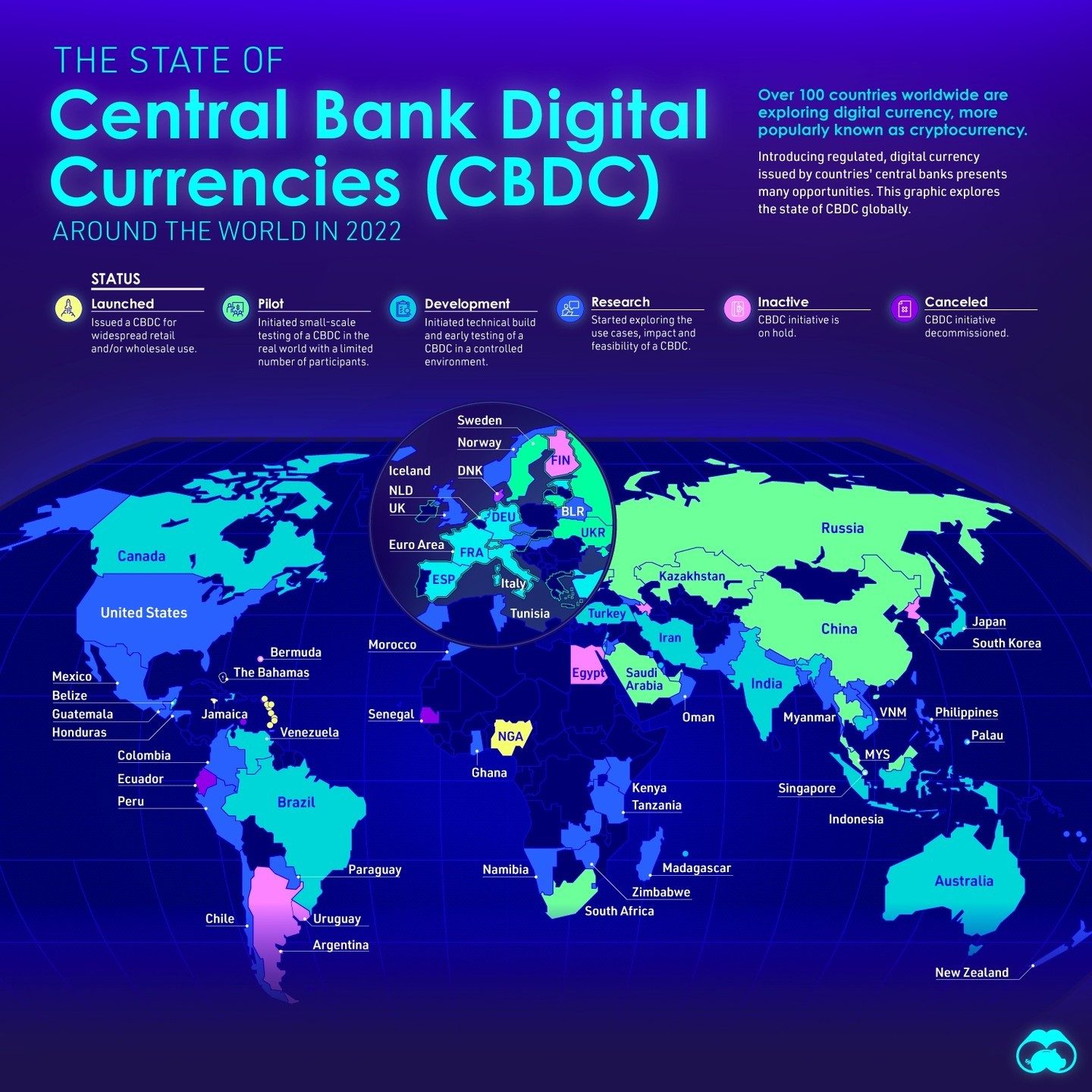
Central Bank Digital Currencies (CBDCs) are a hot topic globally, with over 100 countries exploring or developing their own digital currencies. These regulated digital currencies, issued by countries' central banks, present a range of opportunities and challenges. Let's delve into the current state of CBDCs around the world, drawing from data visualized by the Atlantic Council’s Currency Tracker.
Context: The Rise of CBDCs
The interest in digital currencies has surged, driven by technological advancements and the increasing digitalization of financial services. Unlike decentralized cryptocurrencies, CBDCs are centralized and regulated by central banks. This centralization ensures stability and trust, making CBDCs a viable option for governments seeking to modernize their monetary systems.
The global status of CBDCs varies significantly by region. By examining the progress in different parts of the world, we can gain insights into the trends, challenges, and opportunities associated with these digital currencies.
The Global Landscape of CBDCs
Europe
In Europe, several countries are at the forefront of CBDC development. Sweden, for instance, has been actively researching CBDCs and has even started pilot programs. The UK, Finland, and the Euro Area are also making significant progress, with various stages of development and research underway. These initiatives aim to address issues such as cash usage decline and the need for a digital alternative.
East Asia and Oceania
East Asia and Oceania present a diverse range of CBDC initiatives. Countries like South Korea and Japan are actively researching and developing their digital currencies. Hong Kong and Australia have also shown considerable interest, with pilot programs and development stages in progress. North Korea, however, remains relatively quiet on the CBDC front, with no significant initiatives reported.
The Middle East and Central Asia
The Middle East and Central Asia are seeing a mix of CBDC activities. Countries like Iran and Turkey have shown interest and are in the research or pilot stages. The UAE, Oman, and Qatar are also exploring CBDCs, with some making more substantial progress than others. Kazakhstan and Azerbaijan are also part of the conversation, with various projects in different stages of development.
North and Central America & the Caribbean
The United States, Canada, and several Central American and Caribbean countries are also exploring digital currencies. The United States is actively researching the feasibility of a CBDC, while Canada has moved forward with pilot programs. Mexico, Guatemala, and other Central American countries are at various stages of development, with some focusing on retail use cases, while others are exploring wholesale applications.
The Different Faces of CBDCs
CBDCs can serve various purposes, which is reflected in their use cases. Some countries are focusing on retail use, aiming to provide a digital alternative to cash for everyday transactions. Others are exploring wholesale use, targeting interbank settlements and large-scale financial transactions. A few are even looking at both, seeking to integrate digital currency into all aspects of their financial systems.
The Future of CBDCs
The global interest in CBDCs indicates a shift towards digital financial systems. As more countries explore and develop their digital currencies, we can expect to see a rise in innovative financial solutions and services. However, the path to full adoption is fraught with challenges, including regulatory frameworks, technological infrastructure, and public acceptance.
Practical Tips for Understanding CBDCs
- Stay Informed: Keep up with the latest developments in CBDCs by following reliable sources and reports.
- Understand Use Cases: Recognize the differences between retail and wholesale use cases, as well as the potential benefits and challenges of each.
- Explore Regional Progress: Pay attention to how different regions are approaching CBDCs, as this can provide valuable insights into global trends and innovations.
- Engage with Stakeholders: Participate in discussions and forums related to CBDCs to gain a comprehensive understanding of their implications and potential.
Important Takeaways
CBDCs are a growing phenomenon with significant implications for the global financial landscape. The varying stages of development and the diverse use cases reflect the complex nature of digital currencies. Understanding the global landscape, the regional progress, and the different applications of CBDCs is crucial for anyone interested in this rapidly evolving field.
Conclusion
Central Bank Digital Currencies are transforming the financial landscape, offering new opportunities and challenges. By exploring the current state of CBDCs worldwide, we can better understand the potential impact of these digital currencies on our financial systems and economies. As more countries continue to develop and implement CBDCs, staying informed and engaged will be key to navigating this evolving landscape.
Watch the Reel
Questions readers ask
Which regions are leading in CBDC development?
East Asia and Europe are at the forefront of CBDC development. Several countries in East Asia, such as China and South Korea, have advanced pilots or are even exploring full-scale launches. Meanwhile, Europe is also making significant progress, with various countries investigating or piloting their own CBDCs. Oceania also shows some promise.
Where can I find the latest status of CBDCs by country?
The Atlantic Council’s Currency Tracker provides a comprehensive map and database that visualizes the progress of CBDCs worldwide. It offers a real-time overview of which countries are in the research, pilot, or launch phases, making it easy to track global CBDC adoption.
What are the main differences between CBDCs and cryptocurrencies?
CBDCs are centralized and regulated by central banks, which ensures stability and trust. In contrast, cryptocurrencies are decentralized and operate independently of central authorities. This centralization is a key factor that makes CBDCs a viable option for governments and financial institutions.
What is the current state of CBDC development in North America and the Caribbean?
Many countries in North America and the Caribbean are in the research or exploratory phases of CBDC development. However, some have also moved on to pilot projects. For example, the Bahamas has already launched its CBDC, known as the Sand Dollar, while other countries are still evaluating the potential benefits and challenges.
How do CBDCs benefit from being centralized?
Centralization in CBDCs provides regulatory stability and trust. By being issued and controlled by central banks, CBDCs benefit from the oversight and credibility of these financial authorities, unlike decentralized cryptocurrencies. This ensures a safer and more reliable digital currency for users and financial institutions alike.
Are there any countries that have launched their CBDCs?
Yes, several countries have launched their CBDCs. The Bahamas, for instance, has already launched the Sand Dollar, while other countries like China and Australia have advanced pilots or are in the process of exploring full-scale launches. These launches mark significant milestones in the global CBDC adoption journey.
Related deep dives
Similar reads based on topic and creator.


Recent articles
Fresh deep dives from the latest Reels we unpacked.




Comments
Be the first to comment.