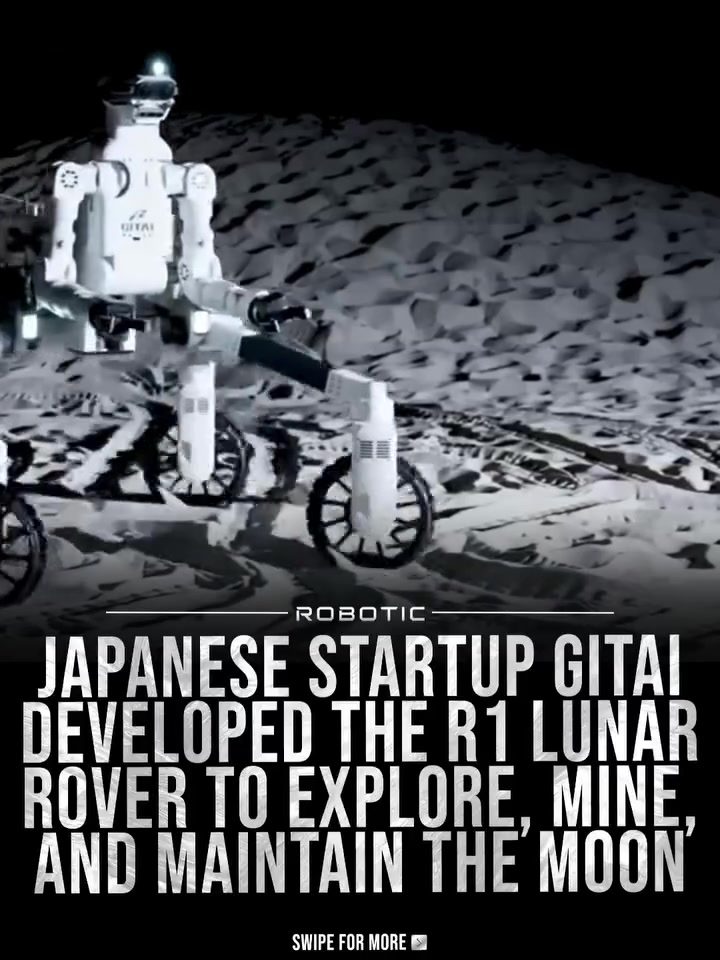
The GITAI R1 Lunar Rover: Pioneering Robotic Exploration on the Moon
The GITAI R1 Lunar Rover is a state-of-the-art robotic vehicle designed to tackle the challenging tasks associated with lunar exploration, mining, and maintenance. Developed by GITAI, a Japanese startup, the R1 is poised to play a crucial role in humanity's future on the moon.
Why this Matters
As space agencies and private companies accelerate plans for permanent lunar exploration, the need for reliable and efficient robotic systems becomes increasingly important. The R1 Lunar Rover is designed to carry out hazardous tasks more safely, efficiently, and at a lower cost than human astronauts. This not only reduces risk but also paves the way for sustainable lunar colonization.
Capabilities and Features
Autonomous Mobility
One of the standout features of the R1 Lunar Rover is its autonomous mobility. During successful testing at JAXA’s mock lunar surface in Japan, the rover demonstrated its ability to navigate challenging terrain. This includes climbing sandy slopes and traversing various simulated lunar conditions, showcasing its robustness and adaptability.
Exploration and Resource Collection
The R1 is equipped with advanced capabilities for exploration and lunar resource collection. It can assemble infrastructure, such as solar panels, and perform inspections and maintenance tasks. This versatility makes it an invaluable asset for future lunar bases, where the ability to collect and process lunar resources will be critical for long-term sustainability.
Infrastructure Assembly
A key aspect of the R1's design is its ability to assemble infrastructure. This includes setting up solar panels, which are essential for powering lunar habitats and equipment. The rover's precision and dexterity allow it to handle delicate tasks, ensuring that critical infrastructure is built and maintained with the utmost reliability.
Simulated Testing
The R1 has undergone rigorous testing at JAXA’s mock lunar surface, where it showcased its capabilities in a controlled environment that simulates the conditions on the moon. This testing has been instrumental in validating the rover's design and ensuring its readiness for deployment in the lunar environment.
Practical Tips for Understanding Lunar Rovers
Importance of Autonomy
When evaluating the efficacy of lunar rovers, autonomy is a critical factor. The ability to operate independently in harsh and unpredictable environments is essential for sustained lunar exploration. The R1's autonomous mobility not only enhances its operational efficiency but also ensures that it can perform tasks without constant human supervision.
Versatility in Tasks
Lunar rovers must be versatile to handle a wide range of tasks. The R1's capability to perform exploration, mining, and maintenance tasks makes it a multifaceted tool for lunar missions. This versatility is crucial for maximizing the rover's utility and minimizing the need for multiple specialized vehicles.
Infrastructure Assembly
The ability to assemble infrastructure is a key feature of lunar rovers. The R1's capacity to set up solar panels and other essential components is vital for establishing and maintaining lunar bases. This capability ensures that the rover can support long-term missions and contribute to the development of sustainable lunar settlements.
Resource Collection
Lunar rovers must be capable of collecting and processing lunar resources. The R1's ability to collect simulated lunar soil during testing highlights its potential for real-world applications. This capability is essential for supporting future lunar missions, where resource extraction and utilization will be crucial for long-term survival and sustainability.
Performance in Harsh Environments
Lunar rovers must be designed to perform in the harsh and unpredictable conditions of the moon. The R1's testing at JAXA’s mock lunar surface demonstrates its resilience and adaptability. This performance is critical for ensuring the rover's reliability and effectiveness in real-world lunar missions.
Important Takeaways
The GITAI R1 Lunar Rover represents a significant advancement in robotic technology for lunar exploration. Its capabilities in autonomous mobility, resource collection, and infrastructure assembly make it an invaluable asset for future lunar missions. As space agencies and private companies accelerate their plans for permanent lunar exploration, the R1's role in carrying out hazardous tasks safely and efficiently will be crucial for the success of these endeavors.
Conclusion
The GITAI R1 Lunar Rover is at the forefront of robotic innovation for lunar exploration. Its advanced capabilities and rigorous testing make it a reliable and efficient tool for future missions. As we look to the moon as the next frontier for human exploration, the R1 stands ready to pave the way for sustainable lunar colonization. With its ability to perform a wide range of tasks autonomously, the R1 not only reduces the risk to human astronauts but also supports the development of long-term lunar bases.
Watch the Reel
Questions readers ask
What are the primary tasks of the GITAI R1 Lunar Rover?
The GITAI R1 Lunar Rover is designed to perform a variety of tasks, including navigating the Moon's challenging terrain, collecting resources through mining, and conducting maintenance tasks for lunar infrastructure. Its primary goal is to support lunar exploration and colonization efforts by handling hazardous and labor-intensive tasks.
How does the GITAI R1 Lunar Rover contribute to lunar colonization?
By efficiently and safely executing tasks such as mining and maintenance, the GITAI R1 reduces the risks and costs associated with human operations. This makes long-term lunar colonization more feasible and sustainable, allowing human explorers to focus on other critical aspects of establishing a lunar presence.
What makes the GITAI R1 Lunar Rover suitable for lunar exploration?
The GITAI R1 is equipped with advanced robotic capabilities, including autonomous navigation and resource collection, enabling it to traverse the Moon's rough terrain and gather valuable resources. These features make it an invaluable asset for exploring and understanding the lunar surface.
Who developed the GITAI R1 Lunar Rover?
The GITAI R1 Lunar Rover was developed by GITAI, a Japanese startup specializing in robotic technology. The company aims to revolutionize space exploration and mining through innovative robotic solutions.
What are the benefits of using robotic rovers like the GITAI R1 for lunar mining?
Robotic rovers like the GITAI R1 can operate in hazardous environments more safely and efficiently than human astronauts. They can perform tasks such as resource collection and maintenance, reducing risks and costs, and ensuring a steady supply of resources for future lunar missions and colonization efforts.
How does the GITAI R1 Lunar Rover enhance the future of space exploration?
By demonstrating the capabilities of advanced robotic systems in lunar exploration and mining, the GITAI R1 paves the way for more ambitious space missions. Its success could lead to further developments in robotic technology, supporting broader goals in space exploration and colonization.
What role does the GITAI R1 Lunar Rover play in reducing risks for astronauts?
The GITAI R1 Lunar Rover's ability to perform hazardous tasks, such as navigating treacherous terrain and collecting resources, reduces the need for astronauts to undertake these risky activities directly. This minimizes the potential for accidents and health issues, ensuring safer missions and a more sustainable approach to lunar colonization.
Related deep dives
Similar reads based on topic and creator.




Recent articles
Fresh deep dives from the latest Reels we unpacked.




Comments
Be the first to comment.