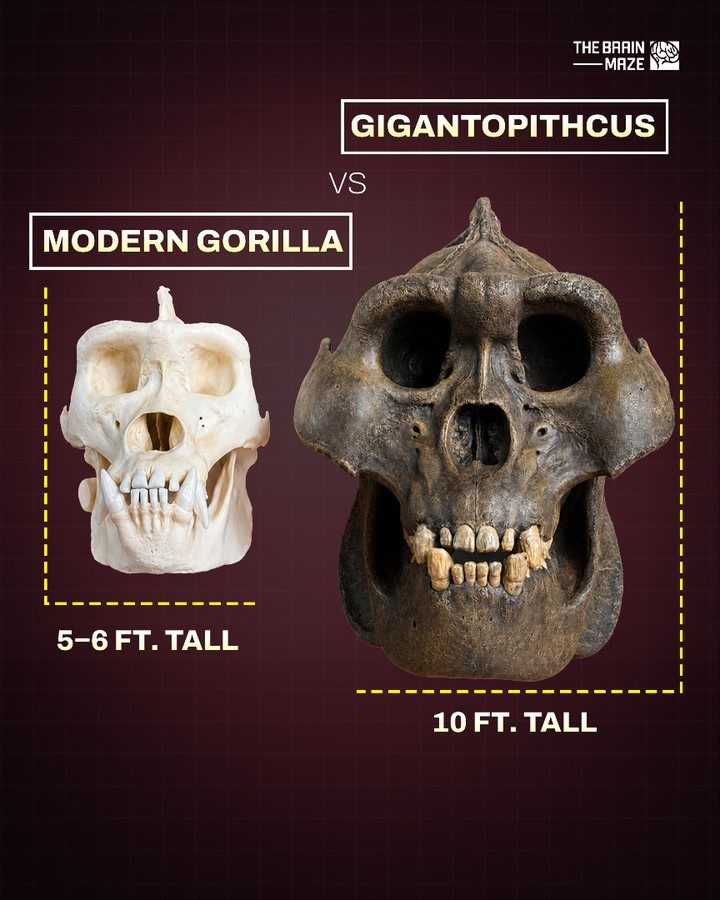
Gigantopithecus vs. Modern Gorilla
Gigantopithecus, the largest ape known to have existed, was a remarkable giant that towered up to about 10 feet (3 meters) tall and weighed several hundred kilograms. When standing upright, modern gorillas, on the other hand, typically reach only 5 to 6 feet. This stark difference in size makes Gigantopithecus one of the most impressive primates in Earth's history.
Context / Why this matters
Gigantopithecus and modern gorillas, despite their significant size difference, both belong to the ape family. This comparison offers a fascinating glimpse into the diversity and scale of primate evolution. Understanding the differences and similarities between these two species provides valuable insights into the biology and behavior of these remarkable creatures.
Gigantopithecus: The Giant of the Primate World
Gigantopithecus is often referred to as the largest ape to have ever lived. Based on fossil evidence and scientific estimates, standing upright, Gigantopithecus could reach heights of up to 10 feet (3 meters) and weigh several hundred kilograms. That’s more than double the size of a modern gorilla, which typically stands around 5 to 6 feet tall and weighs between 300 to 400 pounds. The sheer size of Gigantopithecus makes it a standout figure in the history of primates.
Fossil Evidence
The primary source of information about Gigantopithecus comes from fossil remains. Fragments of skulls, teeth, and bones have been discovered, particularly in China, Vietnam, and Indonesia. These fossils have provided crucial insights into the size, structure, and evolutionary history of this ancient ape.
Size and Strength
The most striking feature of Gigantopithecus is its enormous size. When compared to modern gorillas, which are already one of the largest living primates, Gigantopithecus was a true giant. Its robust build and powerful jaws suggest it was well-adapted to its environment, likely feeding on a diet of plants, roots, and bark.
Modern Gorillas: Today's Largest Primates
Modern gorillas are the largest living primates and are native to the forests of central and eastern Africa. There are three subspecies of gorillas: the Western Lowland Gorilla, the Eastern Lowland Gorilla, and the Mountain Gorilla. These gorillas exhibit remarkable strength, agility, and social structures.
Size and Weight
Modern gorillas stand 5 to 6 feet tall when upright, with males typically being larger and heavier than females. Males can weigh between 300 to 400 pounds, while females generally weigh between 200 to 300 pounds. Their size and strength make them formidable animals, capable of moving large objects and defending themselves and their families from predators and threats.
Social Behavior
Gorillas are highly social animals, living in groups known as troops. These troops are usually led by a dominant male, known as a silverback, and consist of several females and their offspring. The social structure and behavior of gorillas have been extensively studied, providing valuable insights into primate social dynamics and family structures.
Diet
Modern gorillas are primarily herbivorous, feeding on a variety of plants, fruits, and leaves. Their diet is adapted to their forest habitats, providing them with the necessary nutrients to maintain their large size and active lifestyle. The diet of gorillas can vary depending on the availability of food in their environment, but they are known to be adept at finding and consuming a wide range of plant materials.
Practical Tips for Understanding Primate Evolution
When studying the evolution of primates, it’s essential to consider the context in which these animals lived. This includes their environment, diet, and social structures. Understanding these factors can provide valuable insights into how and why primates evolved into the diverse and remarkable species we see today.
Consider the Environment
The environment plays a crucial role in shaping the evolution of primates. For example, the dense forests of central and eastern Africa provide ample food and shelter for gorillas, allowing them to thrive in their natural habitats. In contrast, Gigantopithecus likely lived in a different type of environment, shaped by factors such as climate and vegetation.
Examine Diet and Feeding Habits
Diet is another critical factor in the evolution of primates. The diet of Gigantopithecus, for example, likely consisted of tough, fibrous plant materials, which required strong jaws and teeth. Modern gorillas, on the other hand, have a more varied diet, feeding on a wide range of plants and fruits. Understanding the dietary habits of these primates can provide valuable insights into their evolutionary adaptations.
Study Social Structures
The social structures of primates are also crucial for understanding their evolution. Gorillas, for example, live in complex social groups with well-defined roles and hierarchies. Understanding these social structures can provide valuable insights into the behavior and evolutionary adaptations of these remarkable animals.
Important Takeaways
Gigantopithecus and modern gorillas represent two very different stages in the evolution of primates. While Gigantopithecus was an enormous, powerful ape adapted to its environment, modern gorillas have evolved into highly social, intelligent, and adaptable animals capable of thriving in a variety of habitats.
Size and Adaptation
The size difference between Gigantopithecus and modern gorillas is a testament to the incredible diversity and adaptability of primates. Gigantopithecus, with its massive size and robust build, was well-adapted to its environment and diet. In contrast, modern gorillas have evolved a more varied diet and complex social structures that allow them to thrive in a variety of habitats.
Evolutionary Insights
Studying the evolution of Gigantopithecus and modern gorillas provides valuable insights into the biology and behavior of primates. By examining their size, diet, and social structures, scientists can gain a better understanding of how these remarkable animals have adapted over time to their environments.
Conclusion
Comparing the size, structure, and social behavior of Gigantopithecus and modern gorillas offers a fascinating glimpse into the evolution of primates. From the massive size of Gigantopithecus to the complex social structures of modern gorillas, these animals provide valuable insights into the diversity and adaptability of primates. Studying these remarkable creatures and their evolutionary history can offer a deeper understanding of the natural world and the incredible diversity of life on Earth.
Watch the Reel
Questions readers ask
How tall was Gigantopithecus compared to a modern gorilla?
Gigantopithecus stood up to 10 feet (3 meters) tall, while modern gorillas typically reach heights of 5 to 6 feet when standing upright. This makes Gigantopithecus significantly taller than any living ape.
What was the weight difference between Gigantopithecus and modern gorillas?
Gigantopithecus weighed several hundred kilograms, far exceeding the weight of modern gorillas, which typically weigh between 180 to 440 pounds (82 to 200 kilograms).
Why is Gigantopithecus considered the largest known ape?
Gigantopithecus is considered the largest known ape due to its immense size, with estimates suggesting it reached up to 10 feet in height and weighed several hundred kilograms. This size far surpasses that of any living ape species.
How does the size of Gigantopithecus compare to other ancient giant apes?
Gigantopithecus is notably larger than other ancient giant apes, making it the tallest and one of the heaviest apes known to have existed. Its size is unmatched by any other primate species in Earth's history.
What insights do comparisons between Gigantopithecus and modern gorillas provide?
Comparing Gigantopithecus and modern gorillas offers a unique perspective on primate evolution, highlighting the diversity in size and scale among ape species. This comparison helps to understand the biological and behavioral adaptations that have occurred over time.
Did Gigantopithecus walk upright like modern gorillas?
While it is not definitively known how Gigantopithecus moved, many experts believe that, like other great apes, it might have walked on all fours most of the time, but could also stand upright for short periods. Its enormous size suggests a powerful and robust build, similar to modern gorillas but on a much larger scale.
What can the study of Gigantopithecus tell us about ancient life?
The study of Gigantopithecus provides a glimpse into the remarkable scale of ancient life and the diverse forms that primates have taken over time. Understanding this ancient giant aids in comprehending the broader context of ape evolution and the factors that have influenced the sizes and shapes of different species.
Related deep dives
Similar reads based on topic and creator.




Recent articles
Fresh deep dives from the latest Reels we unpacked.




Comments
Be the first to comment.