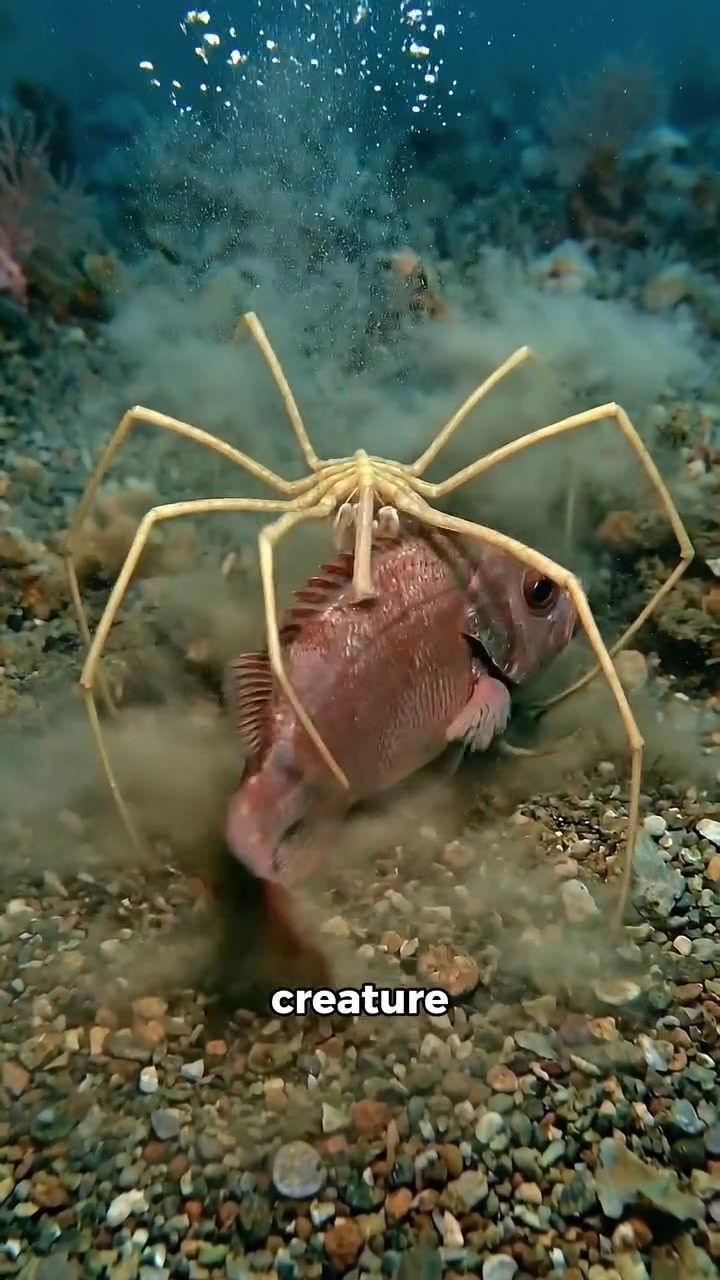
The Giant Sea Spider
The giant sea spider is a fascinating and somewhat eerie creature that inhabits the depths of the ocean. Unlike its terrestrial counterparts, this marine arachnid has a unique physiology and hunting strategy that makes it a true marvel of evolution. Let's dive deep into the world of the giant sea spider, exploring its unique characteristics, hunting methods, and the challenges it faces in its dark and unforgiving habitat.
Why this matters
The giant sea spider is a testament to the incredible diversity of life on Earth, particularly in the deep sea. Understanding these creatures not only enriches our knowledge of marine biology but also highlights the importance of preserving the delicate ecosystems that support them.
The Anatomy of a Giant Sea Spider
A Body of Legs
The giant sea spider is an extraordinary creature, with a body structure that is almost entirely composed of legs. This unique physiology allows it to navigate the freezing mud of the ocean floor with remarkable efficiency. Its thin, elongated legs serve multiple purposes, from locomotion to housing vital organs, as it has no room for a stomach or lungs.
Organ Distribution
One of the most striking features of the giant sea spider is its unusual organ distribution. Due to its thin body, it has evolved to stuff its vital organs inside its own legs. This adaptation is a fascinating example of how organisms can evolve unique solutions to survive in extreme environments.
Hunting and Feeding
The Needle Hunter
The giant sea spider does not rely on teeth to capture its prey. Instead, it uses a long, thin tube that acts as a needle. When it finds a slow-moving victim, it stands over the prey, pinning it down in the pitch-black abyss. The long tube then pierces the flesh, allowing the spider to drain the victim's fluids alive, drop by drop.
Silent and Efficient
The hunting process of the giant sea spider is both silent and efficient. Once the prey has been completely drained, the spider detaches and moves on to its next victim. There is no rest in the abyss, and the spider is a relentless hunter, constantly on the prowl for its next meal.
Life in the Abyss
The Challenging Environment
The deep sea is a harsh and unforgiving environment, characterized by extreme cold, high pressure, and complete darkness. The giant sea spider has adapted to thrive in these conditions, using its unique physiology and hunting strategies to survive.
The Eternal Hunt
Life in the abyss is a constant struggle for survival. The giant sea spider embodies this struggle, as it is always on the move, searching for its next victim. Its relentless hunting and efficient feeding habits make it a formidable predator in its ecosystem.
The Living Machine
The giant sea spider is often described as a silent living machine, a description that captures its relentless and efficient nature. It is a creature of habit, constantly patrolling the ocean floor in search of prey, driven by an unyielding instinct to survive.
Practical Tips for Observing Giant Sea Spiders
Equipment and Preparation
Observing giant sea spiders in their natural habitat requires specialized equipment and preparation. Deep-sea submersibles or remotely operated vehicles (ROVs) are essential for exploring the ocean depths. Proper lighting and imaging equipment are also crucial for capturing detailed observations.
Patience and Persistence
Observing these creatures requires patience and persistence. They are elusive and often hidden in the darkness, so it may take time to spot one. Being prepared to spend extended periods in the deep sea can increase the chances of successful observation.
Ethical Considerations
When observing giant sea spiders, it is important to maintain a respectful and non-interfering approach. These creatures are a vital part of their ecosystems, and any disturbance could have unintended consequences. Always prioritize the well-being of the marine life you encounter.
Important Takeaways
- The giant sea spider is a unique and fascinating creature with a body composed almost entirely of legs.
- It has evolved to stuff its vital organs inside its own legs, a remarkable adaptation to its environment.
- The spider uses a needle-like tube to drain the fluids of its prey alive, a silent and efficient hunting method.
- Life in the deep sea is a constant struggle for survival, and the giant sea spider embodies this struggle with its relentless hunting habits.
- Observing these creatures requires specialized equipment, patience, and a respectful approach.
Conclusion
The giant sea spider is a remarkable example of the incredible diversity of life on Earth. Its unique physiology and hunting methods make it a fascinating subject of study, offering insights into the adaptations that allow organisms to thrive in extreme environments. Understanding and appreciating these creatures can deepen our connection to the natural world and inspire us to protect the delicate ecosystems that support them.
Watch the Reel
Questions readers ask
How does the giant sea spider's hunting strategy differ from other spiders?
The giant sea spider uses a distinctive hunting method compared to other spiders. Instead of using teeth or fangs to bite and envenomate its prey, it employs a needle-like tube to drain the bodily fluids of its prey. This method is particularly adapted to its deep-sea environment, where resources are scarce and competition is fierce.
What makes the giant sea spider's anatomy suited for deep-sea life?
The giant sea spider's elongated legs and unusual distribution of organs allow it to thrive in the harsh conditions of the deep sea. Its long legs help it move efficiently in low-oxygen environments, while its unique organ placement optimizes its survival in extreme pressures and temperatures. Additionally, its body structure enables it to efficiently drain fluids from its prey.
What challenges does the giant sea spider face in its deep-sea habitat?
The deep-sea environment is unforgiving, with crushing pressures, near-freezing temperatures, and a lack of sunlight. The giant sea spider must contend with these extreme conditions while also finding sufficient prey in a resource-scarce environment. Its unique adaptations, such as its needle-like tube for fluid extraction, help it overcome these challenges.
How does the giant sea spider's hunting method work?
The giant sea spider's hunting method involves piercing its prey with a needle-like tube and then draining the prey's bodily fluids. This process is slow and methodical, allowing the sea spider to extract as much nourishment as possible from its catch. This efficient predation strategy is crucial for its survival in the food-scarce deep-sea environment.
What role do the giant sea spider's long legs play in its survival?
The giant sea spider's elongated legs serve multiple purposes. They enable the spider to move efficiently through the low-oxygen, high-pressure environment of the deep sea. Additionally, the long legs help the spider maneuver and position itself effectively for draining fluids from its prey, which is a critical aspect of its unique hunting strategy.
What types of prey does the giant sea spider typically hunt?
The giant sea spider's diet primarily consists of marine organisms found in the deep sea. Given the scarcity of resources, the spider must make the most of any prey it encounters. Its hunting strategy, involving fluid extraction, allows it to consume a variety of prey, including other deep-sea creatures that might otherwise be tough to digest.
Recent articles
Fresh deep dives from the latest Reels we unpacked.




Comments
Be the first to comment.