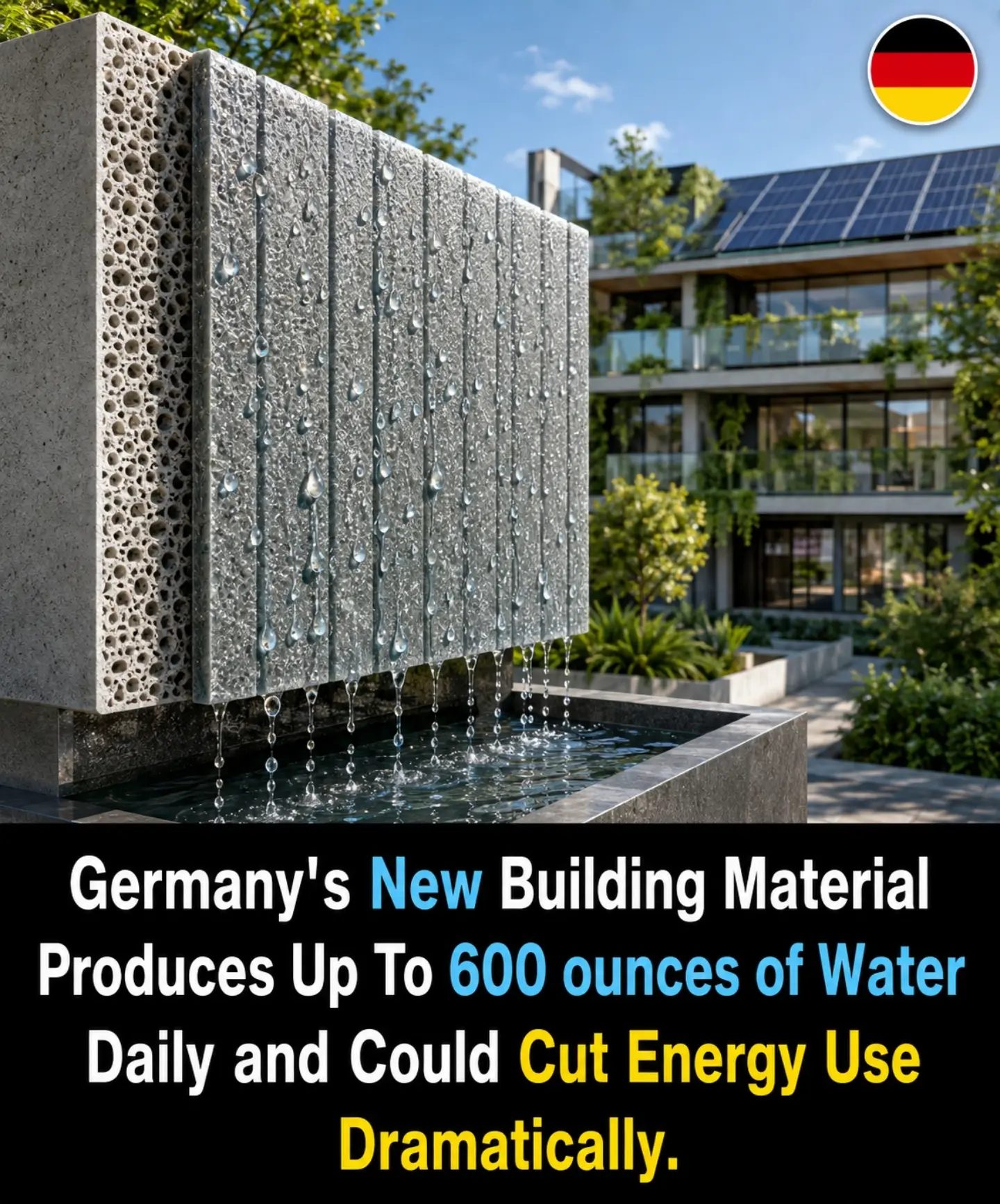
Germany's Innovative Building Material: A Modern Marvel in Construction Technology
Innovative Building Material from Germany
A revolutionary building material from Germany is making waves in the construction industry. This material is not only aesthetically pleasing but also boasts impressive functional capabilities. The material features a porous structure, allowing it to collect and channel water down its surface. This unique characteristic enables the material to produce up to 600 ounces of water daily, contributing to sustainable water management in urban environments.
Why This Matters
In a world where water scarcity and energy efficiency are pressing concerns, this innovative building material offers a promising solution. By harnessing the power of natural elements, it addresses two critical issues in modern architecture: water conservation and energy use. The ability to produce significant amounts of water daily can help mitigate the strain on municipal water systems, while its potential to reduce energy consumption aligns with global sustainability goals. However, the material's impact extends beyond water and energy. Its aesthetic appeal and versatility make it a desirable choice for contemporary architecture, offering designers and builders a new tool to create visually stunning and environmentally responsible structures.
Main Discussion
Water Collection and Management
The most striking feature of this building material is its ability to collect and channel water. The porous surface allows rainwater to seep into the material, which is then directed down the facade through a controlled flow. This process not only reduces runoff but also captures a substantial amount of water, up to 600 ounces daily. This water can be collected and used for various purposes, such as irrigation, cleaning, or even drinking after proper treatment, making it a valuable resource in urban areas.
Energy Efficiency
The material's potential to reduce energy consumption is another significant benefit. By utilizing the collected water, the material can support passive cooling systems, which reduce the need for air conditioning. Additionally, the water flow can be integrated into green building designs, further enhancing energy efficiency. The material's ability to cut energy use dramatically can lead to substantial cost savings and reduced carbon footprints, making it an attractive option for sustainable construction projects.
Aesthetic and Design Flexibility
Beyond its functional benefits, the material offers architects and designers a unique aesthetic. The porous surface and water flow create a dynamic and visually appealing facade, adding a modern and sophisticated touch to any building. Its versatility allows for various design applications, from residential buildings to commercial complexes, making it a versatile choice for contemporary architecture.
Practical Tips for Implementation
Design Integration
When integrating this material into a building design, consider the overall aesthetic and functional goals. The material's porous nature can be used to create intricate patterns and designs, enhancing the facade's visual appeal. Additionally, plan the water collection and distribution system carefully to maximize water use and minimize waste.
Maintenance and Upkeep
While the material is designed to be durable and low-maintenance, regular cleaning and inspection are essential to ensure optimal performance. Check for any blockages or damage to the porous surface that could affect water flow. Proper maintenance will not only extend the material's lifespan but also ensure it continues to deliver its intended benefits.
Regulatory Compliance
Before implementing this material, verify local building codes and regulations. Some jurisdictions may have specific requirements for water management systems and energy-efficient materials. Ensure that the building design and material use comply with all relevant standards to avoid potential issues during the construction or operation phases.
Important Takeaways
Sustainability
This innovative building material significantly contributes to sustainability by conserving water and reducing energy consumption. Its ability to produce up to 600 ounces of water daily and cut energy use dramatically makes it a valuable addition to green building projects.
Versatility
The material's versatility allows for various design applications, from modern residential buildings to commercial complexes. Its aesthetic appeal and functional benefits make it a desirable choice for architects and designers looking to create visually stunning and environmentally responsible structures.
Cost-Effectiveness
The material's potential to reduce energy consumption can lead to substantial cost savings over time. Additionally, its durability and low maintenance requirements make it a cost-effective choice for long-term building projects.
Conclusion
Germany's innovative building material represents a significant advancement in construction technology. Its unique water collection and energy-efficient properties, combined with aesthetic flexibility, make it a valuable addition to modern architecture. By integrating this material into new building projects, architects and designers can create sustainable, cost-effective, and visually appealing structures that contribute to a greener future.
Watch the Reel
Questions readers ask
How does Germany's new building material help with water scarcity in urban areas?
Germany's new building material addresses urban water scarcity by collecting rainfall through its porous structure. It can generate up to 600 ounces of water daily, which can be used for various purposes, reducing the demand on municipal water supplies and promoting self-sufficiency in urban areas.
What makes this new building material from Germany energy-efficient?
The material fosters energy efficiency by reducing the need for conventional water treatment and transportation processes. Since it harvests rainwater, it lessens the energy required to pump and treat water from external sources, thereby lowering a building’s overall energy consumption.
Can this innovative material be integrated into existing buildings?
While the material is designed to be part of new construction projects, it can also be retrofitted onto existing buildings. This makes it a versatile solution for both new developments and the renovation of older structures, enhancing their sustainability and water management capabilities.
What are the benefits of using porous building materials like Germany's new innovation?
Porous building materials offer multiple benefits, including improved water management, enhanced energy efficiency, and aesthetic appeal. They can help mitigate urban heat island effects, improve indoor air quality, and contribute to a more sustainable and resilient built environment.
How does the daily water production of this material compare to other rainwater harvesting systems?
The material's ability to produce up to 600 ounces of water daily is quite substantial when compared to traditional rainwater harvesting systems, which often rely on separate collection and storage systems. This integrated approach ensures a more consistent and reliable water supply, making it a superior option for urban settings.
What are the aesthetic advantages of using this new building material?
The material offers modern façade design options. It presents a sleek, contemporary look that can enhance the visual appeal of buildings. Its unique properties also allow for creative architectural designs, making buildings not only functional but also visually striking.
How does Germany's new building material contribute to sustainable construction?
This innovative building material supports sustainable construction by reducing the demand for resources like water and energy. Its ability to harvest and manage water on-site and in conjunction with its energy-saving properties, makes it a key component in creating environmentally friendly and efficient buildings.
Recent articles
Fresh deep dives from the latest Reels we unpacked.




Comments
Be the first to comment.