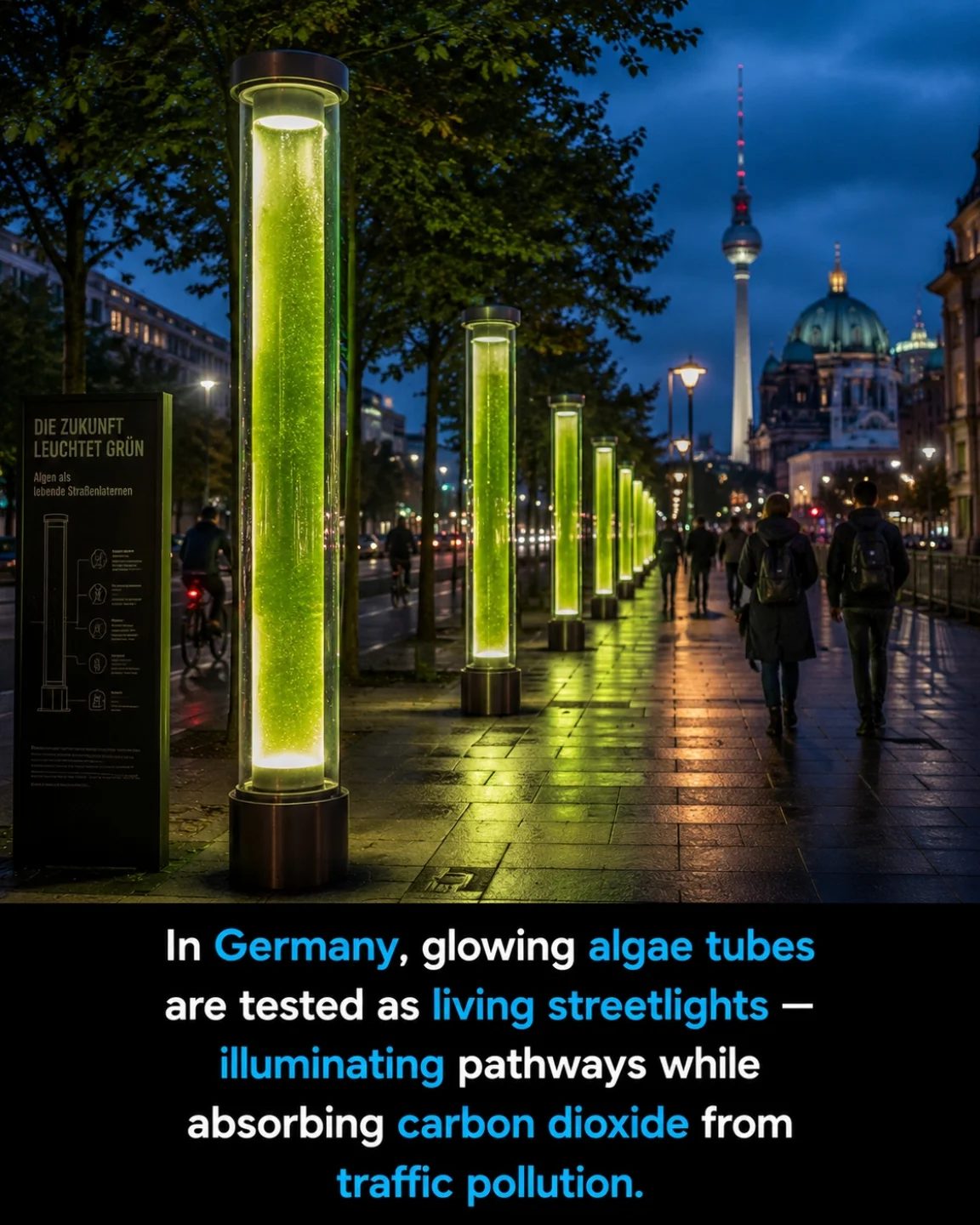
Glowing Algae Streetlights
In Germany, a groundbreaking initiative is transforming city streets with glowing algae streetlights. These innovative streetlights not only provide illumination but also play a crucial role in absorbing carbon dioxide from traffic pollution, making them a sustainable and environmentally friendly alternative to traditional streetlights.
Why This Matters
As urban areas continue to grow, so does the demand for efficient and eco-friendly infrastructure. Traditional streetlights, while essential for public safety and navigation, contribute to light pollution and have a significant carbon footprint. The integration of algae-based streetlights addresses these concerns by offering a sustainable and visually unique lighting solution, which is especially important in the face of global environmental challenges.
Algae Streetlights: How They Work
The Science Behind Glowing Algae
Algae are photosynthetic organisms that convert light energy into chemical energy, releasing oxygen in the process. Certain species of algae, such as dinoflagellates and bioluminescent algae, can emit light naturally. This natural luminescence is harnessed in the development of glowing algae streetlights.
The streetlights feature tubes filled with algae that absorb carbon dioxide and other pollutants from the air. During photosynthesis, the algae release oxygen and produce a soft, natural glow. This process not only illuminates the streets but also actively contributes to a cleaner environment by reducing the levels of harmful gases.
Installation and Maintenance
Installing algae streetlights involves setting up tubes filled with algae along pathways and streets. These tubes are designed to be durable and resistant to environmental factors, ensuring long-lasting performance. Unlike traditional streetlights, which require significant energy inputs, algae streetlights are powered naturally and require minimal maintenance, making them a cost-effective and sustainable solution.
The Environmental Impact
Reducing Carbon Footprint
One of the primary benefits of algae streetlights is their ability to absorb carbon dioxide. Traffic pollution, particularly in urban areas, is a significant contributor to greenhouse gas emissions. By integrating algae streetlights, cities can actively reduce their carbon footprint and contribute to cleaner air.
Enhancing Urban Biodiversity
Algae streetlights also support urban biodiversity. The presence of living organisms such as algae creates micro-ecosystems that can attract other organisms, such as insects and birds. This can lead to a more vibrant and balanced urban ecosystem, improving overall environmental health.
Practical Applications
Public Spaces
Algae streetlights are particularly suitable for public spaces such as parks, pedestrian walkways, and community centers. These areas benefit from the soft, natural glow of the algae, which can create a serene and inviting atmosphere. Additionally, the environmental benefits make them an excellent choice for eco-friendly urban planning.
Residential Areas
For residential neighborhoods, algae streetlights provide an energy-efficient and aesthetically pleasing lighting solution. Homeowners and community associations can leverage this technology to enhance the beauty and sustainability of their surroundings, fostering a sense of community engagement and environmental stewardship.
Important Takeaways
- Glowing algae streetlights offer a sustainable and environmentally friendly alternative to traditional streetlights.
- These innovative streetlights absorb carbon dioxide from traffic pollution, contributing to cleaner air and reducing the carbon footprint.
- Algae streetlights create micro-ecosystems that enhance urban biodiversity.
- They are suitable for various applications, including public spaces and residential areas, providing both aesthetic and functional benefits.
Conclusion
The concept of glowing algae streetlights represents a significant step forward in urban sustainability. By harnessing the natural properties of algae, these streetlights not only provide illumination but also actively contribute to a cleaner, greener environment. As we continue to explore new and innovative ways to reduce our environmental impact, glowing algae streetlights serve as a shining example of how technology and nature can work hand in hand to create a more sustainable future.
Watch the Reel
Questions readers ask
What are Germany's glowing algae streetlights and how do they work?
Germany's glowing algae streetlights are an innovative lighting solution where light is produced from a bio-luminescent process of algae. These streetlights contain algae in light tubes, which absorb carbon dioxide and pollutants from traffic, while the algae themselves produce light.
How do algae streetlights contribute to urban pollution reduction?
Algae streetlights play a significant role in reducing urban pollution by absorbing carbon dioxide and other pollutants from traffic. This process helps to mitigate the effects of traffic-related emissions, contributing to a cleaner urban environment. Additionally, these streetlights reduce light pollution compared to traditional streetlights.
What are the benefits of using algae-powered streetlights over traditional streetlights?
Algae-powered streetlights offer several benefits over traditional streetlights. They are more environmentally friendly, as they absorb carbon dioxide and reduce light pollution. Furthermore, they provide a unique and aesthetically pleasing illumination, enhancing the visual appeal of urban areas.
How does the implementation of algae streetlights in Germany impact carbon dioxide levels?
The implementation of algae streetlights in Germany helps to lower carbon dioxide levels by using the algae to absorb CO2 from the atmosphere. This process contributes to reducing greenhouse gas emissions in urban areas, making a positive impact on air quality.
Are there any video resources available to learn more about glowing algae streetlights in Germany?
Indeed, there are video resources available that showcase the innovative algae streetlights in Germany. These videos provide visual demonstrations of how the streetlights work, and offer insights into their environmental benefits and the technology behind them. Simply search for 'algae streetlights video' to find these resources.
Related deep dives
Similar reads based on topic and creator.

Recent articles
Fresh deep dives from the latest Reels we unpacked.




Comments
Be the first to comment.