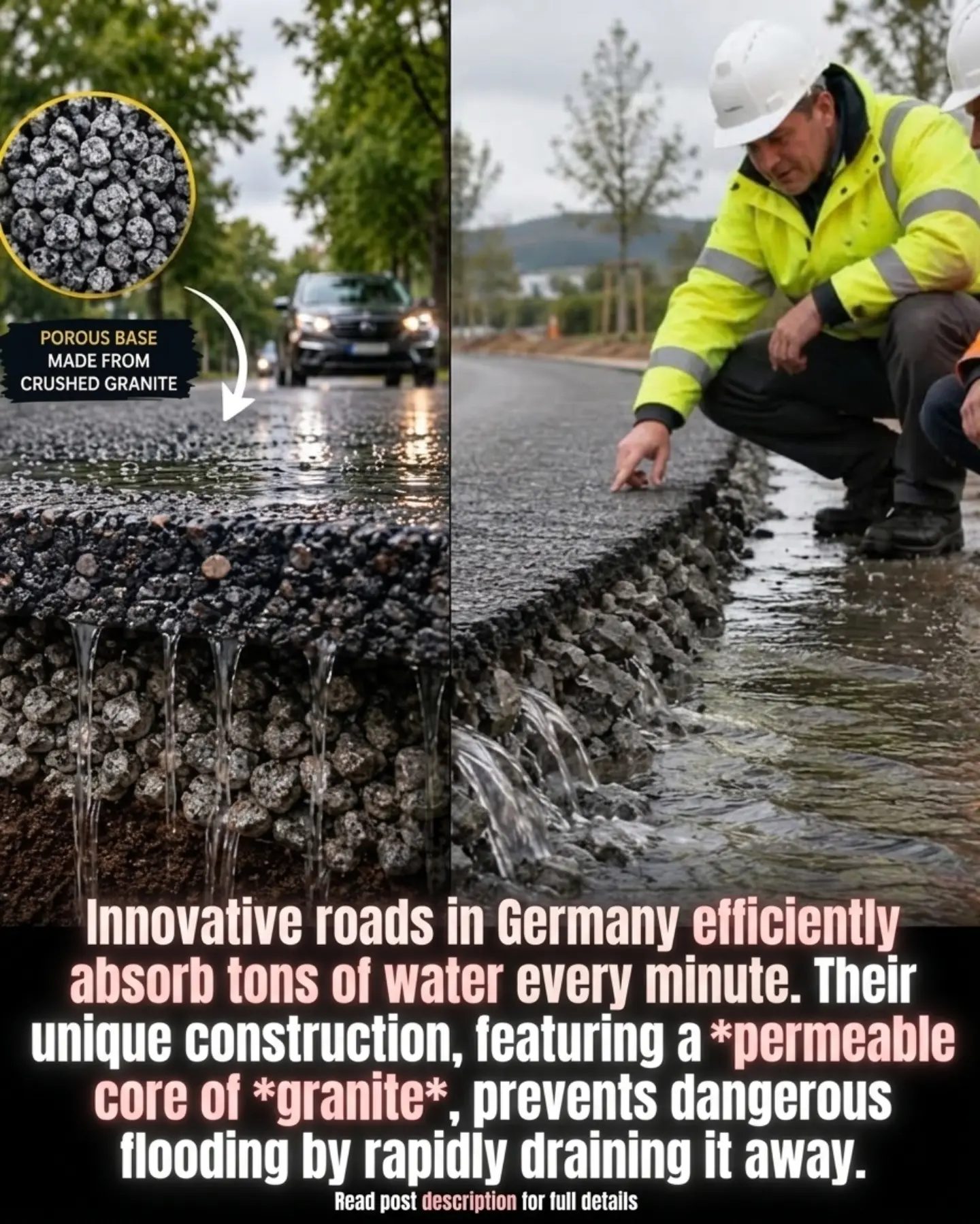
Innovative Roads in Germany
Innovative road construction techniques in Germany have gained attention for their ability to effectively manage water and prevent flooding. These roads use a unique base material that offers significant advantages over traditional construction methods. Let's dive into the details of this innovative approach.
Context and Why This Matters
Germany has long been at the forefront of engineering and innovation, and its road construction methods are no exception. Traditional road construction often relies on impermeable materials that can exacerbate flooding issues, especially in areas with heavy rainfall. The innovative roads in Germany address this problem by incorporating a porous base made from crushed granite. This design allows for efficient water absorption and rapid drainage, making these roads particularly effective in mitigating flood risks.
Porous Base Construction
Materials and Design
The foundation of these innovative roads lies in the use of a porous base made from crushed granite. This material is chosen for its durability and ability to allow water to pass through it easily. The porous nature of the base ensures that water can quickly drain away, reducing the risk of standing water and flooding.
Water Absorption and Drainage
One of the key advantages of this construction method is its exceptional water absorption capacity. The roads can efficiently absorb tons of water every minute. This rapid drainage is crucial in preventing flooding, especially during intense rainfall. By allowing water to seep through the road surface and into the underlying layers, these roads help to maintain dry, safe driving conditions and protect surrounding infrastructure.
Environmental Benefits
Beyond the immediate benefits of flood prevention, these innovative roads also offer environmental advantages. By allowing water to infiltrate the ground, they help to replenish groundwater reserves and reduce runoff, which can carry pollutants into local waterways. This makes the roads beneficial for both urban and rural environments.
Construction Process
The construction of these roads involves several key steps. First, a layer of crushed granite is laid down to form the porous base. This layer is carefully compacted to ensure its stability and ability to absorb and drain water effectively. Next, additional layers, such as asphalt or concrete, are added on top, ensuring a durable and safe driving surface. The entire structure is designed to maintain its integrity while allowing water to flow through the porous base.
Practical Tips for Road Construction
Choosing the Right Materials
When planning a road construction project, selecting the right materials is crucial. For areas prone to flooding, consider using porous materials like crushed granite. These materials can significantly improve water management and drainage, helping to prevent flooding and maintain road safety.
Designing for Drainage
Incorporating a porous base into the road design is one of the most effective ways to improve drainage. Ensure that the base layer is sufficiently porous and that additional drainage systems, such as underground pipes or grids, are in place to facilitate water flow.
Regular Maintenance
Regular maintenance is essential to keep these innovative roads functioning effectively. This includes inspecting the porous base for any blockages or compaction that could reduce its ability to absorb and drain water. Regular cleaning and maintenance of the surface layers are also important to ensure the road's longevity and performance.
Important Takeaways
- Innovative roads in Germany utilize a porous base made from crushed granite to manage water efficiently.
- These roads can absorb tons of water every minute, preventing flooding and maintaining safe driving conditions.
- The construction method offers environmental benefits by replenishing groundwater reserves and reducing runoff.
- Choosing the right materials, designing for drainage, and regular maintenance are key to the success of these innovative roads.
Conclusion
The innovative road construction techniques in Germany represent a significant advancement in infrastructure design. By using a porous base made from crushed granite, these roads effectively manage water, prevent flooding, and offer environmental benefits. Whether you're a city planner, engineer, or simply someone interested in cutting-edge infrastructure solutions, understanding this approach can provide valuable insights into modern road construction.
Watch the Reel
Questions readers ask
What makes Germany's flood-resistant roads innovative?
Germany's flood-resistant roads are innovative due to their use of porous, crushed granite. This material allows water to absorb and drain efficiently, reducing the risk of flooding and improving overall road safety.
How does porous road construction improve water management?
Porous road construction improves water management by allowing rainwater to seep through the surface and into the ground, rather than running off into drainage systems or causing surface flooding. This helps to replenish groundwater supplies and reduces the strain on urban drainage infrastructure.
What are the benefits of using crushed granite in road construction?
Using crushed granite in road construction offers several benefits. It enhances water absorption, reduces the risk of flooding, and promotes sustainable water management. Additionally, it can lead to cost savings by decreasing the need for extensive drainage systems.
How do Germany's innovative roads enhance road safety?
These roads enhance safety by minimizing water accumulation on the surface, which can prevent hydroplaning and other water-related hazards. Improved drainage also reduces the risk of potholes and other road damages caused by water.
Can these innovative road designs be implemented in other countries?
Yes, these designs can be implemented in other countries, especially those with heavy rainfall or prone to flooding. The key is to adapt the materials and techniques to the specific environmental and climatic conditions of the region.
What are the environmental benefits of Germany's water-absorbing roads?
The environmental benefits include reduced surface water runoff, which helps to mitigate local flooding and prevents erosion. Additionally, the absorbed water can replenish groundwater, benefiting local ecosystems. These roads also contribute to a more sustainable urban landscape.
How does Germany's innovative road construction compare to traditional methods?
Traditional road construction often uses impermeable materials that can exacerbate flooding. In contrast, Germany's innovative approach uses a porous base made from crushed granite, which allows water to drain effectively. This design reduces the need for extensive drainage systems and enhances overall water management.
Related deep dives
Similar reads based on topic and creator.



Recent articles
Fresh deep dives from the latest Reels we unpacked.




Comments
Be the first to comment.