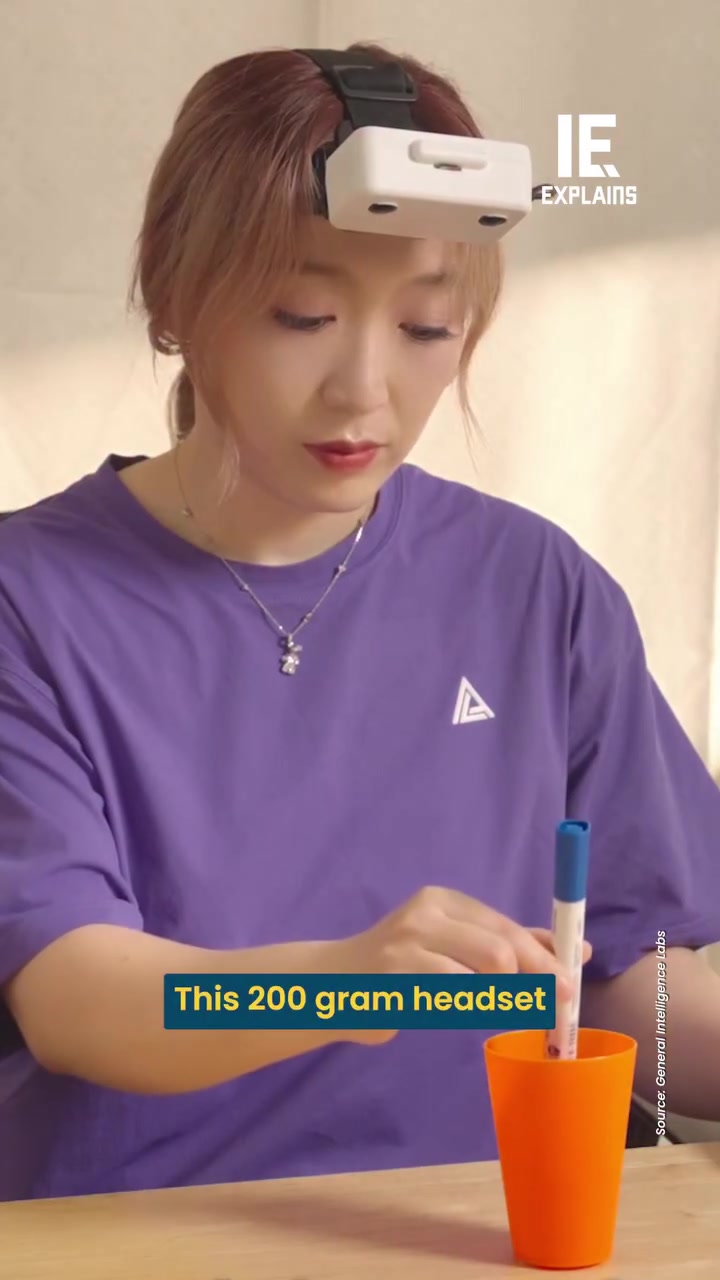
The EG01GS headset from General Intelligence Labs captures the exact movements of the person wearing it. It’s robotic autonomy in miniature. The lightweight headset weighs just 200 grams, recording everything from hand movements to eyesight and transmitting it to AI.
The EG01GS Data Collection Headset
The EG01GS is a data collection tool from General Intelligence Labs. It's designed to let robots learn from human actions. The headset is equipped with 1,000 ATP cameras running at 30 frames per second. It captures hand movements, field of view and has a 9-axis IMU running at 400 Hz and stereo mics. Every frame is subject to immediate in-device analysis though on board hand detection model. The resulting data is then transmitted to a robot. What sets the EG01GS apart is its compact form and high-tech features packed in. The headset’s rotating shutter captures images at consistent angles that mimic human vision. Meanwhile, the IMU makes sure the headset is accurately positioning the robot’s hands and eyes. This makes it perfect for training robots. The camera angles already match what the robot will see when it takes over the task from the human. This means less teleoperation is needed as robot policy leads the way. Highlighting that the EG01GS is simpler than Meta's Project Area, which has research access by application. The data collection will make the robot come to life through imitation learning.
Imitation Learning in Robotic Tasks
Imitation learning, as its name suggests, is the art of teaching a robot. The robot learns how to repeat an ordinary task through a rigged environment or regular human movement. The collected data are then processed and applied to several robots of varying skills and areas. The same is applied to the EG01GS where it captures human functions and transmits them to the robot. The robot then applies the captured behaviour to its actions. The headset’s primary use is to capture data for imitation learning. The aim here is to enable robots to perform human-like tasks. Once the EG01GS records the necessary data, the headset is removed. This then makes room for robots to begin their imitation learning. The learning is done through several methods including reinforcement, behaviour cloning, and deep learning. The EG01GS excels where it's needed the most: capturing and copying complex human motions. Its data collection helps robots perform tasks like cooking, assembly, and part sorting. This could revolutionize industries where precision is key. Its small size and dependable mechanics make it suitable for both domestic and high-stakes environments.
The Tech specs of EG01GS
The EG01GS has a couple of 157 by 84 cameras that sit 63mm apart. The similarity to the eye gap gives precise images while providing depth. The 9-axis IMU and stereo mics gives sophisticated movement and noise reading. The IMU is running at 400Hz. Which means the EG01GS can handle the wildest movements. The stereo mics are equally as efficient.
How The Data Is Processed
The data collected by the EG01GS is preserved in a single time-aligned file. This file has a 50 millisecond drift, and the IMU captures 400 frames every second. The data is transmitted via Wi-Fi or USB and saved on a 128GB microSD card or on the device itself. The files are now available to train your robots through imitation learning. The camera angle already matches the robot's view so you can find robots replicating tasks in no time.
For Robot Policy or Extra Hour
In the long run, the EG01GS is for robot policy-building and not just to teleoperate arms for a few hours. The aim is to replicate human actions so robots can do them at scale. The EG01GS publicizes innovation. It may come off as expensive, but the innovation is worth it.
The Hands of a Robot
The EG01GS headset is designed to teach a robot to mimic human hands. The robot hand performs tasks, bends, and smears materials just like a human. This is due to its advanced motion sensing capabilities, which are enhanced by its 9-axis IMU. The robot hand is capable of delicate movements, making it ideal for tasks that require precision. The robot hand's ability to perform these tasks makes it a valuable tool in various industries. This makes it ideal for industrial uses.
How to Get Started
With the EG01GS, you can get started teaching robots in a snap. First, find a task you want to train your robots. Cook, sort parts or assemble. Then, wear the headset and complete the task. The EG01GS immediately lets you know if it fails to capture a frame. Now, you can calmly redo the missed part. It could be pricey. It is not just an extra hour of teleoperation but more than that.
Getting the Best from the EG01GS
The EG01GS is an innovative way for companies to train robots efficiently. This device makes it easier to capture and replicate human movements. These are its strengths and weaknesses.
- Start with your best talent: You want your robot to learn from your best. This means taking your best performing task employees to perform the first batch of recordings.
- Calibrate regularly: Recalibrate regularly to sustain the headset's functionality. This is a device you can't afford to break. Regular calibration will also help you keep up with the new data.
- Do it often: Frequent recordings mean a deep understanding. This means fewer instances of the robot missing the mark. Although the EG01GS is an expensive investment, the advantages it offers are worth it. The cost is negligible when you consider all the automation benefits your company can get from using this tool. With the aid of this headset, the EG01GS, General Intelligence Labs aims to teach robots complex tasks. They do this by capturing the data of human actions. The insights could change how industries automate complex tasks. The EG01GS could be the beginning of robots.
Watch the Reel
Questions readers ask
How does the EG01GS headset capture human movements so accurately?
The EG01GS uses a combination of high-speed cameras and advanced sensors to capture human movements. It has 1,000 ATP cameras running at 30 frames per second, a 9-axis IMU operating at 400 Hz, and stereo microphones. This setup allows it to record detailed hand movements, field of view, and even subtle noises, all of which contribute to its precise data collection.
What kind of tasks can the EG01GS help robots learn?
The EG01GS is particularly effective at capturing complex human motions, which makes it useful for teaching robots tasks that require precision and dexterity. This includes activities like cooking, assembly work, and part sorting. The headset's data collection helps robots perform these tasks in a more human-like manner, which could be revolutionary in various industries.
How does the EG01GS compare to other similar technologies, like Meta's Project Area?
The EG01GS stands out due to its compact size and high-tech features, making it more accessible and easier to use compared to technologies like Meta's Project Area. Unlike Project Area, which has restricted research access, the EG01GS is designed to be simpler and more straightforward, focusing on direct data collection for imitation learning.
Can the EG01GS be used in environments where precision is crucial, such as in medical settings?
Yes, the EG01GS is designed to be suitable for both domestic and high-stakes environments. Its dependable mechanics and precise data collection make it a good fit for settings where precision is key, such as medical procedures or industrial assembly lines. However, specific use cases would need to be evaluated to ensure it meets all necessary safety and accuracy standards.
What happens to the data collected by the EG01GS after it is removed?
Once the EG01GS records the necessary data, it is transmitted to the robot for imitation learning. The data is processed and applied to robots of varying skills and areas. The robot then uses this data to perform tasks in a human-like manner through methods like reinforcement learning, behaviour cloning, and deep learning.
How does the EG01GS ensure that the data it collects is accurate and reliable?
The EG01GS ensures data accuracy through its advanced sensor technology. The 9-axis IMU running at 400 Hz and the stereo microphones provide precise movement and noise readings. Additionally, the headset's rotating shutter captures images at consistent angles, mimicking human vision and ensuring that the data collected is as accurate as possible.
Related deep dives
Similar reads based on topic and creator.




Recent articles
Fresh deep dives from the latest Reels we unpacked.



Comments
Be the first to comment.