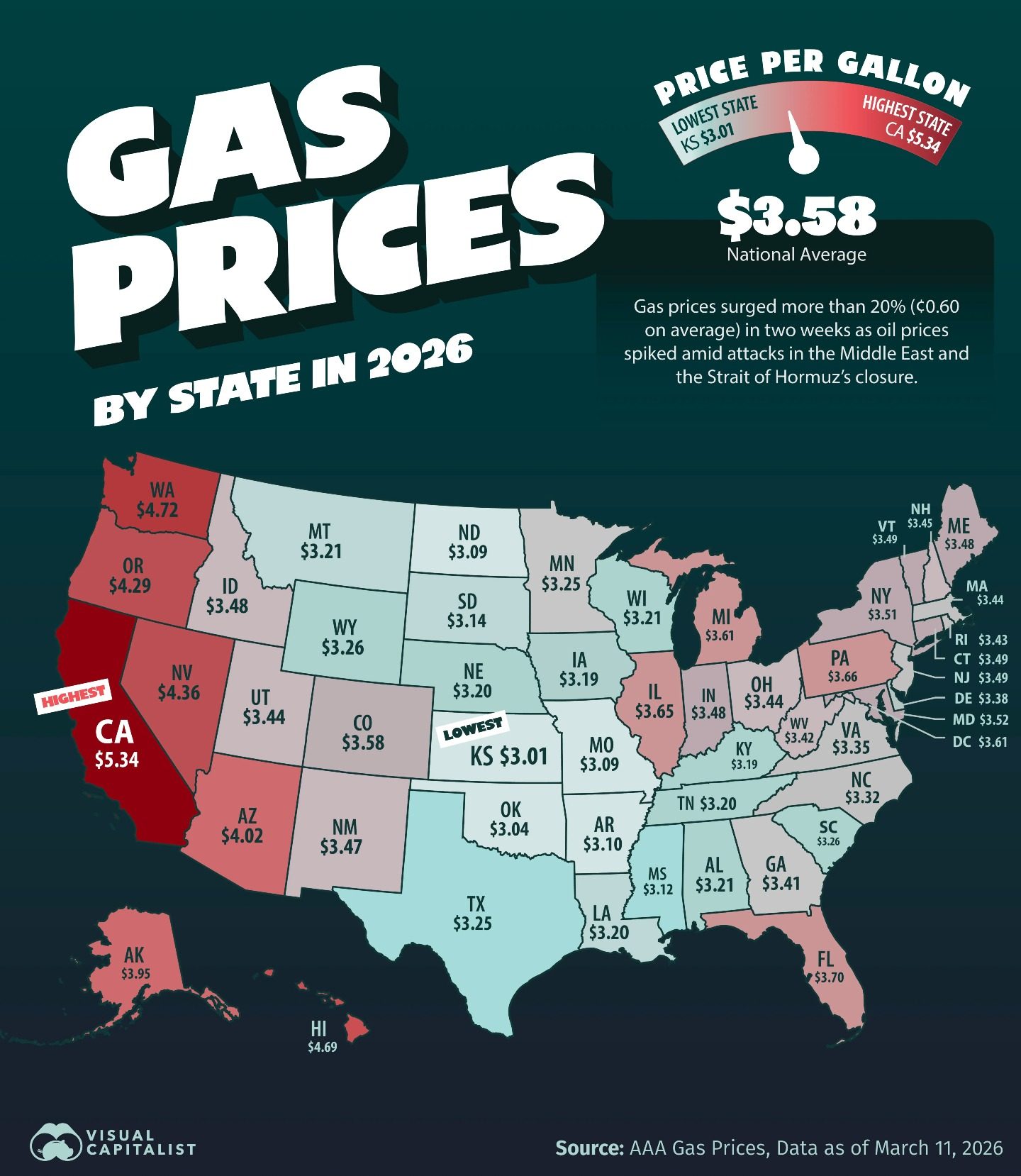
Gas Prices by State
Gas prices vary significantly across the United States, with California leading the way at an average of $5.34 per gallon. Kansas, on the other hand, offers the lowest prices at $3.01 per gallon. This disparity creates a $2.33 gap nationwide, with most states falling below the national average of $3.58.
Why This Matters
Understanding the fluctuations in gas prices is crucial for both consumers and businesses. Gas prices impact the cost of living, travel, and transportation of goods. Whether you're planning a road trip or managing a fleet, knowing the gas price landscape can help in budgeting and decision-making.
Main Discussion
Regional Disparities
The West Coast, particularly California, experiences the highest gas prices. This region is heavily reliant on imports and has stringent environmental regulations, which contribute to the higher costs. In contrast, the Midwest and Southern states generally have lower prices due to their proximity to refineries and lower taxes.
Factors Influencing Gas Prices
Several factors influence the price of gas:
- Oil Prices: The cost of crude oil, which is the primary component of gasoline, directly affects gas prices. Recent surges in oil prices, such as the 20% increase in two weeks due to Middle East tensions, have led to significant spikes in gas prices.
- Refinement Costs: The process of refining crude oil into gasoline incurs costs that vary by region. States with fewer refineries or those that rely on imports often face higher prices.
- Taxes: State and federal taxes on gasoline also play a significant role. States with higher gas taxes typically see higher prices at the pump.
- Distribution Costs: The cost of transporting gasoline from refineries to gas stations can vary widely. States with extensive pipeline networks or proximity to refineries generally have lower distribution costs.
Current Trends
As of March 2026, gas prices have surged by more than 20% in just two weeks. This increase is attributed to geopolitical tensions, including attacks in the Middle East and the closure of the Strait of Hormuz, a critical oil shipping route. Such disruptions can lead to temporary shortages and increased costs for consumers.
State-by-State Breakdown
Let's take a closer look at some key states:
- California: At $5.34 per gallon, California's prices are driven by high taxes, strict environmental regulations, and reliance on imports.
- Wyoming: Wyoming has relatively lower prices at $4.72 per gallon, benefiting from nearby refineries and lower taxes.
- Kansas: Kansas offers the lowest prices in the country at $3.01 per gallon, thanks to its central location, low taxes, and efficient distribution networks.
- Midwest States: States like Minnesota, Iowa, and Missouri have prices ranging from $3.14 to $3.26 per gallon, benefiting from their proximity to refineries and lower taxes.
Practical Tips
- Plan Ahead: If you're planning a long road trip, consider mapping out your route through states with lower gas prices to save money.
- Monitor Prices: Use apps and websites that track gas prices in real-time to find the best deals.
- Efficient Driving: Improve your vehicle's fuel efficiency by maintaining proper tire pressure, avoiding aggressive driving, and keeping up with regular maintenance.
- Carpooling: Share rides with friends or colleagues to split the cost of fuel and reduce overall consumption.
Important Takeaways
- Gas prices are influenced by a variety of factors, including oil prices, refinement costs, taxes, and distribution costs.
- Regional disparities in gas prices are significant, with the West Coast generally experiencing higher prices.
- Keeping an eye on current trends and planning ahead can help consumers and businesses manage their fuel costs more effectively.
Conclusion
Gas prices are a dynamic and complex issue, influenced by a multitude of factors. Understanding these factors and staying informed about current trends can help you make better decisions, whether you're a commuter, a business owner, or a traveler. By keeping these insights in mind, you can navigate the ever-changing landscape of gas prices more effectively.
Watch the Reel
Questions readers ask
What are the average gas prices in California and Kansas?
As of the latest data, California has the highest average gas price at $5.34 per gallon. In contrast, Kansas offers the lowest average gas price at $3.01 per gallon.
What factors contribute to the significant difference in gas prices between states?
The disparity in gas prices is influenced by several factors, including regional taxes, local oil prices, and the cost of transporting fuel to different regions. Additionally, state-specific regulations and environmental standards can impact prices.
How do gas prices in California compare to the national average?
California's gas prices are notably higher than the national average of $3.58 per gallon. This makes California one of the most expensive states for fuel, with prices that are significantly above the U.S. average.
Which states typically have the lowest gas prices in the U.S.?
States like Kansas, Oklahoma, and Texas often have some of the lowest gas prices in the U.S. These states benefit from their proximity to major oil-producing regions, which helps to keep fuel costs down. In March 2026, Kansas is at the lowest price.
Why is it important to understand gas price trends for businesses?
For businesses, especially those involved in transportation and logistics, understanding gas price trends can help in budgeting and planning. Fluctuations in fuel costs can significantly impact operational expenses, making it crucial to stay informed about regional and national price trends.
How can consumers benefit from knowing the gas price landscape?
Consumers can benefit from knowing the gas price landscape by planning their travel and commuting routes more efficiently. For example, if you're planning a road trip, understanding the gas price differences between states can help you budget more accurately and choose the most cost-effective routes.
What are the implications of high gas prices in states like California for daily life?
High gas prices in states like California can impact daily life by increasing the cost of living, making commuting more expensive, and potentially affecting the affordability of goods as transportation costs are passed on to consumers.
Related deep dives
Similar reads based on topic and creator.




Recent articles
Fresh deep dives from the latest Reels we unpacked.




Comments
Be the first to comment.