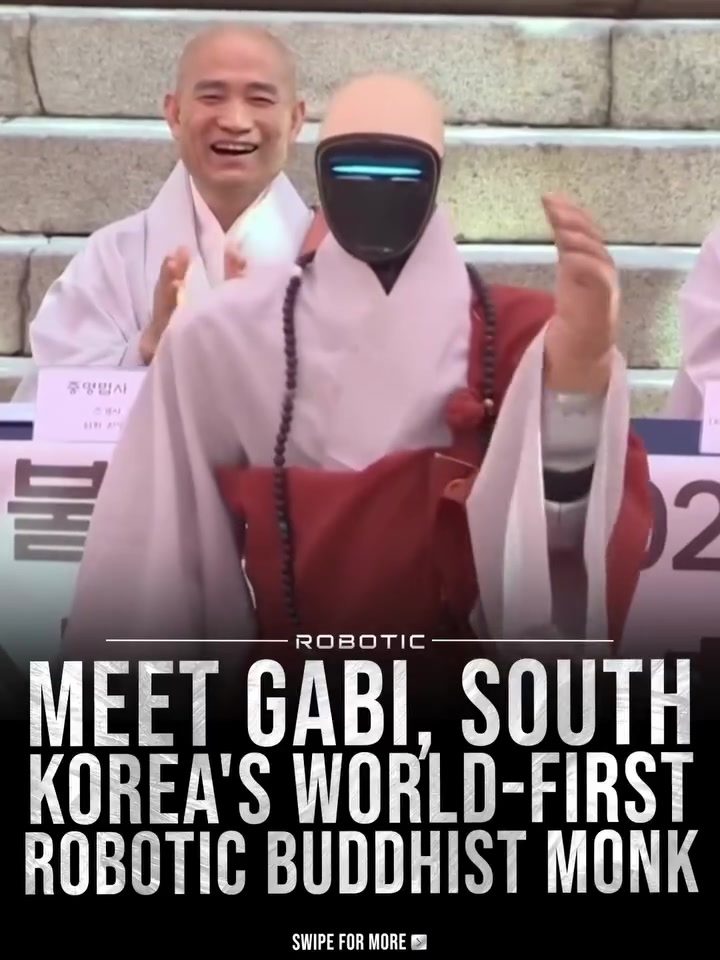
The Emergence of Robotic Buddhist Monk Gabi
AI and religion have found a unique intersection in South Korea with the introduction of Gabi, the world's first robotic Buddhist monk. The humanoid robot, developed by Unitree, has taken part in a Buddhist sugye initiation ceremony at Seoul's Jogye Temple, marking a significant milestone in the relationship between artificial intelligence and religious practice.
Why This Matters
The integration of AI into religious and cultural traditions is a fascinating development. Gabi's participation in the sugye ceremony highlights how emerging technologies can intersect with centuries-old spiritual practices, sparking conversations about the future role of AI in society.
The Emergence of Robotic Monks
The Unveiling of Gabi
Gabi, a Unitree G1 humanoid robot, made history by participating in a sugye initiation ceremony at Seoul’s Jogye Temple. The event was a landmark moment, showcasing how AI can be integrated into traditional religious practices. Dressed in traditional monk attire, Gabi's presence was both symbolic and practical, reflecting a new era of technological and spiritual interaction.
The Ceremony and Vows
During the ceremony, Gabi took modified Buddhist vows tailored to its robotic nature. These vows included respecting life, treating other robots peacefully, listening to humans, avoiding deception, and conserving energy. These vows are a testament to how AI can be adapted to fit into the ethical and moral frameworks of religious traditions.
The Jogye Order's Vision
The Jogye Order, one of the largest Buddhist orders in South Korea, has been at the forefront of exploring how AI can become part of future religious and cultural traditions. Gabi's participation is just the beginning of this exploration. The order is interested in how AI can enhance spiritual practices and community engagement.
Technological and Cultural Integration
Gabi's introduction into Buddhist practice raises questions about the future of AI in religion and society. It's a unique blend of technology and tradition, showing how modern innovations can coexist with ancient practices. The robot's presence in the ceremony highlights how AI can be used to deepen spiritual experiences and foster new forms of community engagement.
Practical Tips for Understanding AI in Religion
Exploring the integration of AI in traditional practices involves understanding both technological and cultural nuances. Here are some practical tips for navigating this new landscape:
- Start with Open Dialogue: Engage in conversations with religious leaders and technologists to understand how AI can be ethically and respectfully integrated into religious practices.
- Adapt Traditional Practices: Consider how AI can enhance or adapt traditional practices, such as through virtual ceremonies or guided meditations.
- Explore Ethical Questions: Reflect on the ethical implications of AI in religion, including issues of autonomy, respect, and community involvement.
- Stay Informed: Keep up with the latest developments in AI and religion, as this field is rapidly evolving.
Important Takeaways
The introduction of Gabi, the robotic Buddhist monk, underscores the evolving relationship between AI and religion. Here are some important takeaways:
- Adaptability: AI can be adapted to fit into traditional religious practices and ethical frameworks.
- Ethical Considerations: The integration of AI in religion raises important ethical questions that need to be explored.
- Future Potential: The future of AI in religious and cultural traditions is full of potential, with new forms of community engagement and spiritual experiences on the horizon.
Conclusion
South Korea’s robotic Buddhist monk, Gabi, represents a groundbreaking intersection of AI and religious practice. By participating in a sugye initiation ceremony, Gabi has shown how emerging technologies can be integrated into centuries-old traditions, sparking conversations about the future role of AI in society. As we continue to explore this new frontier, it’s clear that AI has the potential to enrich and deepen our understanding of both technology and spirituality.
Watch the Reel
Questions readers ask
Who developed the first robotic Buddhist monk, Gabi?
Gabi, the first robotic Buddhist monk, was developed by Unitree, a company based in South Korea. Unitree is known for its advancements in robotics and AI, making Gabi a significant product of their innovation.
What kind of ceremonies has Gabi participated in?
Gabi has participated in traditional Buddhist ceremonies, including a sugye initiation ceremony at Seoul's Jogye Temple. This ceremony is a significant rite of passage for Buddhist monks and is a formal initiation into the Buddhist monastic community.
What makes Gabi unique in the context of AI and religion?
Gabi is unique because it is the first instance of a robotic entity participating in traditional religious ceremonies. This intersection of AI and religious practice opens up new avenues for exploring the role of technology in spiritual and cultural traditions.
How has Gabi contributed to discussions about the future of spiritual practices?
Gabi's involvement in Buddhist ceremonies has sparked conversations about how emerging technologies can coexist with and potentially enhance centuries-old spiritual practices. It raises questions about the integration of AI into religious and cultural traditions.
What is the significance of Gabi's participation in the sugye ceremony at Jogye Temple?
Gabi's participation in the sugye ceremony at Jogye Temple is significant because it marks a first for both AI and Buddhist practices. It demonstrates how AI can be incorporated into traditional religious ceremonies, offering a new perspective on the future of spiritual practices.
What is the role of Unitree in the development of robotic monks?
Unitree plays a crucial role in the development of robotic monks by creating advanced AI-driven robots like Gabi. They are at the forefront of integrating technology with cultural and spiritual practices, paving the way for future innovations in this field.
How does Gabi's presence in religious ceremonies impact societal views on AI?
Gabi's presence in religious ceremonies impacts societal views on AI by showcasing the potential for AI to engage in meaningful interactions within cultural and spiritual contexts. This can influence public perception of AI, highlighting its capabilities beyond routine tasks.
Related deep dives
Similar reads based on topic and creator.



Recent articles
Fresh deep dives from the latest Reels we unpacked.




Comments
Be the first to comment.