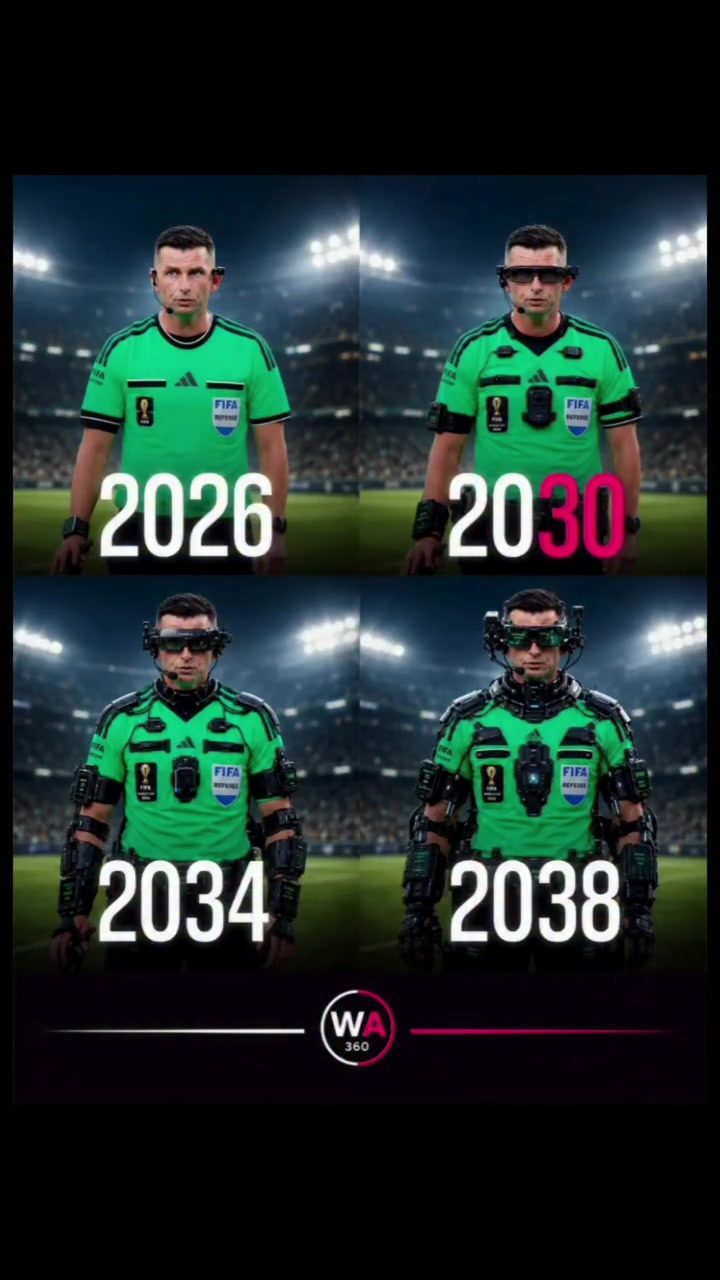
FIFA Referee Evolution
From 2026 to 2038, football is set for a technological revolution, with referees at the forefront of this transformation. This evolution is imagined in a creative concept that envisions how FIFA referees could transform, introducing smarter wearables, advanced communication devices, and AI-powered cameras. While this concept is fan-made and not an official FIFA roadmap, it sparks an exciting discussion about the future of football officiating.
Context / Why this matters
Football, or soccer as it is known in some parts of the world, is a sport deeply rooted in tradition. However, the game is not immune to the advancements of technology. As the beautiful game evolves, so does the technology that supports it. This evolution is particularly evident in the role of the referee, who plays a crucial part in ensuring the fairness and transparency of the game.
As the FIFA World Cup tournaments approach, the technology used to support the referees is expected to become more sophisticated. The future of football officiating could be more connected and accurate than ever before, with the introduction of intelligent referee systems and augmented reality.
Main discussion
The Evolution of Referee Technology
The journey from 2026 to 2038 is marked by significant advancements in referee technology. By 2026, smart wearables will become a standard part of a referee's kit. These wearables will be equipped with sensors that can monitor vital signs in real-time, ensuring that referees are in optimal physical condition to make critical decisions.
By 2030, advanced communication devices will be integrated into the referees' uniforms. These devices will allow for seamless communication between referees and other officials, reducing the time it takes to make important decisions and enhance the overall efficiency of the game.
AI-Powered Cameras and Real-Time Biometric Monitoring
As technology advances, so does the role of AI-powered cameras. By 2034, AI cameras will be able to track every movement on the pitch, providing referees with real-time data and analytics that can help them make more informed decisions. These AI systems will be able to detect fouls, offsides, and other infractions with unparalleled accuracy, reducing the likelihood of human error.
In addition to AI cameras, real-time biometric monitoring will also become a key feature of the referee's technology. This technology will allow for the continuous monitoring of the referee's heart rate, stress levels, and other vital signs, ensuring that they are always in peak condition to make decisions.
Futuristic Augmented Reality Systems
By 2038, futuristic augmented reality (AR) systems will become the norm in football officiating. These AR systems will provide referees with real-time overlays of the game, including player positions, goal lines, and other critical information. This technology will enhance the transparency and fairness of the game, ensuring that every decision is made with the utmost accuracy.
The Impact of Technology on Decision-Making
The introduction of these advanced technologies will have a significant impact on decision-making in football. AI-powered cameras and AR systems will reduce the likelihood of human error, ensuring that every decision is made with the utmost fairness and accuracy. This will not only enhance the transparency of the game but also improve the overall experience for players and spectators alike.
Practical tips
For football enthusiasts and technology lovers alike, staying informed about the latest advancements in referee technology is essential. Here are some practical tips to stay updated:
Stay Connected with the Latest Developments
Follow industry experts and influential figures in the world of football. They often share insights and updates on the latest technological advancements. Engage with them on social media and be part of the discussion.
Attend Football Conferences and Workshops
Attend conferences, workshops, and seminars focused on the intersection of technology and sports. These events are great opportunities to learn about the latest innovations and network with industry professionals.
Participate in Online Discussions
Join online forums and communities dedicated to football and technology. Platforms like Reddit, Twitter, and specialized forums offer a wealth of information and are great places to engage in discussions with like-minded individuals.
Experiment with Virtual and Augmented Reality
If you have access to virtual and augmented reality (VR/AR) technology, explore its capabilities. Try different applications and see how they enhance various aspects of sports. This hands-on experience can provide a deeper understanding of how AR can be used in football officiating.
Read Industry Reports and Research Papers
Subscribe to publications and journals that focus on sports technology. Industry reports and research papers often provide in-depth analyses of the latest advancements and their potential impact on the game.
Important takeaways
The future of football officiating is set to be more connected and accurate than ever before. With the introduction of smart wearables, AI-powered cameras, real-time biometric monitoring, and futuristic AR systems, referees will be better equipped to make fair and transparent decisions. While this vision is fan-made and not an official FIFA roadmap, it offers an exciting glimpse into the potential of technology in sports. As the game continues to evolve, so too will the technology that supports it, ensuring that football remains a fair and enjoyable experience for all.
Conclusion
The evolution of FIFA referees from 2026 to 2038 is a fascinating journey into the future of football officiating. As technology continues to advance, so too will the tools and systems used by referees, ensuring that the game remains fair, transparent, and enjoyable for players and spectators alike. Staying informed about these advancements will ensure that you are always at the forefront of this exciting technological revolution.
Watch the Reel
Questions readers ask
What are smart wearables and how will they assist referees from 2026 onwards?
Smart wearables for referees are technological devices designed to be worn during a match. These devices can track player movements, monitor vital signs, and even provide real-time data to referees. By 2026, smart wearables are expected to help referees make more accurate decisions, such as detecting offsides or fouls with greater precision.
How will AI-powered cameras enhance officiating in football by 2038?
AI-powered cameras will be integrated into the game to assist referees by providing advanced analytics and real-time insights. These cameras can track the ball and player movements with high accuracy, helping to detect offsides, fouls, and other infractions that might be missed by human referees. By 2038, AI will be able to provide audible alerts to referees if they are about to miss a significant call in the game.
What improvements can we expect in VAR technology by 2030?
By 2030, VAR (Video Assistant Referee) technology is expected to undergo significant upgrades. These improvements will include faster review times, more accurate interpretations of rules, and better integration with on-field referees. The goal is to make the game more efficient and fair, with fewer interruptions and more accurate decisions.
How will advanced communication devices benefit referees in the future?
Advanced communication devices will allow referees to communicate more effectively with each other and with the VAR system. These devices will provide real-time updates, instant replays, and even suggestions based on AI analysis. By enhancing communication, these devices will help referees make more informed decisions and reduce the likelihood of missed calls.
What is the Referee Alerts360 system and how will it change the game?
The Referee Alerts360 system is a conceptual technology that provides referees with a 360-degree view of the game, allowing them to see every angle and make more accurate decisions. This system combines data from multiple cameras and sensors to create a comprehensive view of the field. By offering real-time, high-resolution visuals, it will minimize human errors and enhance the overall fairness of the game.
How will the football whistle evolve with technology by 2034?
By 2034, the traditional football whistle is expected to be replaced with a digital whistle that integrates with other technologies. This digital whistle could be connected to smart wearables and AI systems, automatically recording the exact moment a whistle is blown. It could also provide real-time feedback to referees, ensuring that important calls are not missed.
What are the expected game changes in FIFA by 2038 due to technological advancements?
By 2038, FIFA games are expected to see significant changes with the integration of advanced technologies. These include the use of AI-powered cameras, smart wearables, and advanced communication devices, which will make the game more efficient and fair. The goal is to enhance the overall experience for both players and fans, ensuring a competitive and thrilling atmosphere.
Related deep dives
Similar reads based on topic and creator.


Recent articles
Fresh deep dives from the latest Reels we unpacked.




Comments
Be the first to comment.