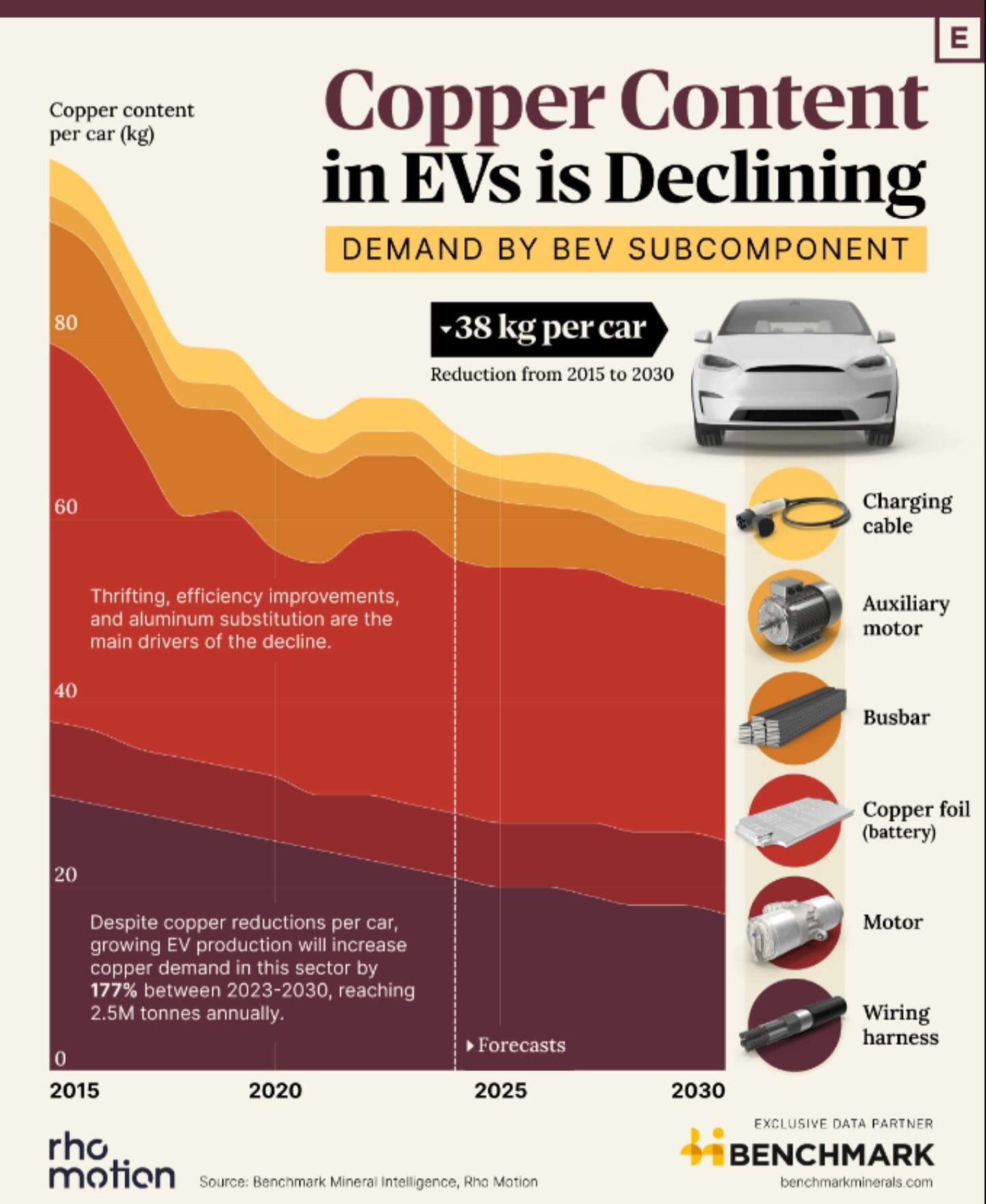
Copper Demand in Electric Vehicles: Shifts and Trends
Copper plays a critical role in the production of battery electric vehicles (BEVs). However, the demand for copper in these vehicles is undergoing significant changes. Let's delve into these trends and understand the underlying factors driving this shift.
Why This Matters
The automotive industry is undergoing a massive transformation driven by the shift toward electric vehicles (EVs). This transition not only impacts the type of fuel used but also the materials required for manufacturing. Copper, a key component in EV batteries and electrical systems, is at the heart of this change. Understanding the evolving demand for copper in EVs helps stakeholders in the automotive and mining industries plan for future needs and adapt to market shifts.
Declining Copper Content in EVs
Copper usage in BEVs is expected to decline by nearly 38 kg per car by 2030 compared to 2015. This reduction is driven by several factors, including efficiency improvements, material thrifting, and the introduction of alternative metals like aluminum.
Efficiency Improvements
One of the primary drivers of reduced copper usage is the improvement in efficiency. Modern EVs are being designed with more efficient battery systems and electrical components that require less copper. For instance, advancements in battery technology are allowing for higher energy densities, which means fewer materials are needed to achieve the same performance.
Material Thrifting
Material thrifting involves the optimization of material usage to reduce waste and cost. Automakers are increasingly focusing on using materials more judiciously, ensuring that every gram of copper is utilized effectively. This approach not only reduces the overall copper content but also enhances the sustainability of EV production.
Transition to Alternative Metals
The shift toward alternative metals, particularly aluminum, is another significant factor. Aluminum is lighter and more abundant than copper, making it an attractive substitute in various EV components. This transition is particularly prevalent in components like charging cables, auxiliary motors, and busbars, where aluminum can offer similar performance with reduced weight and cost.
Components and Copper Usage
Several key components in EVs contribute to the overall copper demand. Understanding how copper is utilized in these components provides insight into where the reductions are occurring.
Battery Components
The battery is the heart of any EV, and copper plays a crucial role in its functionality. Copper foil, in particular, is essential for conducting electricity within the battery pack. However, as battery technology evolves, the need for copper foil may decline as alternative materials and designs are developed.
Electrical Systems
The electrical systems in EVs, including the motor, wiring harness, and auxiliary motor, are significant consumers of copper. These components require high conductivity and durability, making copper an ideal material. However, improvements in motor design and the use of alternative metals are reducing the copper content in these systems.
Charging Infrastructure
Charging cables and busbars are essential for the efficient charging of EVs. While these components traditionally rely heavily on copper, advancements in charging technology and the use of alternative materials are leading to a reduction in copper usage. For instance, aluminum is being increasingly used in charging cables due to its lighter weight and lower cost.
Practical Tips for Managing Copper Demand
For automakers and material suppliers, managing the evolving copper demand in EVs presents both challenges and opportunities. Here are some practical tips for navigating this landscape:
Invest in Research and Development
Investing in research and development is critical for automakers looking to optimize copper usage. This involves exploring new materials, designing more efficient components, and improving manufacturing processes. Collaboration with research institutions and technology partners can accelerate these efforts.
Supply Chain Optimization
Optimizing the supply chain can help manage copper demand more effectively. This includes securing reliable sources of copper, implementing efficient logistics, and ensuring that material thrifting practices are adopted throughout the supply chain. By doing so, automakers can reduce waste and optimize resource usage.
Adopt a Holistic Approach
A holistic approach to material management involves considering the entire lifecycle of copper in EVs. This includes not only the production phase but also the recycling and reuse of copper at the end of the vehicle's life. Implementing recycling programs and designing components for easier disassembly can help recover valuable materials and reduce environmental impact.
Important Takeaways
Reducing Copper Content
The reduction in copper content per EV is a significant trend driven by efficiency improvements, material thrifting, and the use of alternative metals. These factors are expected to continue shaping the demand for copper in the EV sector.
Overall Demand Increase
Despite the reduction in copper content per car, the overall demand for copper in the EV sector is projected to increase by 177% between 2023 and 2030. This is due to the growing number of EVs on the road, which will offset the per-vehicle reduction in copper usage.
Sustainability and Innovation
The shift in copper demand highlights the importance of sustainability and innovation in the automotive industry. Automakers and material suppliers must continue to invest in research and development, optimize their supply chains, and adopt a holistic approach to material management to meet future demands effectively.
Conclusion
The demand for copper in EVs is undergoing a significant transformation, driven by efficiency improvements, material thrifting, and the use of alternative metals. While the per-vehicle copper content is expected to decline, the overall demand for copper in the EV sector is projected to increase. Automakers and material suppliers must adapt to these changes by investing in research, optimizing supply chains, and adopting a holistic approach to material management. By doing so, they can navigate the evolving landscape of copper demand in EVs and contribute to a more sustainable future.
Watch the Reel
Questions readers ask
Why is copper demand per electric vehicle expected to decrease by 2030?
Advancements in technology and material usage are leading to more efficient use of copper in electric vehicles. Additionally, the adoption of alternative metals and improved battery technology are contributing to this projected decrease.
What role does copper play in electric vehicles?
Copper is crucial in EV batteries and electrical systems. It is used in wiring harnesses, motor windings, and various other components, making it a key material in the functioning of electric vehicles.
How will the shift in copper demand affect the automotive industry?
The automotive industry will need to adapt to the changing demand for copper, and this may involve exploring alternative materials. Additionally, automakers will need to focus on optimizing copper usage in EV components and technology advancements.
What are the trends driving changes in copper usage in electric vehicles?
Several trends are driving changes in copper usage, including advancements in EV battery technology, improved motor efficiency, and the adoption of alternative materials that can reduce copper demand.
How does the use of copper in electric motors compare to other metals?
Copper is highly conductive and efficient for electric motors, but there is ongoing research into alternative metals and materials that could reduce copper demand. Aluminum is one such metal being explored for its potential to replace copper in certain applications.
What are the implications for the mining industry due to the changing copper demand in electric vehicles?
The mining industry will need to adapt to the projected decrease in copper demand by diversifying their operations and potentially exploring new markets for copper and other minerals.
What are some of the key components in electric vehicles that utilize copper?
Copper is used in various components of electric vehicles, including wiring harnesses, motor windings, batteries, and charging systems. These components are critical for the performance and efficiency of electric vehicles.
Related deep dives
Similar reads based on topic and creator.


Recent articles
Fresh deep dives from the latest Reels we unpacked.




Comments
Be the first to comment.