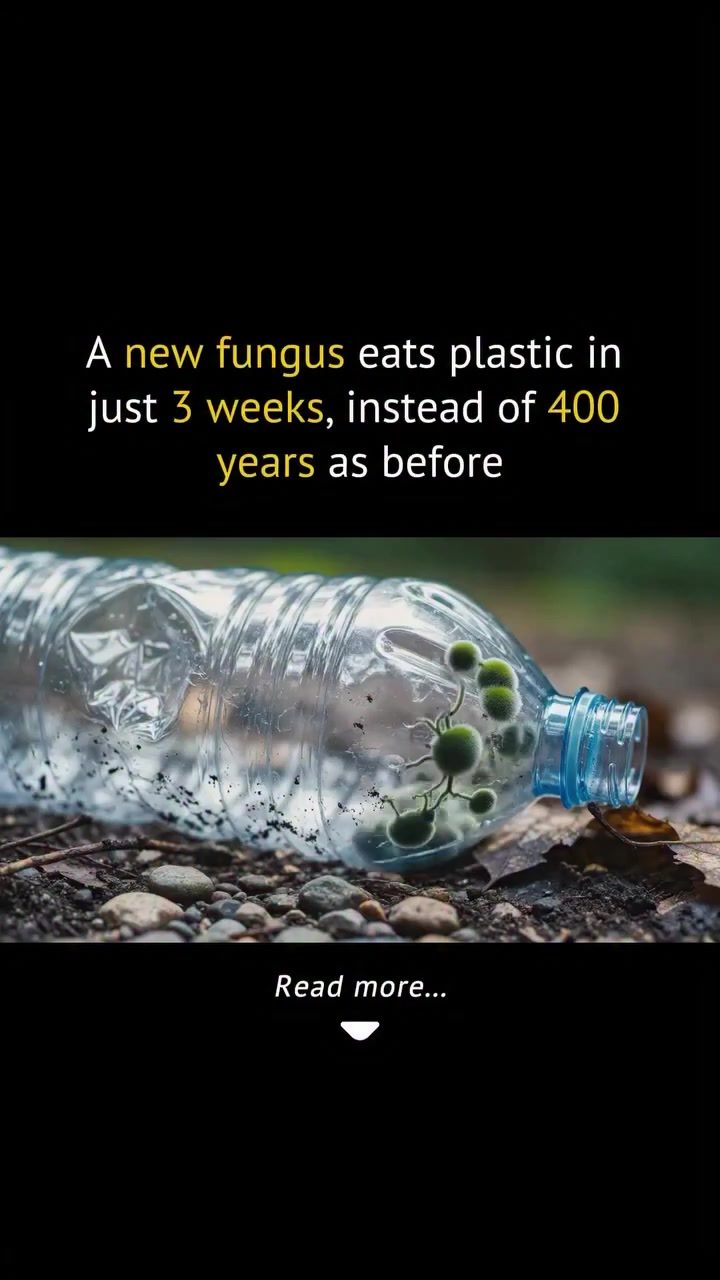
Plastic-eating Fungus: A Natural Solution to Plastic Pollution
Plastic has long been hailed for its durability, but this very strength has turned into a significant environmental challenge. However, a naturally occurring fungus, Aspergillus tubingensis, offers a promising solution by breaking down polyurethane plastic in just weeks under laboratory conditions. This discovery has significant implications for the circular economy and sustainable waste management.
Context / Why this matters
Plastic pollution is a global crisis, with millions of tons of plastic waste entering landfills and oceans each year. Traditional plastics, like polyurethane, can persist in the environment for hundreds of years, contributing to environmental degradation and harming wildlife. The discovery of a fungus that can break down plastic in just a matter of days challenges our conventional understanding of waste management. It points us toward a future where waste does not have to be the end of a material’s life.
Main discussion
The discovery of Aspergillus tubingensis
Scientists studying landfill environments have uncovered an unexpected ally in the battle against plastic pollution: the fungus Aspergillus tubingensis. This fungus has the remarkable ability to degrade polyurethane plastic, a material that typically persists in the environment for hundreds of years. In laboratory conditions, the fungus can break down plastic in just a few weeks, leaving behind minimal residue.
The fungus achieves this feat by producing enzymes that target the long polymer chains in plastic. These enzymes break the polymers down into simpler compounds, which the fungus can then use as an energy source. This biological process is not only efficient but also environmentally friendly, as it does not rely on heat, UV light, or harsh chemicals.
The process of biological degradation
The process of fungal remediation involves introducing the fungus to plastic waste in a controlled environment. The fungus colonizes the plastic, and its enzymes gradually break down the material. Over time, the plastic disintegrates, leaving behind very little residue. This process is not only effective but also aligns with the principles of a circular economy, where waste is minimized and materials are reused or regenerated.
Challenges and considerations
While the discovery of Aspergillus tubingensis is promising, it is not a silver bullet for the plastic crisis. Scaling this biological degradation process to an industrial level presents several challenges. Researchers must ensure that the process is safe, economically viable, and does not disrupt ecosystems. Additionally, the fungus must be able to degrade a variety of plastics, not just polyurethane, to be a truly effective solution.
Practical tips
For those interested in exploring biological solutions to plastic waste, here are some practical tips:
- Support Research and Development: Encourage and support ongoing research into fungal remediation and other biological degradation methods.
- Promote Circular Economy Practices: Implement systems where materials are reused, regenerated, or returned safely to the environment.
- Advocate for Policy Changes: Push for policies that incentivize the use of biodegradable materials and the development of sustainable waste management practices.
- Stay Informed: Keep up-to-date with the latest developments in bioinnovation and sustainable design.
Important takeaways
The discovery of Aspergillus tubingensis highlights the potential of biological solutions in addressing the plastic crisis. By breaking down plastic in just a matter of weeks, this fungus offers a promising alternative to traditional waste management methods. However, scaling this solution safely and economically remains a significant challenge. The key to success lies in aligning human systems with natural ones, fostering a true circular economy where waste is minimized and materials are reused or regenerated.
Conclusion
The plastic problem is complex, but nature offers surprising solutions. As we continue to explore the potential of biological degradation, we move closer to a future where waste is not the end of a material’s life. By embracing innovative solutions and aligning our practices with natural processes, we can turn pollution into a resource and create a more sustainable world.
Watch the Reel
Questions readers ask
What is Aspergillus tubingensis and why is it significant?
Aspergillus tubingensis is a fungus that has been found to break down polyurethane plastic in just a few weeks. Its significance lies in its potential to address the global issue of plastic pollution by offering a natural and rapid decomposition process for durable plastics.
How does Aspergillus tubingensis degrade plastic?
Aspergillus tubingensis secretes enzymes that break down the chemical bonds in polyurethane plastic, effectively degrading it over a short period. This biological process could provide a more sustainable alternative to conventional plastic disposal methods.
Can this fungus degrade all types of plastics?
Currently, research has shown that Aspergillus tubingensis can degrade polyurethane plastic effectively. While promising, further studies are needed to determine if this fungus can degrade other types of plastics as well.
What are the potential benefits of using Aspergillus tubingensis for waste management?
Using Aspergillus tubingensis for waste management could lead to reduced landfill waste, lower environmental impact, and a more efficient circular economy. By breaking down plastic waste naturally, this fungus could help mitigate the harmful effects of plastic pollution on ecosystems and wildlife.
How does this discovery contribute to a circular economy?
The discovery of Aspergillus tubingensis contributes to a circular economy by introducing a biological method for recycling and reusing plastic waste. This could help create a sustainable loop where plastic waste is continuously broken down and repurposed, reducing the need for new plastic production.
Are there any challenges to implementing this fungus in real-world applications?
While promising, implementing Aspergillus tubingensis on a large scale faces several challenges. These include optimizing the fungus's effectiveness in diverse environmental conditions, ensuring the process is cost-effective, and addressing potential regulatory hurdles.
Related deep dives
Similar reads based on topic and creator.



Recent articles
Fresh deep dives from the latest Reels we unpacked.


Comments
Be the first to comment.