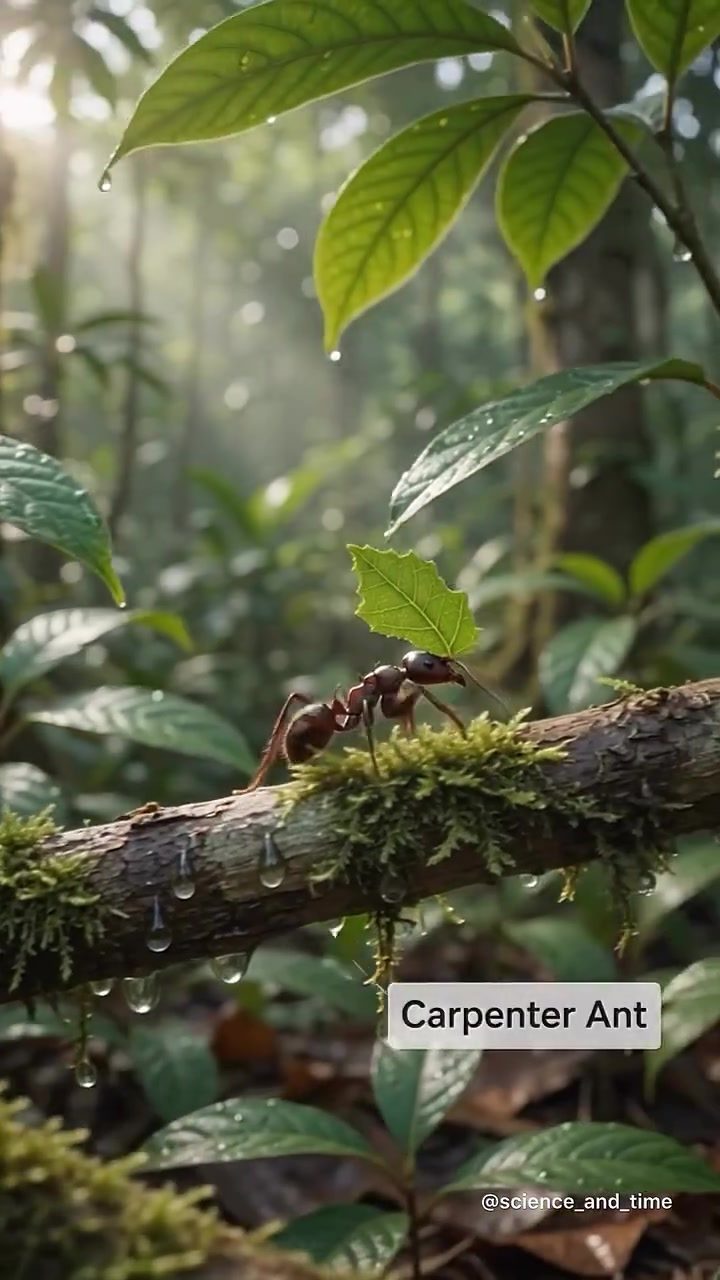
Ants and the Fungal Parasite Ophiocordyceps
The story of the ant and the fungus is a tale of biological manipulation and evolution. Deep in tropical forests, a tiny fungus known as Ophiocordyceps infects ants, making them act in ways that are not their own. This fungus is an example of how nature can create some of the most extraordinary and terrifying examples of parasitism.
Context / Why this matters
Understanding the interaction between ants and the fungus Ophiocordyceps allows us to appreciate the complexity of nature’s strategies for survival. This parasite has evolved to manipulate its host in a way that ensures its own reproductive success, showing how evolution can take unexpected and sometimes terrifying forms. This insight into the natural world can help us appreciate the intricacies of ecosystems and the ways in which different organisms interact with each other.
Main discussion
The Infection Process
The parasite Ophiocordyceps begins its journey when fungal spores land on the body of an ant. These spores, invisible to the naked eye, are the start of a process that will eventually lead to the ant's demise and the fungus's continued survival. Within a few short days, the spores develop into tiny fungal threads called hyphae, which penetrate the ant’s body. The hyphae spread through the ant’s hemolymph—the ant's blood-like fluid—and begin to manipulate the host from the inside without immediately killing it.
The fungus's tactics are precisely calculated. Rather than invading the ant’s brain, it uses chemical signals to manipulate the ant's behavior. This ensures that the ant remains alive and mobile, following the fungus's commands. The ant abandons its colony and begins to follow the fungus's directives, which may not be in the best interest of the ant or its colony.
Changing Behavior
The ant’s behavior changes drastically as the fungus takes control. It is forced to climb to a height that the fungus deems optimal for the next stage of its lifecycle. The ant’s jaws then lock onto a leaf in what is known as the "death grip." This position is crucial for the fungus’s reproductive strategy. The ant remains in this position until it dies, providing a stable platform for the fungus to grow and reproduce.
Reproduction and Spread
After the ant dies, the fungus feeds on its body, using it as a nutrient source. The fungus then grows a stalk called a stroma from the ant’s head, preparing to spread thousands of new spores into the forest. These spores fall onto new ants below, beginning the cycle anew. This process ensures that the fungus can infect new hosts and continue its lifecycle.
The Cycle Continues
The cycle is a terrifying one, as it showcases the power of a tiny organism to control the behavior of a much larger one. The fungus’s ability to manipulate the ant’s behavior ensures its own survival and reproduction, making it a highly effective parasite. The ant, while no longer in control of its own actions, becomes a crucial part of the fungus’s lifecycle, ensuring that the cycle continues unabated.
Fungal Parasitism in Nature
The relationship between ants and the fungus Ophiocordyceps is not an isolated case. Parasitism is a common strategy in nature, where one organism benefits at the expense of another. This relationship highlights the intricate and often brutal dynamics of natural ecosystems. The fungus’s ability to control its host is a testament to the incredible adaptations that have evolved over millions of years.
Practical tips
When exploring the natural world, especially in tropical forests, it's essential to be aware of the intricate relationships between different species. Understanding how parasites like Ophiocordyceps interact with their hosts can provide valuable insights into the broader ecosystem. This understanding can inform conservation efforts and help us appreciate the complexities of natural systems.
Important takeaways
- The fungus Ophiocordyceps infects ants and manipulates their behavior for its own reproductive success.
- The fungus uses chemical signals to control the ant, rather than invading its brain.
- The ant is forced to climb to a specific height and lock its jaws onto a leaf, providing a stable platform for the fungus to grow.
- The fungus feeds on the ant’s body and then grows a stalk to release new spores, beginning the cycle anew.
- This relationship highlights the intricate and often brutal dynamics of natural ecosystems.
Conclusion
The interaction between ants and the fungus Ophiocordyceps is a fascinating and terrifying example of parasitism in nature. This relationship showcases the incredible adaptations that have evolved over time, allowing one organism to control another for its own survival. Understanding the complexities of this interaction can provide valuable insights into the broader ecosystem and the ways in which different species interact with each other. Whether exploring the natural world or studying the intricacies of ecosystems, the story of the ant and the fungus serves as a reminder of the incredible and often brutal dynamics that drive evolution.
Watch the Reel
Questions readers ask
What is Ophiocordyceps and how does it infect ants?
Ophiocordyceps is a genus of fungal parasites that infects ants, primarily in tropical forests. The fungus invades the ant's body, grows inside it, and eventually manipulates the ant's behavior to suit the fungus's reproductive needs.
How does the Ophiocordyceps fungus control ant behavior?
The fungus releases chemicals that alter the ant's brain, making it climb to a specific height on a plant and bite down on a leaf or twig. This behavior is crucial for the fungus's spores to disperse effectively, ensuring the continuation of its lifecycle.
What happens to the ant after it is infected by the Ophiocordyceps fungus?
Once infected, the ant's body is eventually consumed by the fungus, which then uses the ant's carcass to produce and release spores. The ant's death is a critical part of the fungus's reproductive cycle, making it a grim example of parasitic behavior.
Where can Ophiocordyceps fungal infections be found?
Ophiocordyceps fungal infections are predominantly found in tropical forests, where the warm, humid conditions are ideal for the fungus's growth and survival. These regions provide the necessary environment for the fungus to thrive and infect ant populations.
Can Ophiocordyceps infect other insects besides ants?
While Ophiocordyceps is primarily known for infecting ants, there are other species within the Ophiocordyceps genus that infect different types of insects, such as beetles. However, the most well-studied and documented interactions involve ants, particularly in tropical ecosystems.
Is the Ophiocordyceps fungus harmful to humans?
The Ophiocordyceps fungus does not pose a direct threat to humans. The fungal infection is specifically adapted to infect and manipulate ants, and there is no evidence to suggest that it can infect or harm humans in the same way.
How does understanding Ophiocordyceps help in studying broader ecological processes?
Studying the interaction between Ophiocordyceps and ants provides insights into the complex dynamics of ecosystems and the evolutionary adaptations that drive survival strategies. This knowledge can help in understanding broader ecological processes and the intricate relationships between species in nature.
Related deep dives
Similar reads based on topic and creator.




Recent articles
Fresh deep dives from the latest Reels we unpacked.




Comments
Be the first to comment.