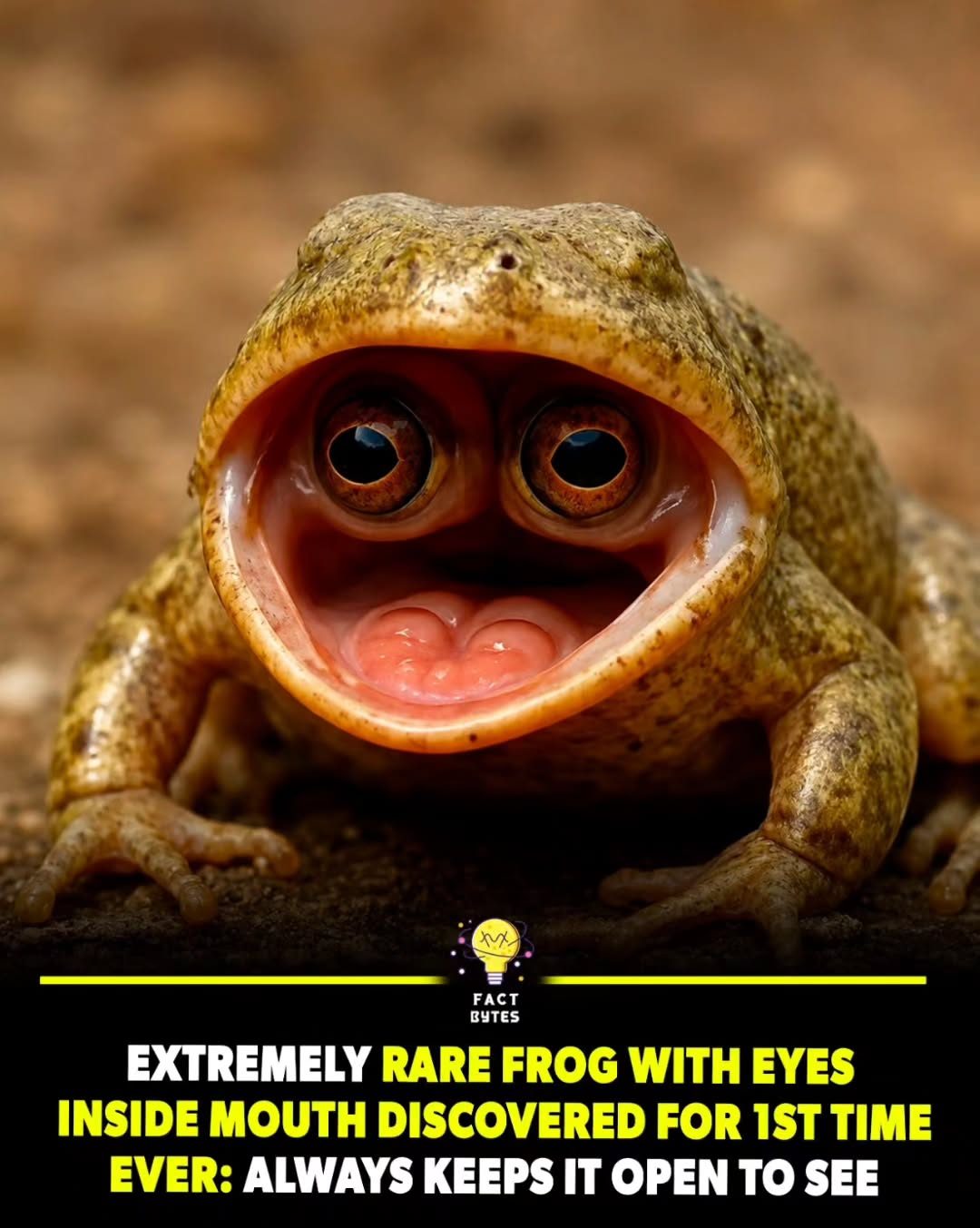
Rare Frog with Eyes Inside Mouth
A rare frog with a unique genetic abnormality has recently captivated attention. This frog's eyes formed inside the roof of its mouth, a condition that allows it to see clearly only when its mouth is open. This extraordinary biological phenomenon is one of the rarest amphibian anomalies ever recorded, and it raises intriguing questions about genetics, adaptation, and survival.
Context: Genetic Abnormalities in Amphibians
Genetic abnormalities in amphibians, such as the rare frog with eyes inside its mouth, are not unheard of, but they are incredibly uncommon. These anomalies often result from mutations or developmental errors during the early stages of life. While some abnormalities may have minimal impact on an amphibian's survival, others can significantly affect their ability to thrive in the wild. This particular frog's condition is a striking example of how genetic mutations can lead to profound physical differences.
The Frog's Unique Characteristics
Inner Eyes
The most striking feature of this frog is the position of its eyes. Instead of the typical placement on the outside of the head, the frog's eyes are located inside the roof of its mouth. This condition, extremely rare in amphibians, means the frog can only see clearly when its mouth is open, a situation that poses significant challenges for its survival. The mutation causing the eyes to form inside the mouth is a remarkable example of the unpredictability of genetic mutations.
Open-Mouth Behavior
The frog always keeps its mouth open, a behavior likely necessitated by its unique anatomy. This constant open-mouth posture allows the frog to see and navigate its environment. While this behavior might seem peculiar, it is a direct adaptation to the frog's unusual eye placement. The constant exposure of the mouth also leaves the frog more vulnerable to dangers such as dehydration, predation, and infection.
Survival Challenges
Living with such a significant abnormality presents numerous survival challenges. The frog's constant need to keep its mouth open can affect its ability to hunt, defend itself, and avoid predators. Furthermore, the open-mouth posture can increase susceptibility to dehydration and environmental threats, making survival in the wild an uphill battle. The rarity of this condition suggests that such extreme abnormalities are often not compatible with long-term survival in natural habitats.
Practical Tips for Understanding Genetic Abnormalities
While the specific case of the frog with eyes inside its mouth is exceptional, understanding genetic abnormalities in amphibians and other animals can provide valuable insights into the broader field of biology. Here are some practical tips to deepen your understanding:
Observe and Document
If you encounter an amphibian or any animal with unusual characteristics, document your observations carefully. Note the specific features that set the animal apart and consider how these features might affect its behavior and survival. Sharing these observations with researchers or biological databases can contribute to a greater understanding of genetic anomalies.
Consult Scientific Literature
Genetic abnormalities are well-documented in scientific literature. Consulting journals, textbooks, and research articles can provide a wealth of information on how genetic mutations occur and their effects on different species. This knowledge can help contextualize and understand unique cases like the frog with eyes inside its mouth.
Engage with Conservation Efforts
Conservation efforts often focus on protecting endangered species and their habitats. Engaging with conservation projects can provide firsthand experience with genetic diversity and the challenges faced by animals with rare characteristics. This involvement can also offer opportunities to learn about the latest research and conservation strategies.
Important Takeaways
The discovery of a frog with eyes inside its mouth highlights the incredible diversity and unpredictability of genetic mutations. This rare anomaly serves as a reminder of the complexity of biological systems and the challenges faced by animals with unique characteristics. Understanding and documenting such cases can contribute to a broader knowledge of genetics, adaptation, and survival in the natural world.
Conclusion
The existence of a frog with eyes inside its mouth underscores the wonders and mysteries of the natural world. This extraordinary amphibian provides a fascinating glimpse into the realm of genetic abnormalities and their potential impacts on survival and adaptation. By exploring such rare cases, we gain a deeper appreciation for the complexity and diversity of life on Earth. Whether through observation, scientific research, or conservation efforts, the study of genetic anomalies enriches our understanding of nature and its endless surprises.
Watch the Reel
Questions readers ask
What causes the rare frog to have eyes inside its mouth?
The rare frog's unique condition is due to a genetic abnormality, likely caused by a mutation or developmental error during the early stages of its life. This anomaly resulted in the eyes forming on the roof of its mouth instead of on the head.
How does this frog adapt to its unusual condition?
The frog must keep its mouth open to see clearly, which presents significant challenges. It may have adapted behaviors to compensate, such as relying more on other senses or finding alternative ways to hunt and avoid predators.
What are the survival challenges faced by this frog?
The constant need to keep its mouth open for vision makes the frog vulnerable to dehydration and potential attacks. Additionally, it may struggle with hunting and evading predators due to its limited mobility and constant need for clear vision.
Are there other known cases of amphibians with similar abnormalities?
While genetic abnormalities in amphibians are uncommon, there are other known cases of amphibians with unique physical traits, but having eyes inside the mouth is one of the rarest anomalies ever recorded.
How does this frog's condition affect its interaction with its environment?
The frog's unique condition likely affects its ability to forage, navigate, and communicate with other frogs. Its constant open-mouth posture may also alter how it interacts with its habitat, such as its ability to burrow or climb.
Can this frog's condition be corrected or treated?
Given the frog's wild habitat and the rarity of its condition, any corrective measures are unlikely. The genetic abnormality is a permanent part of the frog's physiology, and it will need to adapt to its environment as it is.
What can scientists learn from this frog's unique condition?
Studying this frog can provide insights into genetic mutations, developmental processes, and the adaptability of amphibians. It can contribute to a broader understanding of how genetic abnormalities affect physiology and behavior in the wild.
Related deep dives
Similar reads based on topic and creator.




Recent articles
Fresh deep dives from the latest Reels we unpacked.




Comments
Be the first to comment.