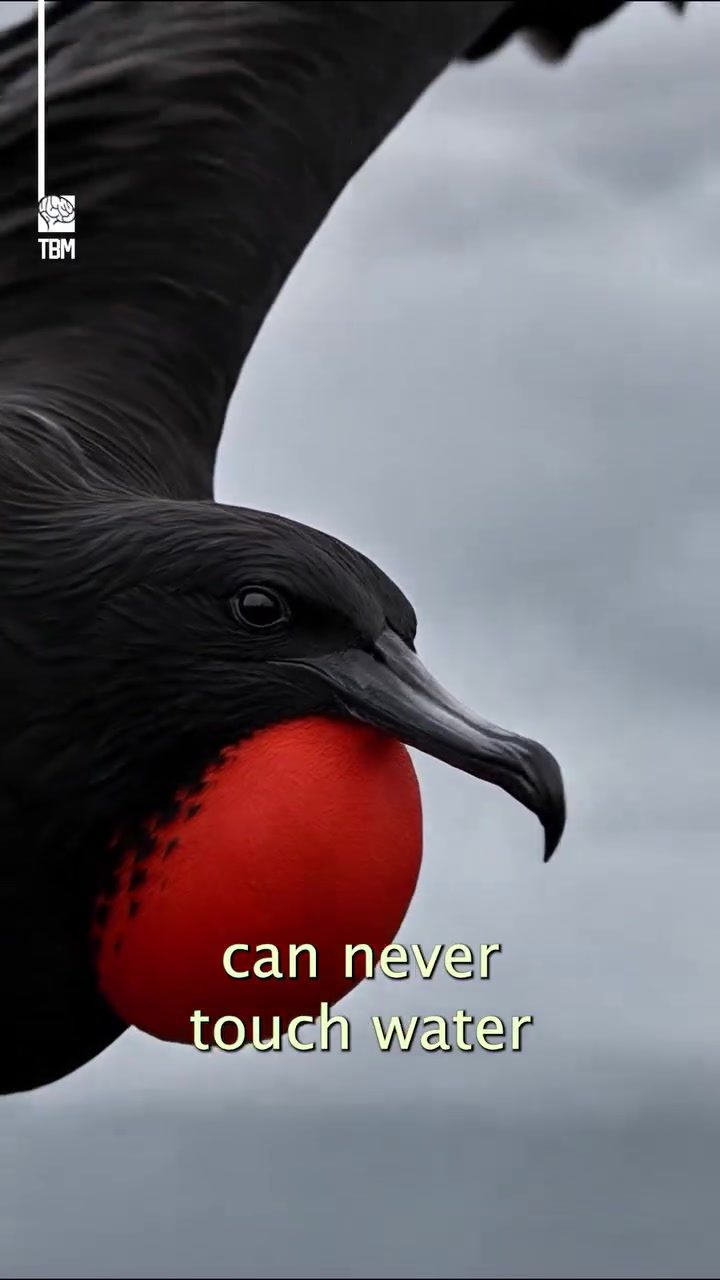
The Magnificent Frigatebird is a remarkable seabird known for its unique hunting strategy and extraordinary aerial abilities. This bird’s lifestyle and survival techniques make it a fascinating subject for those interested in ornithology and marine ecosystems.
Why this matters
The Magnificent Frigatebird is a master of the skies, spending most of its life in flight. Understanding its behaviors and adaptations provides insight into the complex dynamics of marine and avian ecosystems. Its unique hunting methods and physiological adaptations offer a glimpse into the ingenuity of nature. This bird’s survival strategies are a testament to the intricacies of evolutionary adaptations in the natural world.
Main discussion
Adaptations for aerial life
The Magnificent Frigatebird has evolved several adaptations that allow it to thrive in the open sea. One of the most notable is its non-waterproof feathers. While this might seem like a disadvantage, it actually compels the bird to avoid landing on water. Any contact with water could soak its feathers, making it impossible for the bird to take off again. This adaptation forces the bird to live almost entirely in the air.
Living in the sky for extended periods requires incredible stamina and endurance. Frigatebirds can glide for weeks above tropical oceans, conserving energy by taking advantage of air currents. Their large wingspan aids in this aerial lifestyle, allowing them to soar effortlessly over vast distances with minimal effort.
Sleeping in the sky
One of the most fascinating aspects of the Magnificent Frigatebird’s life is its ability to sleep while flying. During sleep, one half of its brain rests while the other half stays alert, ensuring the bird can maintain its flight and navigate safely. This unihemispheric sleep is a unique adaptation that allows the bird to rest without compromising its aerial lifestyle.
Hunting strategies
When hunger strikes, the Magnificent Frigatebird employs a distinctive hunting strategy. Known as a skilled thief, it often targets other seabirds carrying fish. The frigatebird attacks mid-flight, chasing and harassing its prey until the other bird drops its catch or vomits it back up. The frigatebird then swoops in and catches the fish in midair, a maneuver that showcases its aerial agility and precision.
This clever strategy allows the frigatebird to obtain food without having to dive into the water, an action that would be perilous given its non-waterproof feathers.
The importance of its distinctive features
The Magnificent Frigatebird’s large wingspan and distinctive red pouch are key features. The red pouch, more pronounced in males, is used in mating displays. The pouch inflates during courtship rituals, making the male bird more attractive to potential mates. This feature is a crucial component of the bird’s mating success.
Practical tips
To observe Magnificent Frigatebirds in their natural habitat, consider the following:
- Location: Look for them in tropical and subtropical regions, especially near coastal areas and islands. They are often seen soaring over the open sea.
- Timing: Early morning and late afternoon are optimal times for spotting these birds, as they are most active during these periods.
- Equipment: Use binoculars or a spotting scope to get a closer look at their aerial maneuvers and distinctive features.
- Patience: Frigatebirds spend a lot of time in the sky, so be prepared to wait and observe for extended periods.
Important takeaways
- The Magnificent Frigatebird is adapted to a life of near-constant flight, with non-waterproof feathers and a large wingspan.
- It can sleep while flying, thanks to its unique half-brain sleep pattern. This adaptation enables it to rest without landing, preserving its energy.
- Its hunting strategy of attacking other seabirds mid-flight to steal their catch is a testament to its aerial prowess and opportunistic behavior.
- The distinctive red pouch of male birds plays a crucial role in mating rituals, making the bird visually striking.
Conclusion
The Magnificent Frigatebird’s unique adaptations and hunting strategies make it a captivating subject for ornithologists and nature enthusiasts alike. Its ability to live almost entirely in the sky, combined with its unorthodox feeding methods, highlights the remarkable diversity and ingenuity of avian species. By understanding the intricacies of the Magnificent Frigatebird’s life, we gain a deeper appreciation for the complex and awe-inspiring natural world.
Watch the Reel
Questions readers ask
How do Magnificent Frigatebirds steal fish mid-flight?
Magnificent Frigatebirds employ a tactic known as 'kleptoparasitism' where they harass other seabirds, such as boobies or pelicans, until they regurgitate their catch. The frigatebirds then swoop in to snatch the fish directly from the air, showcasing their agility and opportunistic nature.
What makes the hunting strategy of the Magnificent Frigatebird unique?
The Magnificent Frigatebird's hunting strategy is unique because it primarily steals fish from other birds rather than catching fish on its own. This tactic allows them to conserve energy and reduces the need to land on water, which their non-waterproof feathers make difficult.
Why don't Magnificent Frigatebirds have waterproof feathers?
Magnificent Frigatebirds have evolved to have non-waterproof feathers to reduce weight, making flight easier. This adaptation allows them to spend most of their lives in the air. Instead of landing on the water to fish, they employ their unique aerial hunting methods.
How do Magnificent Frigatebirds' physiological adaptations support their aerial lifestyle?
Magnificent Frigatebirds exhibit unique physiological adaptations like unihemispheric sleep, allowing one half of their brain to rest while the other remains alert. This enables them to rest during flight and quickly respond to threats or opportunities, such as stealing fish from other birds.
What role do Magnificent Frigatebirds play in marine ecosystems?
By stealing fish from other birds, Magnificent Frigatebirds play a crucial role in marine ecosystems, helping to control the populations of other seabirds and maintain a balance. Their presence also indicates the health of the marine ecosystem, as their survival depends on the availability of fish.
Related deep dives
Similar reads based on topic and creator.




Recent articles
Fresh deep dives from the latest Reels we unpacked.




Comments
Be the first to comment.