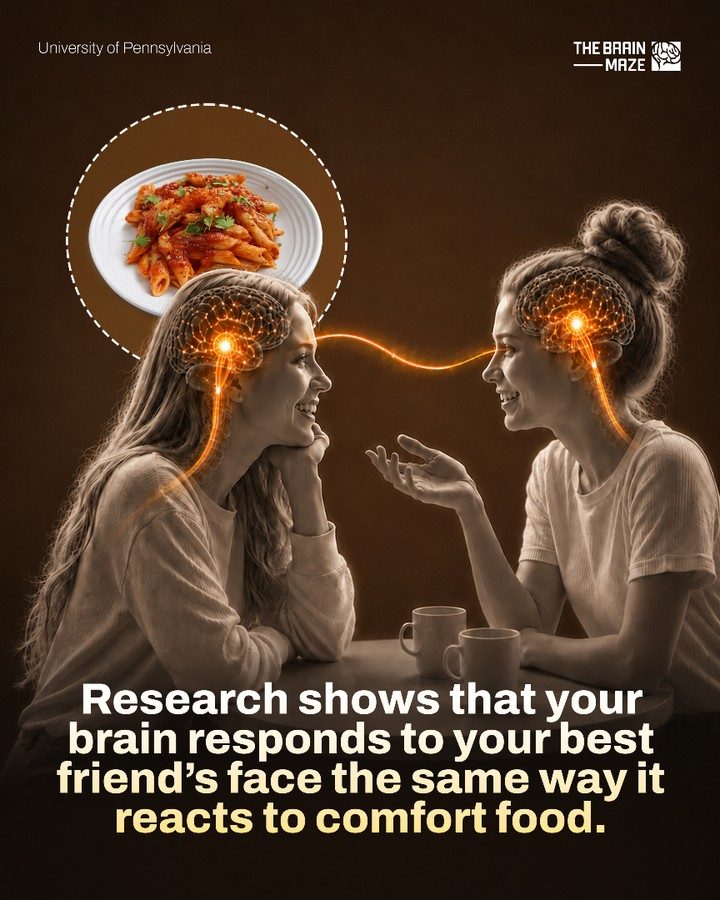
Brain Response to Comfort Food
The study from the University of Pennsylvania provides a captivating look into how our brains react to social connections. Specifically, the research indicates that the sight of a close friend's face triggers the same brain responses as seeing your favorite comfort food.
Context / Why this matters
This finding is significant because it offers a scientific basis for understanding the emotional power of friendship. By demonstrating that our brains process social bonds in a way that is similar to how they process pleasurable stimuli, this research sheds light on the depth and strength of human connections.
Main discussion
The Neuroscience of Social Bonds
The brain's response to social cues is a complex interplay of various neural pathways. When we see someone we care about, the brain releases neurotransmitters like dopamine and oxytocin. These chemicals are associated with feelings of pleasure and reward, much like the response to comfort food.
Comfort Food and the Brain
Comfort food is often associated with positive memories and emotional well-being. When we see or consume our favorite comfort food, the brain's reward pathways are activated, releasing dopamine and creating a sense of pleasure and satisfaction. The same neural pathways are engaged when we see the face of a close friend, suggesting that social bonds can provide a similar emotional reward.
The Role of Dopamine
Dopamine plays a crucial role in the brain's response to both social interactions and comfort food. This neurotransmitter is often referred to as the "reward chemical" because it is released in response to pleasurable activities. Whether it's the sight of a friend's face or a plate of pasta, dopamine helps to reinforce positive behaviors and experiences.
The Emotional Impact of Friendship
The emotional impact of friendship is profound. The brain's response to a friend's face suggests that deep social bonds can trigger the same pleasure and reward pathways as comfort food. This highlights the powerful emotional role that friends play in our lives, providing a sense of security, support, and happiness.
Practical tips
Cultivating Strong Social Bonds
To cultivate strong social bonds, consider the following tips:
- Spend Quality Time Together: Regular, meaningful interactions can strengthen your connections with friends and family.
- Show Genuine Interest: Pay attention to the details of their lives and show genuine interest in their experiences.
- Be Reliable: Consistency and reliability in your interactions can help build trust and deepen your relationships.
Incorporating Comfort Food
While the emotional rewards of friendship are significant, incorporating comfort food into your routine can also have a positive impact on your well-being. Here are a few tips:
- Choose Healthy Options: Opt for comfort foods that are also nutritious, such as whole grain pasta, lean proteins, and fresh vegetables.
- Cook with Friends: Preparing comfort food with friends can enhance the social experience and make the meal even more enjoyable.
- Mindful Eating: Pay attention to the sensory experience of eating, focusing on the taste, texture, and aroma of the food.
Important takeaways
The brain's response to social bonds and comfort food highlights the powerful emotional impact of friendship. By understanding the neuroscience behind these responses, we can appreciate the depth and significance of our social connections. Cultivating strong social bonds and incorporating comfort food into our lives can contribute to our overall well-being and happiness.
Conclusion
The research from the University of Pennsylvania offers a fascinating insight into the brain's response to social connections. By demonstrating that the sight of a friend's face triggers the same pleasure and reward pathways as comfort food, this study underscores the emotional power of friendship. Whether through meaningful interactions or the enjoyment of comfort food, nurturing these aspects of our lives can lead to a richer, more fulfilling experience.
Watch the Reel
Questions readers ask
How does the brain respond when you see a close friend?
When you see a close friend, your brain activates the same reward pathways as when you indulge in comfort food. This response highlights the emotional significance of human connections and explains why friendships can be so fulfilling.
What does the University of Pennsylvania research reveal about comfort food and friendship?
The research from the University of Pennsylvania shows that seeing a close friend's face triggers similar brain responses as seeing your favorite comfort food. This finding underscores the powerful emotional impact of social bonds.
Why is understanding the brain's response to friendship important?
Understanding how the brain responds to friendship is crucial because it provides a scientific explanation for the emotional power of human connections. This knowledge can help us appreciate the depth and strength of our social bonds and the impact they have on our well-being.
What are brain reward pathways and how do they relate to friendship and comfort food?
Brain reward pathways are neural circuits that process pleasurable experiences. The research indicates that these pathways are activated by both seeing a close friend and consuming comfort food, demonstrating that our brains derive similar satisfaction from social connections and indulgent treats.
How does the neuroscience of comfort food relate to social connections?
The neuroscience of comfort food shows that our brain's pleasure centers are activated by indulging in favorite treats. Similar brain regions are activated when we see close friends, suggesting that our brains process social bonds and pleasurable stimuli in comparable ways.
What can we learn from the brain's response to best friends?
The brain's response to best friends reveals that social connections are processed as rewarding experiences, similar to how our brains react to comfort food. This insight emphasizes the importance of maintaining strong, positive friendships for overall well-being.
What are some examples of comfort food psychology?
Comfort food psychology refers to the emotional and psychological responses associated with consuming favorite treats. This includes the activation of brain reward pathways, the release of feel-good neurotransmitters, and the emotional comfort and familiarity that certain foods provide.
Related deep dives
Similar reads based on topic and creator.




Recent articles
Fresh deep dives from the latest Reels we unpacked.




Comments
Be the first to comment.