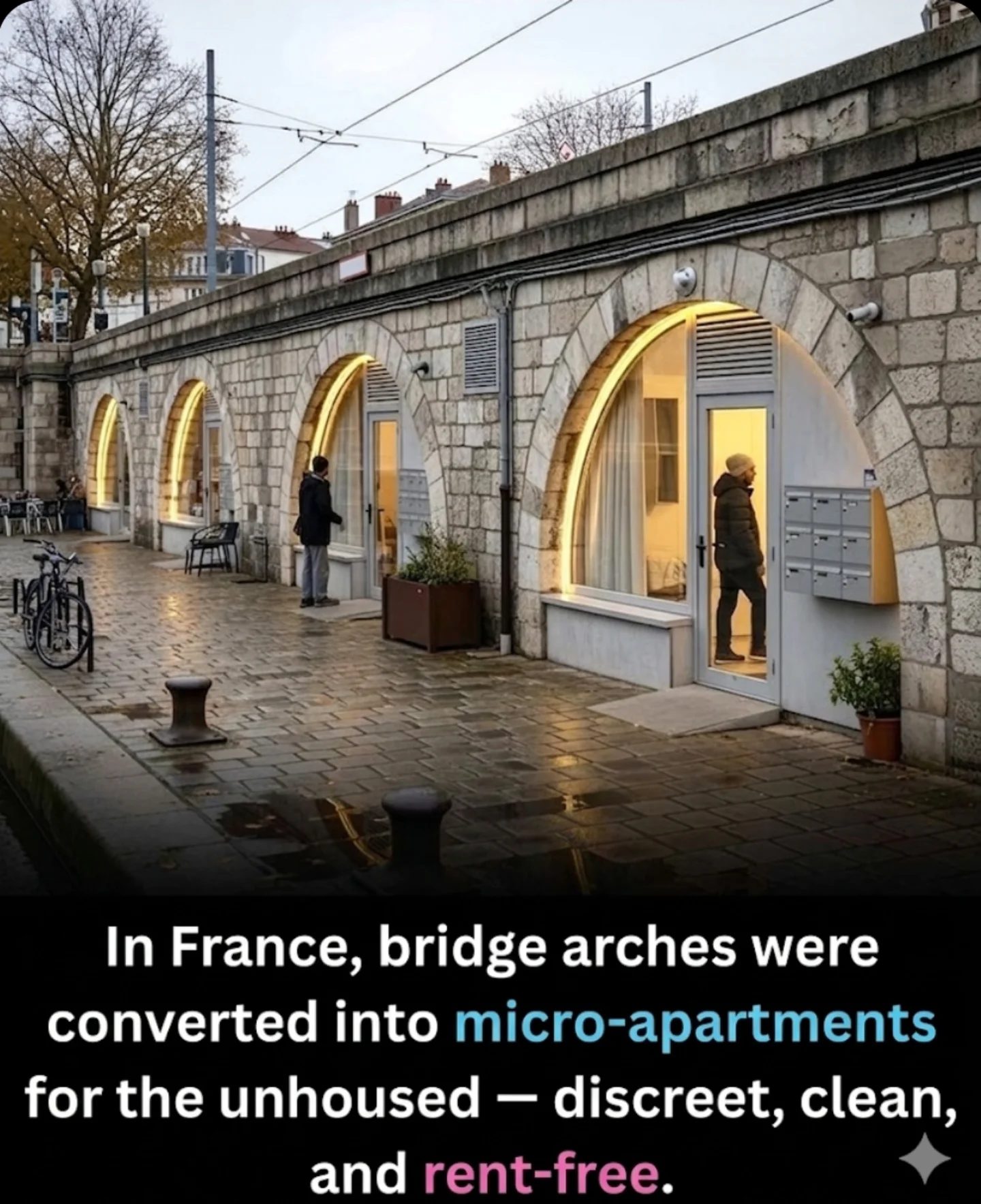
Unique Housing Solution: Repurposing Bridge Arches into Micro-Apartments
It is no secret that European cities have long been creative in repurposing old railway arches, underpasses, and historic masonry voids. While these spaces often find new life as trendy cafes, artisan workshops, and galleries, the conversion of these spaces into residential micro-apartments for the unhoused is a rarity. In France, bridge arches have been innovatively converted into discreet, clean, and rent-free micro-apartments, providing a unique solution to housing challenges.
Context / Why this matters
The repurposing of bridge arches into micro-apartments addresses a critical need for affordable and dignified housing for the unhoused population. This innovative approach not only provides much-needed shelter but also integrates seamlessly into the existing urban infrastructure, minimizing the visual and spatial impact on the cityscape. The project underscores the potential of creative architectural solutions in addressing social issues.
Main discussion
The Design and Integration
Bridge arches, typically used for commercial or transportation purposes, are being repurposed into micro-apartments. These converted spaces are designed to be discreet and unobtrusive, blending seamlessly into the urban landscape. The micro-apartments are equipped with floor-to-ceiling glass doors, allowing for natural light and ventilation. This design choice, however, raises concerns about privacy and security. Despite the challenges, the integration of these micro-apartments into the existing infrastructure highlights a innovative approach to urban housing.
Addressing Structural and Legal Constraints
The conversion of bridge arches into residential spaces comes with a set of unique challenges. Structural safety is a primary concern, as these arches are subject to vibrations, dampness, vehicle exhaust, and potential water filtration. Ensuring the safety and durability of these structures requires complex engineering and certification processes. Additionally, installing proper sewage, running water, and ventilation systems into centuries-old public bridge foundations is a daunting task. These infrastructure requirements are heavily restricted by architectural heritage laws, adding another layer of complexity to the project.
Ensuring Privacy and Dignity
Providing privacy and dignity for the residents is a crucial aspect of this project. Floor-to-ceiling glass doors directly facing a public pedestrian quay pose significant privacy challenges. For individuals transitioning out of homelessness, the lack of privacy can be a major barrier to a sense of security and comfort. The design of these micro-apartments must balance the need for natural light and ventilation with the residents' right to privacy and dignity. This delicate balance is essential for the success of the project and the well-being of its residents.
Practical tips
When considering similar projects, it is important to address the following practical aspects:
-
Structural Assessment: Conduct a thorough structural assessment to ensure the safety and durability of the converted spaces. Engage with engineering experts to address vibrations, dampness, and potential water filtration.
-
Infrastructure Planning: Develop a comprehensive infrastructure plan that includes proper sewage, running water, and ventilation systems. Work closely with local authorities to navigate architectural heritage laws and obtain necessary permits.
-
Privacy Solutions: Incorporate design elements that enhance privacy, such as frosted glass, blinds, or strategic landscaping. Ensure that the design respects the residents' need for a sense of security and comfort.
-
Community Engagement: Engage with the local community to address any concerns or objections. Transparent communication and collaboration can help build support for the project and ensure its success.
-
Sustainability: Consider sustainable design and construction practices to minimize the environmental impact of the project. Use eco-friendly materials and energy-efficient systems to create a sustainable living environment.
Important takeaways
-
Innovative Solutions: The repurposing of bridge arches into micro-apartments demonstrates the potential of innovative architectural solutions in addressing social issues.
-
Challenges and Constraints: Addressing structural, legal, and privacy concerns is crucial for the success of such projects. These challenges require careful planning, expert consultation, and community engagement.
-
Balance and Integration: Balancing the need for privacy and dignity with the design and integration of the micro-apartments is essential. The project highlights the importance of considering the residents' well-being and comfort.
-
Sustainable Development: Incorporating sustainable design and construction practices can enhance the environmental impact of the project, creating a more livable and eco-friendly urban environment.
Conclusion
The innovative conversion of bridge arches into micro-apartments in France offers a unique and practical solution to the housing challenges faced by the unhoused population. By repurposing these spaces, European cities can provide discreet, clean, and rent-free housing while integrating seamlessly into the existing urban infrastructure. Addressing structural, legal, and privacy concerns is essential for the success of such projects. Through careful planning, community engagement, and sustainable practices, these innovative housing solutions can contribute to a more inclusive and livable urban environment.
Watch the Reel
Questions readers ask
What are the benefits of converting bridge arches into micro-apartments?
Converting bridge arches into micro-apartments provides a unique solution for urban housing challenges. These spaces offer rent-free and modern housing options for the unhoused, while also repurposing underutilized infrastructure to enhance the cityscape. This approach helps the city achieve a more cohesive and inclusive urban environment.
How do micro-apartments in bridge arches blend into the cityscape?
The micro-apartments are designed to blend seamlessly into the existing architecture. They are discreet and often feature glass facades, ensuring they do not disrupt the visual harmony of the bridge and the surrounding urban landscape. The aesthetic design helps maintain the city's character while addressing a significant social challenge.
Are there any similar initiatives in other countries?
While France's initiative is notable, other countries have also explored repurposing underutilized infrastructure. For instance, some cities have converted old railway arches into trendy cafes, artisan workshops, and galleries. However, the specific use of bridge arches for homeless housing is less common and showcases France's innovative approach to urban housing solutions.
How does this initiative support the unhoused population?
This initiative provides dignified and rent-free shelter for the unhoused, addressing a critical need for affordable housing. By offering clean, secure, and discreet living spaces, these micro-apartments help improve the quality of life for individuals experiencing homelessness, fostering a more inclusive and compassionate urban environment.
What are the environmental benefits of repurposing bridge arches?
Repurposing bridge arches for housing reduces the need for new construction, which can lower the environmental impact. Additionally, by utilizing existing infrastructure, this approach minimizes waste and promotes sustainable urban development. This creative reuse of old bridge arches aligns with broader goals of reducing carbon footprints and conserving resources.
What challenges might arise from converting bridge arches into micro-apartments?
While the initiative has many benefits, challenges include potential structural modifications, ensuring access to essential services, and addressing privacy concerns. French authorities must also consider the long-term maintenance and management of these micro-apartments to ensure their sustainability and effectiveness in providing consistent support to the unhoused population.
Recent articles
Fresh deep dives from the latest Reels we unpacked.




Comments
Be the first to comment.