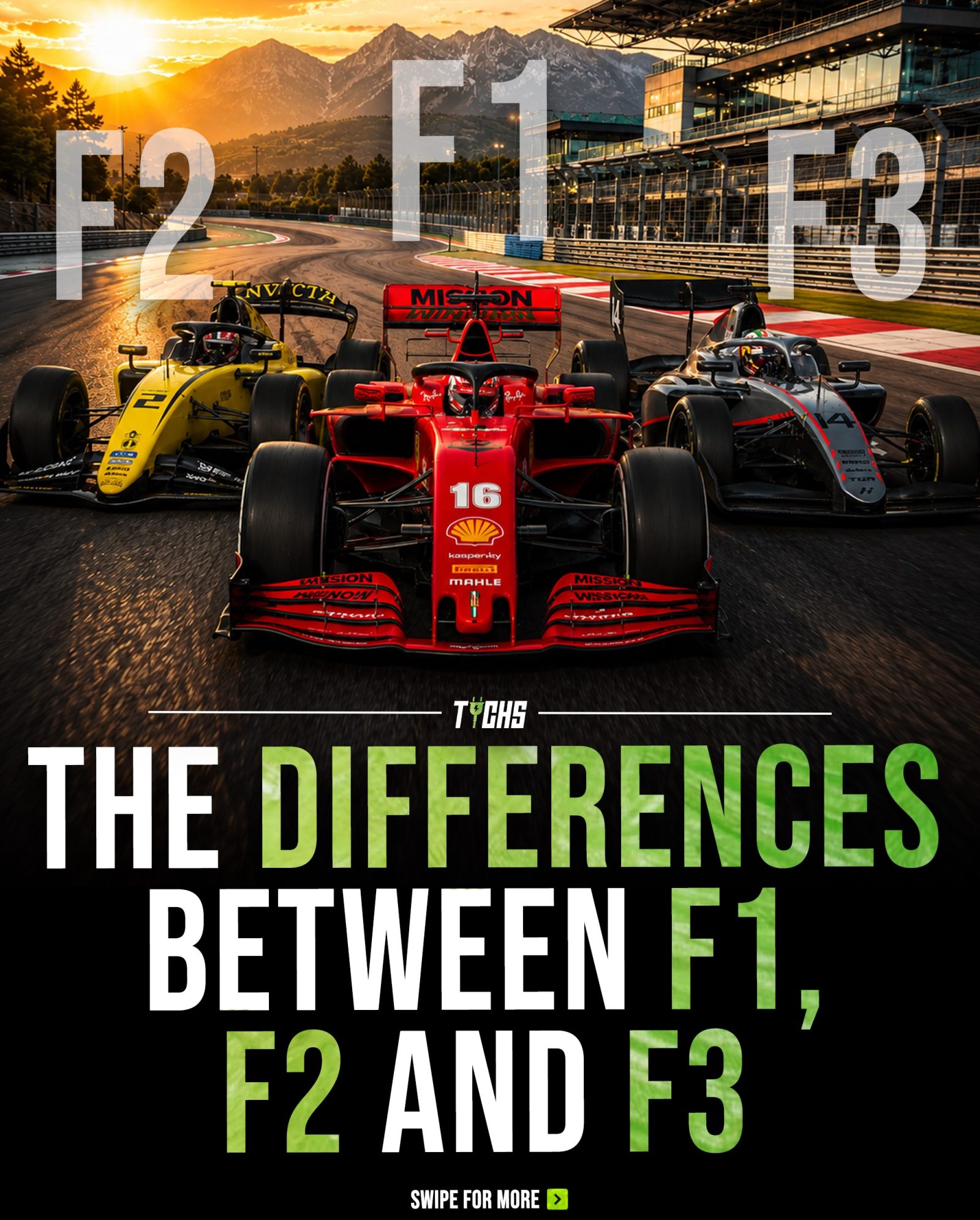
Formula Racing: The Evolution of Formula 1, F2, and F3
Formula racing encompasses much more than just Formula 1. The world of Formula racing is a dynamic ecosystem that includes F2 and F3, both of which serve as crucial stepping stones for aspiring drivers. These categories provide a structured pathway for young talents to hone their skills and eventually reach the pinnacle of motorsport.
Context / Why this matters
Understanding the distinctions between F1, F2, and F3 is essential for appreciating the progression and development of racing drivers. Each category offers unique challenges and opportunities that prepare drivers for the next level. F2 and F3 are not merely support races; they are vital components of the motorsport hierarchy, each with its own set of specifications and performance characteristics.
Main Discussion
Formula 1: The Pinnacle of Motorsports
Formula 1 is the ultimate stage for racing cars, known for their extraordinary performance and cutting-edge technology. The F1 cars produce over 1,000 horsepower and can reach top speeds exceeding 220 mph. These machines are equipped with advanced hybrid powertrains, featuring a 1.6-liter turbocharged hybrid V6 engine. The lightweight design, with a minimum weight of 798 kg, combined with a length of 5,500 mm, ensures optimal aerodynamics and handling. F1 cars can accelerate from 0 to 100 km/h in just 2.6 seconds, making them some of the fastest and most powerful vehicles on the planet.
The high-tech specifications of F1 cars are designed to push the boundaries of engineering and driver skill. The hybrid powertrain, for instance, not only enhances performance but also showcases the industry's commitment to sustainability and innovation. This advanced technology is a significant step forward in the motorsport world, and F1 cars are constantly evolving to stay at the forefront of racing technology.
Formula 2: The Bridge to Formula 1
Formula 2 serves as a crucial bridge between lower-tier racing and Formula 1. F2 cars offer a middle ground in terms of performance and technology. They are equipped with a 3.4-liter naturally aspirated V6 engine, producing 380 horsepower. These cars have a slightly lower top speed of 186 mph and a longer 0 to 100 km/h acceleration time of 3.1 seconds. The weight of an F2 car is 673 kg, with a length of 4,965 mm, making them lighter and more agile compared to their F1 counterparts. The reduced complexity of the powertrain and overall design allows drivers to focus more on racing lines and driver skill, rather than managing advanced technology systems.
This category is designed to emphasize driver development and competitive racing, providing a more accessible platform for young talents to showcase their abilities. As a result, F2 races are often close and unpredictable, offering exciting competition and a breeding ground for future F1 stars.
Formula 3: The Entry Level
Formula 3 is the entry-level category in the Formula racing hierarchy, serving as the first step for drivers looking to make a name in the sport. F3 cars are the most basic in terms of technology and performance, featuring a simplified powertrain and less advanced aerodynamics. However, they are still powerful, with a 3.4-liter naturally aspirated V6 engine producing 380 horsepower, similar to F2 cars. The weight of an F3 car is also 673 kg, with a length of 4,965 mm, and a top speed of 186 mph. The 0 to 100 km/h acceleration time is 3.1 seconds, making it slightly slower than F2 cars. The primary focus of F3 is on driver development, providing a platform for young talents to gain experience and hone their skills in a competitive environment.
Practical Tips
For Aspiring Racers
For those looking to enter the world of Formula racing, understanding the progression from F3 to F1 is crucial. Start by gaining experience in lower-tier categories like karting or lower formula series. Focus on mastering the basics of racing, such as cornering, braking, and acceleration. As you progress, aim to secure a seat in Formula 3, where you can compete against fellow aspiring racers and gain valuable experience.
Once in F3, focus on developing your skills and understanding the nuances of the car. Learn to adapt to different tracks and weather conditions, and work on improving your racecraft and consistency. As you gain experience and success in F3, you can transition to F2, where you will face stiffer competition and more advanced technology.
Finally, when you are ready, make the leap to Formula 1. At this stage, you will need to be at the peak of your abilities, both physically and mentally, to compete at the highest level. Surround yourself with a strong team, and work on improving every aspect of your performance.
For Motorsports Enthusiasts
For fans of motorsport, following the different Formula categories provides a comprehensive view of the sport. Watching F3 races can offer insights into the future stars of the sport, while F2 races provide a glimpse into the intense competition and skill required to reach the pinnacle of motorsport. F1, of course, is the ultimate showcase of advanced technology and top-tier competition.
Attend races, watch broadcasts, and engage with the community to deepen your understanding and appreciation for the sport. Follow drivers as they progress through the ranks, and witness their development from F3 to F1. This holistic view of the sport will enhance your enjoyment and appreciation for the incredible feats of engineering and skill on display in Formula racing.
Important Takeaways
- Formula 1 is the pinnacle of motorsport, featuring advanced hybrid powertrains and cutting-edge technology.
- F2 serves as a crucial bridge between lower-tier racing and F1, emphasizing driver development and competitive racing.
- F3 is the entry-level category, focusing on developing the skills and experience of young drivers.
- Understanding the progression from F3 to F1 is essential for aspiring racers and motorsport enthusiasts alike.
Conclusion
The world of Formula racing is a complex and thrilling ecosystem, with each category playing a vital role in the development of drivers and the advancement of technology. From the high-tech marvels of F1 to the foundational skills honed in F3, each level offers unique challenges and opportunities. Whether you are an aspiring racer or a motorsport enthusiast, embracing the journey and understanding the distinctions between these categories will deepen your appreciation for the sport.
Watch the Reel
Questions readers ask
What are the main differences between F1, F2, and F3 racing cars?
F1 cars are the most technologically advanced, featuring powerful engines that can produce over 1,000 horsepower, and advanced aerodynamics. F2 cars, while still high-performance, are less powerful with around 620 horsepower and simpler aerodynamics. F3 cars are even more basic, focusing on mechanical grip rather than aerodynamic downforce, with around 270-300 horsepower.
How does the weight and length of F2 and F3 cars compare to F1 cars?
F1 cars are significantly lighter, with a minimum weight of 798kg including the driver. In contrast, F2 cars have a minimum weight of 728kg, and F3 cars are even heavier, with a minimum weight of 585kg. In terms of length, F1 cars are the longest, measuring up to 5.16 meters. F2 cars are slightly shorter, around 5.06 meters, and F3 cars are the shortest, around 4.59 meters.
What are the engine specifications of F2 and F3 cars compared to F1?
F1 cars use hybrid power units with turbocharged V6 engines. F2 cars use turbocharged V6 engines with 620 horsepower, while F3 cars use naturally aspirated 4-cylinder engines producing around 270-300 horsepower. The engines in F2 and F3 are designed to be more durable and reliable, while F1 engines are optimized for performance and efficiency.
Why are F2 and F3 races important for aspiring F1 drivers?
F2 and F3 races serve as crucial stepping stones for young drivers aiming for F1. They offer a platform to develop skills, gain experience, and prove their worth in a competitive environment. Drivers in F2 and F3 have to adapt to different car setups, race strategies, and racing conditions, preparing them for the challenges of F1.
How do the speeds of F1, F2, and F3 cars compare?
F1 cars are the fastest, with top speeds exceeding 360km/h (224mph). F2 cars are slightly slower, with top speeds around 320km/h (199mph). F3 cars are the slowest, with top speeds around 240km/h (149mph). These differences in speed highlight the increasing demands and challenges as drivers progress through the ranks.
What are the key differences between F2 and F3 racing categories?
The primary difference between F2 and F3 lies in the engine specifications and car design. F2 cars have more powerful turbocharged V6 engines and more advanced aerodynamics, while F3 cars focus on mechanical grip and use naturally aspirated 4-cylinder engines. F2 is generally considered more challenging and closer to F1 compared to F3.
How do the race formats differ between F1, F2, and F3?
F1 races typically consist of a qualifying session and a main race, with the inclusion of a Sprint Race on some weekends. F2 features a qualifying session, a Sprint Race, and a Feature Race. F3 has a similar format to F2, with a qualifying session, a Sprint Race, and a Feature Race, but the race distances and point systems vary.
What are the main differences between F1 and F2 racing cars?
F1 cars are more advanced and powerful, with hybrid power units and sophisticated aerodynamics. F2 cars, while high-performance, are less powerful and have simpler aerodynamics. F1 cars are also lighter and longer, with a focus on speed, acceleration, and advanced engineering. F2 cars are designed to be more durable and reliable, providing a good balance of performance and reliability.
Recent articles
Fresh deep dives from the latest Reels we unpacked.




Comments
Be the first to comment.